Environment
Maharashtra's Lonar Lake included in ‘Third 100 IUGS Geological Heritage Sites’
The 1.88-km-wide meteorite-impact crater in Buldhana district is among world's most significant geological sites recognised for their scientific value
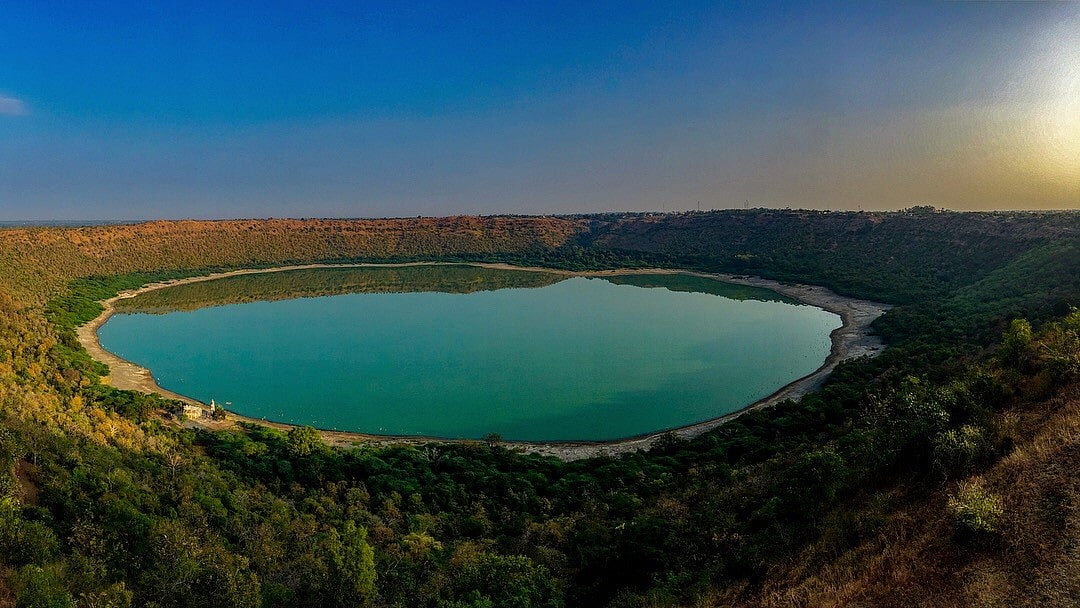
Lonar Lake, a meteorite-impact crater in Maharashtra's Buldhana district, has been included in the ‘Third 100 IUGS Geological Heritage Sites’, an international list recognising locations of outstanding scientific importance.
The International Union of Geological Sciences (IUGS) recognises geological heritage sites for their exceptional examples of geological features, processes and discoveries, a release issued by the Press Information Bureau (PIB) said.
The sites represent some of the world's most significant locations for understanding the Earth and its history.
The selection of the ‘Third 100’ follows the announcement of the ‘First 100’ in Zumaia, Spain, in 2022, and the ‘Second 100’ during the 37th International Geological Congress in Busan, South Korea, in 2024.
Since 2022, more than 1,000 experts from 90 countries and 20 international organisations have contributed to the programme by proposing sites, participating in the selection process and evaluating their scientific value.
With 74 active national members, the IUGS is among the world's largest scientific organisations and promotes international cooperation in Earth sciences.
According to the PIB release, the Lonar crater is one of the youngest and best-preserved bowl-shaped hypervelocity impact structures on Earth, dating back approximately 12,000 years. It has a diameter of around 1.88 km and is situated within the Deccan Traps, a vast succession of tholeiitic continental flood basalts formed around 65 million years ago.
The crater is particularly significant because it is one of the rare terrestrial impact structures formed in basaltic rocks. It is among only five known hypervelocity meteorite impact craters on Earth developed in a basaltic target.
At its centre is a saline-alkaline lake, creating a distinctive geological and ecological setting.
Its circular shape, depth-to-diameter ratio, exposed basaltic lava flows along the inner slopes, brecciated subsurface rocks, outward-dipping country rocks, debris mounds and extensive ejecta deposits provide evidence of its meteoritic impact origin, the release said.
Impact-related materials, including impact glass, spherules and melt rocks, offer important clues to the physical and geochemical processes associated with hypervelocity impacts.
The Geological Survey of India (GSI), through its efforts towards geoheritage conservation in the country, took the initiative to submit Lonar Lake's nomination to the IUGS, the release added.
The Third 100 sites are spread across 47 countries and include 11 locations in Africa, 22 in the Americas, 22 in the Asia-Pacific region, six in the Middle East, 34 in Europe, two in Antarctica and three in the High Seas.
The list also features internationally recognised geological locations such as Mount Fuji in Japan, the fjords of Norway, the San Andreas Fault in the United States, Mount Aconcagua in Argentina and the Chocolate Hills in the Philippines.
The IUGS recognition gives the sites international visibility and identifies them as locations of high scientific value. Many are protected within national parks, geoparks and natural reserves, while others are not.
The recognition is expected to encourage greater appreciation of these sites, promote their use as educational resources and support their preservation, the release said.
Join our official telegram channel (@nationalherald) and stay updated with the latest headlines