Environment
Monsoon heat, humidity could extend India's dangerous hot season: Study
Researchers warn uncompensable heat stress may increasingly shift into monsoon months, threatening health and productivity
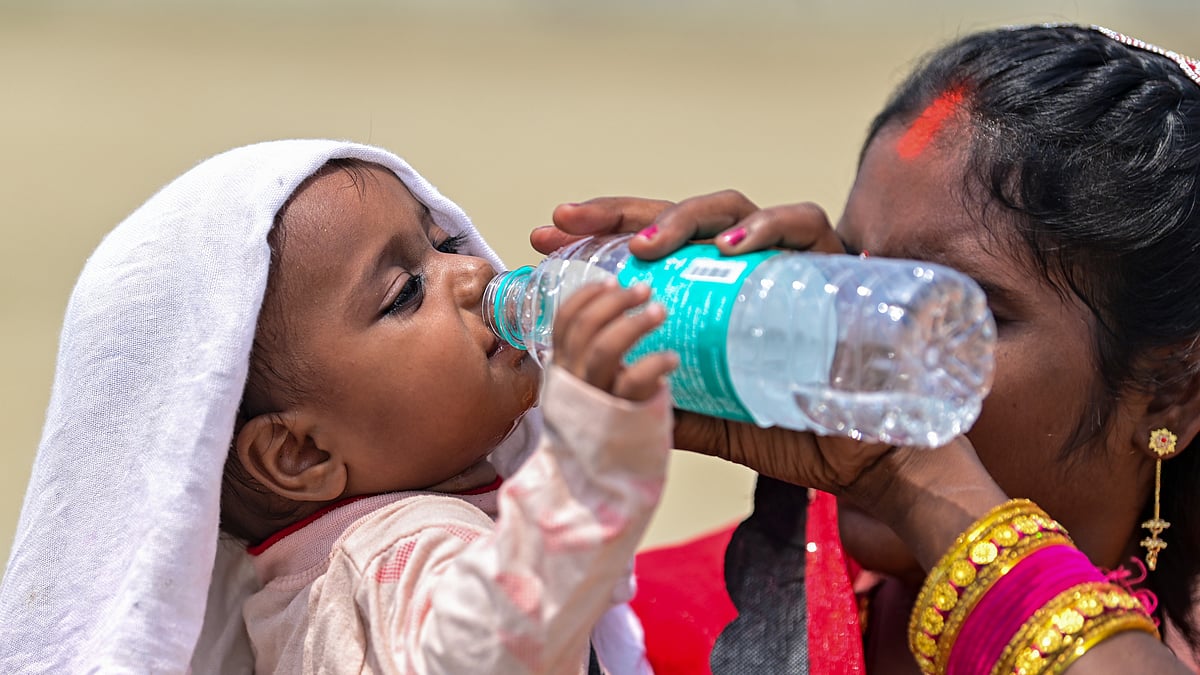
Hot and humid conditions during India's monsoon season could significantly extend periods of dangerous heat stress as global temperatures rise, with a new study warning that large parts of the country may face life-threatening conditions even after the peak summer months.
The study, published in the journal AGU Advances, found that uncompensable heat stress (UHS) during the monsoon season could increase sharply under a global warming scenario of 2 degrees Celsius above pre-industrial levels.
Researchers from IIT (Indian Institute of Technology) Gandhinagar, Stanford University and Purdue University said prolonged exposure to uncompensable heat stress across both summer and monsoon seasons could pose serious risks to public health, labour productivity and climate resilience.
Uncompensable heat stress occurs when extreme heat and humidity prevent the human body from cooling itself effectively through sweating, potentially leading to heat-related illnesses, organ failure and death.
Monsoon heat risk rising
The study found that while uncompensable heat stress has traditionally been concentrated during the summer months between March and June, humid conditions during the monsoon could increasingly create similar risks as temperatures rise.
Researchers said monsoon-season heat stress could affect 53 per cent of India's land area under a 2-degree Celsius warming scenario, compared with 60 per cent during summer.
The affected population could range between 800 million and 1.2 billion people, depending on future warming levels and population growth projections.
Over the period from 1979 to 2021, the area affected by uncompensable heat stress expanded from less than 0.01 million square kilometres during the 1980s to around 0.04 million square kilometres by 2020.
North India among hotspots
The study identified the Indo-Gangetic Plain, northwestern India and eastern coastal regions as major hotspots for heat stress.
During summer, extreme heat stress is driven primarily by very high temperatures combined with moisture transported inland from the Bay of Bengal.
However, during the monsoon season, high humidity coupled with temperatures ranging between 35 and 38 degrees Celsius can create equally dangerous conditions, particularly during breaks in rainfall.
Researchers found that Punjab and parts of northwestern India have already experienced monsoon-season uncompensable heat stress.
They warned that the Gangetic Plain and northwestern India are likely to experience more frequent heat stress events during the monsoon than during summer under future warming scenarios.
Public health concerns
The findings underscore growing concerns about the impact of climate change on India's population, particularly outdoor workers and vulnerable communities.
The researchers noted that uncompensable heat stress has a strong association with heat-related mortality and warned that longer periods of dangerous heat conditions could pose significant challenges for public health systems and economic productivity.
The study drew on population data, heat-related mortality records from the NDMA (National Disaster Management Authority) and IMD (India Meteorological Department), and climate observations spanning more than four decades.
Join our official telegram channel (@nationalherald) and stay updated with the latest headlines