Environment
Nearly three-fourths of UK heatwave news reports failed to mention climate crisis: Analysis
Study of nearly 2,500 articles finds only 28 per cent linked June's extreme heat to climate change, while fewer than one in 20 referred to net-zero policies
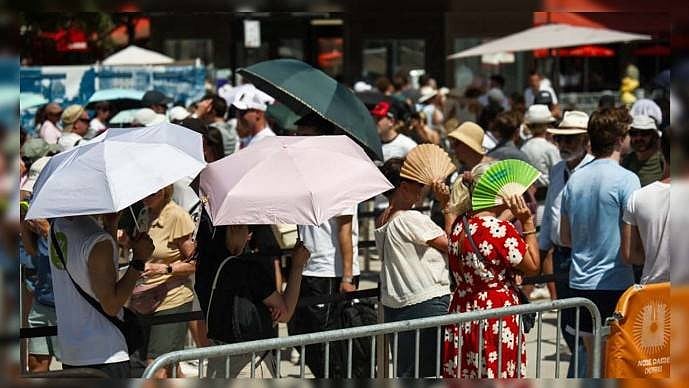
Nearly three-quarters of UK media reports on the record-breaking June heatwave failed to mention climate change or global heating, according to an analysis of nearly 2,500 articles published by nine leading national media outlets.
The analysis by the ECIU (Energy and Climate Intelligence Unit) found that about 72 per cent of reports on the extreme heat made no reference to the climate crisis. Temperatures during the heatwave crossed 37C, setting a record for the time of year.
Fewer than one in 20 heatwave reports mentioned “net zero” or government policies aimed at tackling climate change, the study found.
The June heatwave was the second to hit the UK this year, following a hot spell in May when temperatures reached 35C and broke the previous record for the month. A third heatwave struck the country in July.
Research by Imperial College London estimated that about 2,700 people died from overheating in the UK during May and June. Of these, about 1,100 deaths would not have occurred without the additional heat linked to the climate crisis.
Ed Hawkins, professor of climate science at the University of Reading, said the media had a critical role in helping the public understand the connection between greenhouse gas emissions and extreme heat.
“When extreme heatwaves occur, it is critical that the British public are made aware in the media they consume that greenhouse gas emissions, primarily from burning fossil fuels, have made those heatwaves hotter than they would otherwise have been,” Hawkins said.
Financial Times led in linking heat to climate
The ECIU examined articles published between 22 June and 28 June that contained the terms “extreme heat” or “heatwave”. Researchers tracked whether the reports also referred to “climate change”, “climate”, “global warming” or similar terms, and whether they mentioned “net zero”.
Using the Factiva media database, the study analysed print and online coverage by the Express, Financial Times, Guardian, Independent, Mail, Mirror, Sun, Telegraph and Times.
The Financial Times recorded the highest proportion of heat-related stories mentioning climate change. Fifty of its 78 reports, or nearly two-thirds, made the connection.
The Guardian ranked second, with 64 of its 131 heat-related articles — roughly half — referring to the climate crisis.
The Independent published the largest number of heatwave stories, with 783 articles during the period. Of these, 304, or about 39 per cent, mentioned climate change.
About a fifth of more than 300 heatwave reports published by the Mail referred to global heating, while roughly one in eight of the Express's more than 400 stories made the connection.
The Mirror published more than 300 heatwave reports, but only 9 per cent mentioned climate change. The Sun ranked lowest, with just 6 per cent of its 69 heatwave stories including a climate angle.
The high volume of reports at some publications included live blog posts and minor updates to existing online articles. Excluding live blogs made little difference to the proportion of stories mentioning climate change at most outlets. However, the Independent's share fell to about 34 per cent.
‘Climate change link indisputable'
Gareth Redmond-King, head of international at the ECIU, said the connection between the UK's three recent periods of extreme heat and climate change was clear.
“The link between all three recent periods of extreme heat and climate change is indisputable,” he said.
“If recent heatwaves are the symptom, then climate change is the illness, and net zero is the medicine. When public understanding of this link is so low, it’s vital that the dots are joined between these three concepts to help make us all better.”
A Guardian spokesperson said the publication had consistently treated global heating as an urgent factual reality and highlighted the link between extreme weather and the climate crisis.
The spokesperson said the Guardian had published hundreds of articles mentioning the “climate crisis” or “climate emergency” in 2026. The publication had also changed its style guide in 2019 to adopt terms including “climate emergency” and “global heating”.
Join our official telegram channel (@nationalherald) and stay updated with the latest headlines