Environment
Pilgrimage in the time of climate change
The rapidly melting shivling of Amarnath is a reminder that faith must respect nature
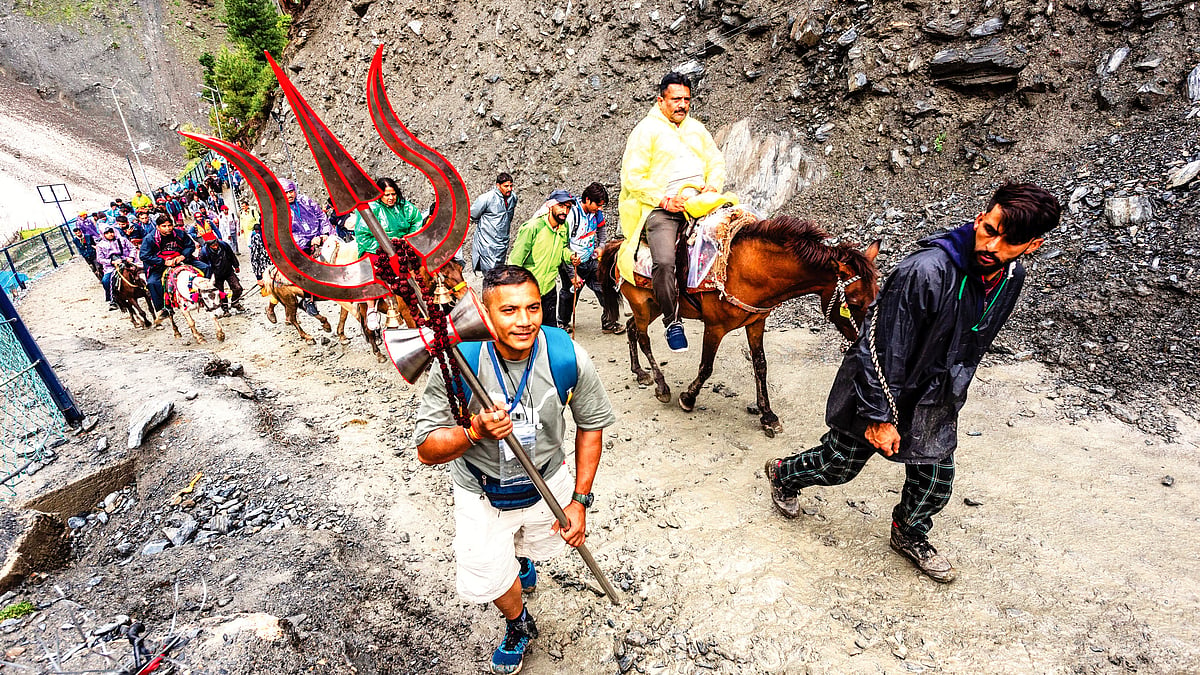
The annual Amarnath Yatra is more than a religious pilgrimage. For millions of Hindus, it is one of the holiest spiritual journeys in India. It is also the economic lifeline for thousands of families in Kashmir and an important indicator of the health of the fragile Himalayan ecosystem.
The 57-day pilgrimage began on 3 July. By the end of the fifth day, more than 113,800 pilgrims had already visited the sacred cave. Almost simultaneously, reports emerged that the naturally formed ice lingam had melted by nearly 90 per cent, shrinking to barely a foot in height.
What devotees witnessed was not merely the premature melting away of a sacred marker. It was an unmistakable warning that climate change, coupled with untenable human pressure (and presence), is altering one of India’s most sensitive mountain ecosystems.
Natural wonder under climate stress
The ice lingam inside the Amarnath cave is not carved or sculpted. It is a naturally occurring ice stalagmite formed through a delicate process in which water droplets falling from the cave roof freeze under sustained sub-zero temperatures. This remarkable phenomenon depends on an exceptionally stable microclimate within the cave. When that microclimate is disturbed, the natural process is disrupted.
This year, Kashmir experienced unusually high temperatures during May and June, with heat levels breaking several previous records. Reduced snowfall during the preceding winter also meant that natural cooling around the cave was significantly weaker than normal. Without sufficient accumulation of snow, the cave loses the thermal conditions necessary to sustain the ice formation throughout the pilgrimage season.
The result was evident within days of the Yatra’s commencement.
A pattern, not an exception
The events of 2026 are not isolated. They fit into a worrying climatic trend.
During the summer of 2024, Kashmir witnessed an intense heat wave in June and July, which experts linked to the unusually rapid melting of the ice lingam. In 2025, erratic weather patterns became equally evident. Following snowfall, minimum temperatures reportedly rose by nearly six degrees Celsius within a short period — another sign of increasing climatic instability in the Himalayan region.
These recurring anomalies reinforce what scientists have long warned: the Himalayas are among the world’s most climate-sensitive mountain systems. Rising temperatures are accelerating glacier retreat, altering snowfall patterns and destabilising ecosystems that have evolved over thousands of years.
Missing climate data
One of the biggest challenges in understanding the phenomenon is the absence of long-term environmental data from the cave itself.
Although the Amarnath cave lies in an ecologically sensitive zone, publicly available observations from permanent automated weather stations remain limited. The India Meteorological Department primarily provides district-level forecasts and short-term weather updates rather than long-term cave-specific climate records.
Consequently, researchers often rely on observations from nearby stations such as Srinagar, Pahalgam and Anantnag, supplementing them with local information on humidity, wind and snowfall to assess conditions inside the cave. This gap highlights the urgent need for continuous scientific monitoring of one of India’s most environmentally vulnerable pilgrimage sites.
The pressure of human activity
Climate change is not the entire story. The cave’s fragile micro-climate is increasingly affected by the sheer scale of human activity during the pilgrimage. Studies suggest that every person inside the cave emits roughly 100 watts of body heat. When tens of thousands of pilgrims pass through the confined space over a short period, the cumulative heat and humidity inevitably rise.
The consequences are predictable. Higher temperatures accelerate the melting of the ice formation.
The problem is compounded by mechanised activity, vehicle movement, construction, power generation and infrastructure built to accommodate more pilgrims. While these facilities undoubtedly improve accessibility, they also increase the ecological footprint of the pilgrimage, placing additional stress on a fragile environment.
****
The shrinking ice lingam raises an uncomfortable but unavoidable question: are we prepared to modify our practices in order to preserve what we revere?
Pilgrimages should not be measured merely by the number of people who reach a sacred spot. They should also reflect respect for ecological balance.
Environmental experts have repeatedly recommended limiting the daily number of pilgrims to help maintain stable conditions inside the cave. Mechanised activity in the immediate vicinity should be minimised, and future infrastructure development must be guided by ecological rather than logistical considerations. Climate adaptation should become an integral part of pilgrimage management, particularly in the Himalayas, where environmental thresholds are very delicate.
Religious faith and environmental conservation cannot be viewed as competing priorities. One depends upon the other. If future generations are to experience the Amarnath ice lingam in its natural form, India must embrace a model of pilgrimage that is both spiritually fulfilling and environmentally sustainable.
The Amarnath cave reminds us of a profound truth. We are not masters of nature but its custodians. Devotion should not unintentionally destroy the very phenomenon it seeks to celebrate. Managing the annual pilgrimage can no longer remain merely an administrative exercise. It must become part of a broader national strategy for climate resilience and ecological stewardship in the Himalayas. Only then can this extraordinary symbol of faith continue to inspire pilgrims for generations to come.
Join our official telegram channel (@nationalherald) and stay updated with the latest headlines