World
Anti-war protests spread across Europe over strikes on Iran
Demonstrators in London, Berlin, Madrid and beyond call for ceasefire and oppose Western military involvement
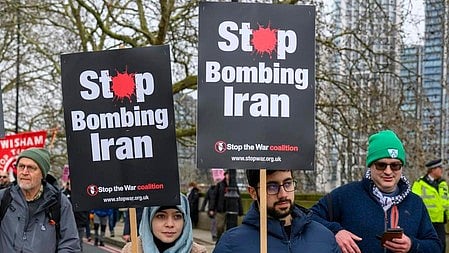
Thousands of people have taken to the streets across Europe in protest against recent United States and Israeli military strikes on Iran, as opposition to the escalating conflict continues to grow.
In London, large crowds marched from Russell Square to Whitehall, carrying banners and chanting slogans condemning the attacks. The demonstration culminated in a rally where speakers urged an immediate ceasefire and an end to foreign intervention in the West Asia.
Protesters voiced strong criticism of the military campaign. One demonstrator, holding a sign reading “Stop the war on Iran”, rejected the US description of the operation, arguing that military action could not bring peace or democracy. Others warned of wider consequences, including rising energy costs and increasing global instability.
The UK protest formed part of a wider wave of demonstrations across Europe. In Madrid, thousands gathered for a march from Atocha to Puerta del Sol, with participants carrying placards opposing war and NATO. Political figures from Spain’s Podemos party joined the rally, calling for a reassessment of the country’s foreign policy and its alliance commitments.
In Lisbon, several hundred demonstrators assembled near the US embassy despite poor weather, calling for peace and disarmament. The protest, supported by dozens of organisations, condemned what participants described as aggression by Western powers.
Similar demonstrations were reported in Sofia, where protesters demanded an end to the strikes and called for the removal of US military presence from Bulgarian territory. Marches and rallies also took place in France, Greece and other European countries.
In Berlin, large crowds gathered to denounce the military action and urge a diplomatic solution. Protesters accused the US of violating international law and drew parallels with previous conflicts, including the Iraq war.
Energy security emerged as a key concern during the demonstrations. Analysts warned that rising tensions in West Asia could further destabilise global energy markets, leaving European countries increasingly reliant on limited suppliers.
Criticism has also come from academic and policy circles. Some analysts argue that the conflict exposes Europe’s dependence on the United States and highlights the need for greater strategic autonomy.
As the conflict enters its third week, public opposition appears to be intensifying, with demonstrators across the continent calling for de-escalation and a renewed focus on diplomacy.
With IANS inputs
Join our official telegram channel (@nationalherald) and stay updated with the latest headlines