World
Middle East more stable after talks with Egypt’s president in Davos: Trump
US president highlights Gaza, Iran pressure and Nile dam dispute after meeting Abdel Fattah el-Sisi on WEF sidelines
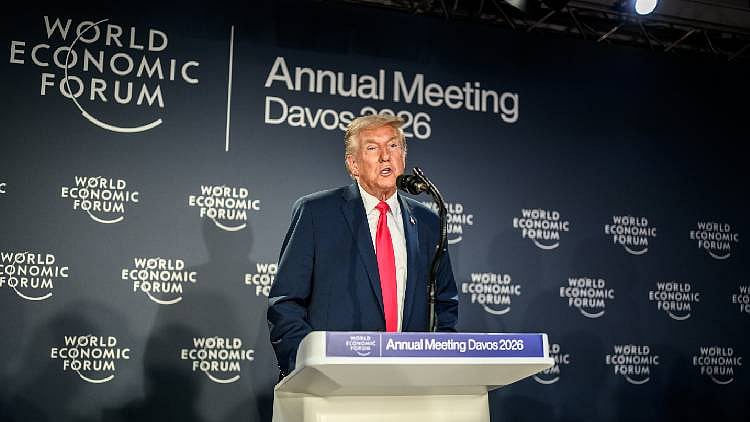
US President Donald Trump has claimed that the Middle East is “more stable” following talks with Egyptian President Abdel Fattah el-Sisi in Davos, citing what he described as progress on Gaza, sustained pressure on Iran and growing interest in his proposed “Board of Peace”.
Speaking to reporters after a bilateral meeting on the sidelines of the World Economic Forum on Wednesday, Trump praised Egypt’s role in regional diplomacy and said discussions had covered Gaza, wider security concerns and a long-running dispute over Ethiopia’s Grand Renaissance Dam on the Nile.
“Egypt has been great,” Trump said, describing Cairo as a key partner in efforts to manage regional tensions.
On the Nile dispute, Trump warned that the Ethiopian dam posed a serious risk to downstream countries. He described it as one of the largest dams in the world and said it effectively restricted the flow of water on which Egypt depends.
“They built a dam where somebody’s not getting the water that they are supposed to get,” he said, adding that Egypt had relied on the Nile “for a million years”. Trump said he intended to try to bring Egyptian and Ethiopian leaders together, calling the issue “a dangerous thing” that required resolution.
Turning to Gaza, Trump repeated his assertion that US involvement had been decisive in reducing violence. “If we weren’t involved, there’d be no peace,” he said, adding that there was now “peace to be a piece of the Middle East”.
However, he acknowledged that threats remained. Referring to Hamas, Trump said there were still “a little flame here and there” and warned that armed groups would need to disarm. “If they don’t get rid of the guns, then they will be very unhappy,” he said.
He also cited Hezbollah in Lebanon as an ongoing concern, though he played down its impact on the wider regional picture. “We actually have peace in the Middle East,” Trump said. “It’s an amazing thing. Nobody thought we’d ever see that.”
Iran featured prominently in Trump’s remarks throughout the day. He repeated his claim that US military action had prevented Tehran from acquiring nuclear weapons, arguing that intervention had set back Iran’s nuclear ambitions by years.
“If we didn’t bomb the Iran nuclear plant, they would have had a nuclear weapon within two months,” he said. Trump added that sanctions and other penalties on Iran would continue, leaving open the possibility of further action if Iran resumed nuclear activity.
The president also used the occasion to promote his proposed Board of Peace, which he described as a new international forum designed to consolidate ceasefires and prevent conflicts from escalating. According to Trump, interest in the initiative was growing among world leaders.
“We have a lot of great people that want to join,” he said, calling it “the most prestigious board ever formed”. He acknowledged that some countries would need parliamentary approval to participate but insisted that “for the most part, everybody wants to be on”.
In separate remarks, Trump addressed questions about Greenland, downplaying speculation about the use of force. He said military action was not being considered. “I don’t think that will be necessary,” he said.
Trump’s emphasis on Middle East stability has broader international implications, including for India, which relies heavily on energy imports from the region. Any reduction in tensions in Gaza and continued pressure on Iran could help lower risks to oil markets and to key shipping routes that are vital to India’s economy and global trade more broadly.
With IANS inputs
Join our official telegram channel (@nationalherald) and stay updated with the latest headlines