World
Trump’s posts and identity of the ‘idiot’ keep Gulf on edge
Uncertainty over US–Iran talks after reopening and shutting Hormuz; Indian tanker fired upon amid reported rift between diplomats and IRGC
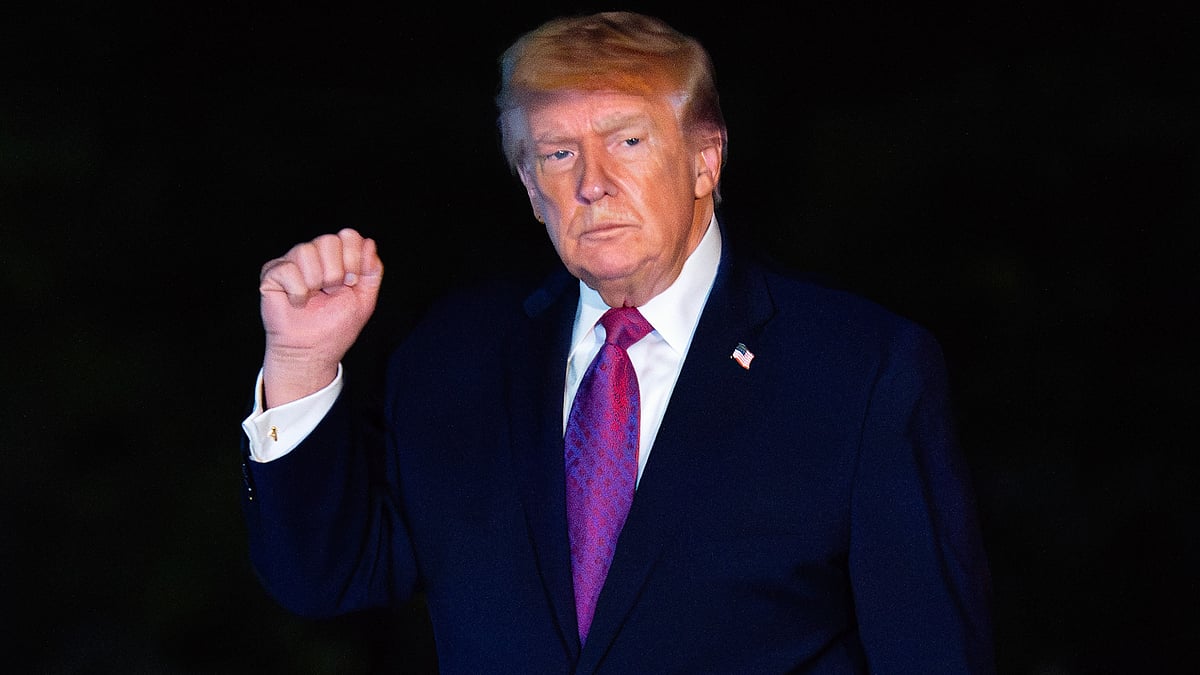
Hopes of a quick diplomatic resolution of the US–Iran standoff have receded in the past 48 hours, with Tehran signalling that it is not yet ready to hold the next round of in-person talks with US officials. Tehran blamed Washington’s unwillingness to move away from what it described as ‘maximalist’ demands, as well as frequent claims made by US President Donald Trump on social media.
Iranian deputy foreign minister Saeed Khatibzadeh refuted the US president’s claim that Iran had agreed to hand over enriched uranium to Washington, dismissing statements made by Trump in an interview with The Associated Press. Iran’s Parliament speaker Mohammad Bagher Ghalibaf said in an interview with state television that while “progress had been made”, the two sides remained “far from final discussion”.
Iran once again reiterated its claim over the Strait of Hormuz, rejecting the US and EU position that the international waterway must remain ‘open and free’. Iran’s foreign ministry spokesperson Eshmaeil Baqaei said, “No rule of international law forbids Iran, the coastal state, from taking necessary measures to stop the Strait of Hormuz being used for waging military aggression against Iran. And ‘unconditional transit passage’ in Hormuz? That fiction sailed the moment US/Israeli aggression brought US military assets into the strait’s backyard.”
Trump’s social media posts appear to be at the centre of the deepening distrust. On Saturday, the US president uploaded an audio clip and posted that the IRGC navy had called Iran’s own foreign minister an “idiot” over open maritime radio, triggering speculation of divisions within Iran’s establishment. Hours later, on Sunday, 19 April, Prof Seyed Mohammad Marandi, another Iranian spokesperson, responded on X saying, “The idiot doesn't know that Trump’s the idiot being referred to.”
Soon after posting the audio clip, Trump told reporters in the Oval Office that “very good conversations” were taking place with Iran, but added that he would not allow Tehran to “blackmail” the US over the Strait of Hormuz. Iranians, he said, were acting “a little cute as they have for 47 years”, reiterating that the US blockade of Iranian ports would continue until “our transaction with Iran is 100 per cent complete”. Tehran, however, insisted that the blockade must first be lifted before the next phase of dialogue could proceed.
Ghalibaf added, “The president of the United States made seven claims in one hour, all seven of which were false. They did not win the war with these lies, and they will certainly not get anywhere in negotiations either. With the continuation of the blockade, the Strait of Hormuz will not remain open.”
Sunday, 19 April saw further brinkmanship, with Seyed Marandi appearing to signal the possible end of talks. “Iran believes a longer war with Trump is better than a short one. A longer war will convince the US regime to stay clear of the Iranian people for years to come, permanently ending maximum pressure sanctions against Iranian women and children,” he posted on X.
He also issued a stark warning to GCC countries, saying, “The UAE, Qatar, Kuwait, Bahrain and Saudi regimes are all fully complicit in this evil war of aggression against Iranians. They will pay the price. Further aggression will lead to the destruction of these regimes and their assets. Iran is not worried about renewed aggression from the Trump and Netanyahu regimes. This time, the Islamic Republic will be more decisive, and it will ensure that the Trump and Netanyahu regimes and their US proxies in the Persian Gulf pay a much greater price.”
Marandi also said in separate interviews that Iran believed the US and Israel were planning to relaunch an even more destructive war.
US media reports appeared to reinforce such concerns, pointing to a steady American military build-up in the region. In an interview broadcast on state television, Ghalibaf, a key negotiator for Iran, recalled that when he met US vice-president J.D. Vance face-to-face in Islamabad, his first words to Vance were, “We have zero trust for you. You will have to restore the trust first.”
He also described tense moments when negotiators learned that a US minesweeper was sailing towards the Strait of Hormuz. “The Strait is ours. Advance, and we fire,” he said he conveyed to the US team. “They asked for 15 minutes and the ship turned around,” Ghalibaf claimed.
In a lengthy interview, Ghalibaf said, “We are not militarily stronger than America. It is clear that they have more money, equipment and resources, and because they have carried out so many aggressions around the world, they also have more experience than us… The enemy had money and resources but did not act correctly. They made mistakes in strategic decisions. They are wrong about our people, just as they are wrong in their military design.”
“The enemy sought regime change and to ‘Venezuelanise’ Iran in order to auction off our oil, but it failed,” he said, adding that Iran’s leadership was prepared to endure hardship. “It is clear that the enemy was defeated, but this is different from saying that we destroyed their army. The enemy intended to bring counter-revolutionaries into the country from our western and eastern borders to create chaos inside, but it did not succeed.”
Iranian lawyer Reza Nasri argued that western countries were wrongly insisting that the Strait of Hormuz is an “international waterway” that must be reopened “unconditionally”. When a so-called international waterway is weaponised to launch an existential armed attack against the coastal state through whose territory it passes, the very idea of unconditional access becomes legally and morally indefensible, he said.
Hamidreza Azizi, an analyst based in Berlin, noted that a Wall Street Journal report suggested the US military could attempt to board Iran-linked oil tankers in the coming days, potentially marking a significant escalation. Tehran has justified renewed restrictions on shipping through the Strait of Hormuz by arguing that the continuing US naval blockade amounts to an act of war and violates the Pakistan-mediated ceasefire framework.
As the two-week ceasefire approaches its end on 22 April, Washington’s coercive diplomacy and Tehran’s refusal to ease control over the Strait of Hormuz — effectively its primary bargaining lever — have kept tensions high. Iranian state media reports that Houthi forces in Yemen have been placed on high alert also suggest the possibility of disruption in the Bab el-Mandeb strait as a further escalatory step.
Join our official telegram channel (@nationalherald) and stay updated with the latest headlines