World
From affair to espionage concerns: Nvidia faces board inquiry and congressional scrutiny
Chipmaker says no secrets were compromised as lawmakers question CEO Jensen Huang’s reported ties to Alice Huang
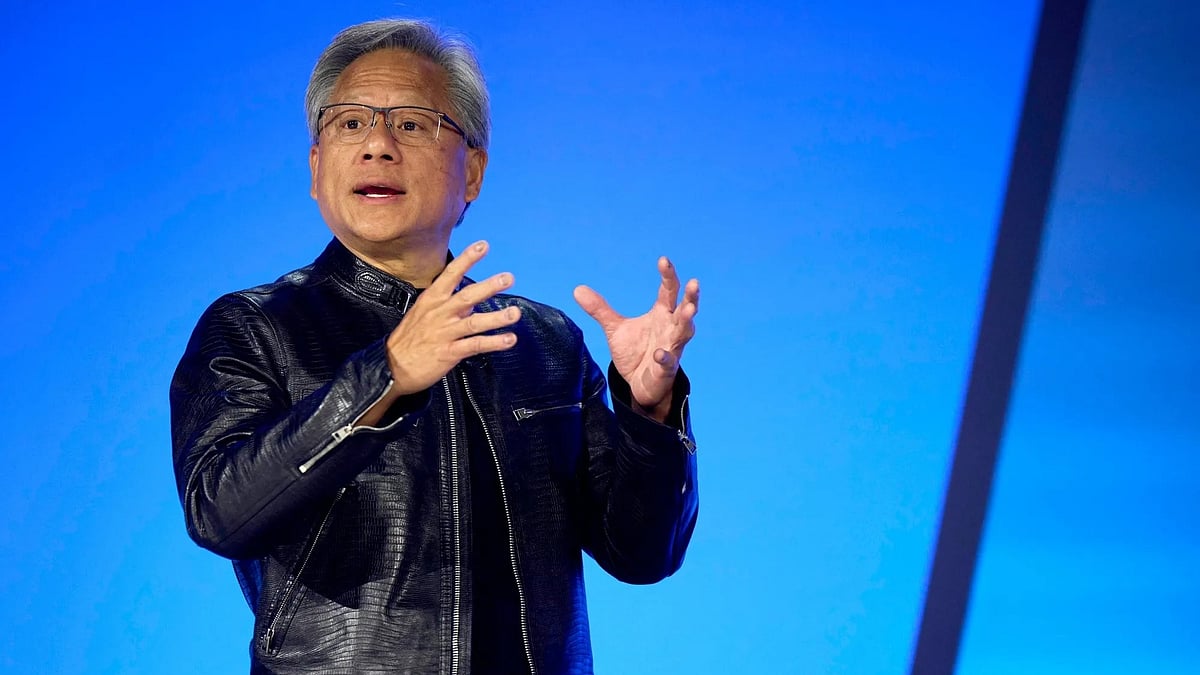
Jensen Huang has admitted infidelity and apologised to his family as Nvidia investigates reports that he was targeted by a foreign intelligence operation
US officials reportedly believe Alice Huang, a businesswoman linked to Nvidia customer Megaspeed, worked for Chinese intelligence; Beijing rejects the accusations
Nvidia says it has no reason to believe company secrets or US national security were compromised, while congressional leaders have requested a briefing
Nvidia has launched an independent investigation into whether chief executive Jensen Huang was targeted by a foreign intelligence operation, after he admitted infidelity amid reports linking him to a Chinese businesswoman whom US officials suspect of working for Beijing.
The inquiry will be overseen by a committee of independent directors assisted by external lawyers. Nvidia said Huang would continue leading the company during the investigation and had pledged his full cooperation.
In a message to employees on Sunday, Huang apologised to his wife, children and colleagues.
“I was unfaithful to my wife. My actions hurt her and our children. There is no excuse for what I did,” he wrote.
He accepted responsibility for the damage caused and said he would work to rebuild confidence in his leadership. Addressing the security concerns, he committed himself to protecting Nvidia and supporting American national security.
The admission concerns his personal conduct. The separate claims about espionage and access to sensitive information remain allegations under examination.
Nvidia’s board said it had “no reason to believe that either national security or NVIDIA secrets were compromised”, while stressing that its inquiry would examine all available information.
The controversy centres on Alice Huang, also known as Huang Le, a Chinese national associated with Singapore-based data centre company Megaspeed. Despite sharing a surname, she is unrelated to Nvidia’s chief executive.
According to The New York Times, US intelligence officials concluded that she had been recruited by China’s Ministry of State Security to gather information about Huang, Nvidia and the American artificial intelligence industry. The reporting relies on unnamed sources familiar with the intelligence findings.
The newspaper reported that surveillance of Alice Huang revealed communications with an American citizen, subsequently identified as Jensen Huang through a process known as unmasking. This involves authorised disclosure of an American’s identity concealed in intelligence reporting.
Alice Huang did not respond to the newspaper’s requests for comment, according to the supplied reports. Her suspected intelligence role has not been established through a publicly reported criminal conviction.
Her professional history has also attracted attention. A profile attributed to her in a Chinese private-fund database listed previous roles at Hunan TV, state broadcaster CCTV, HSBC, CITIC Securities and Shanghai Hexi Investment Management, also known as Hexi Capital.
Those credentials require caution: Hindustan Times said it could not independently verify them, while the New York Post reported that a Hunan TV executive said he had never heard of her.
According to the supplied reporting, she became managing director of Megaspeed around March 2023. The company was reportedly owned by Huang Le Limited before ownership transferred to Swiftdata in November that year, around the time she left her formal directorship.
Megaspeed’s purchases of advanced computing equipment form another strand of the scrutiny.
Trade records obtained from ImportGenius and cited in the reports showed that its Malaysian sister company bought at least $4.8 billion worth of advanced AI equipment containing Nvidia chips and technology between June 2024 and February 2026. That figure refers to equipment purchases, rather than necessarily representing direct chip sales by Nvidia.
The New York Times reported that the US Commerce Department began investigating Megaspeed in late 2024 over suspicions that it was helping Chinese companies obtain restricted technology. An official visiting a Malaysian data centre reportedly found Nvidia equipment still boxed, prompting questions about whether the facility was being used as a transit point.
Nvidia has maintained that its commercial dealings with Megaspeed were routine and has rejected suggestions that it participated in diverting chips to China. Megaspeed told the Times that its current leadership took the allegations seriously and had appointed outside lawyers to investigate.
A further question concerns what Nvidia knew about the reported intelligence concerns. The company has distinguished awareness of earlier chip-diversion allegations, which it says were examined and debunked, from knowledge of a suspected intelligence operation targeting its chief executive.
In a statement supplied to the BBC, Nvidia said it had not been aware of those intelligence concerns and would have expected the US government to notify it of a genuine threat.
The affair has now drawn congressional attention. House Foreign Affairs Committee chairman Brian Mast, China select committee chairman John Moolenaar and House Intelligence Committee chairman Rick Crawford requested a closed-door briefing with Huang on 18 November.
Their letter asked him to respond by 11 November and sought information about Nvidia’s protections against foreign espionage, citing concerns about Chinese access to sensitive American technology and information.
The Times also reported that President Donald Trump had been briefed on the intelligence findings about a year earlier but chose not to act. Trump subsequently defended Huang’s character, while saying he had not discussed the allegations with him.
Beijing has rejected the espionage accusations. Chinese Foreign Ministry spokesperson Guo Jiakun described them as unsubstantiated and as smears against China, according to the supplied material.
The dispute reaches beyond one executive because Nvidia’s processors underpin much of the global AI industry. Companies including OpenAI and Meta use its technology to develop and operate AI systems.
Washington has restricted exports of advanced AI chips to China since 2022, citing national security concerns, including their potential military applications. Huang has advocated continued commercial engagement with China, arguing that restrictions can encourage the development of competing domestic technology.
The allegations also emerge ahead of Trump’s planned talks with President Xi Jinping in China, where technology restrictions and trade tensions are expected to feature. Chinese companies are investing in alternative computing capabilities as Beijing presses Washington to ease restrictions.
For investors, the immediate uncertainty concerns the investigation’s findings and any implications for Huang’s leadership. Reports put Nvidia’s market value at approximately $4.5 trillion. Overnight trading indicated a possible decline of around 4 per cent before Monday’s New York opening; that indication was not a closing-market result.
Huang co-founded Nvidia in 1993, eight years after marrying Lori Mills, whom he met while studying electrical engineering at Oregon State University. They have two children, Madison and Spencer.
The couple established the Jen-Hsun and Lori Huang Foundation in 2007. Its assets have grown alongside Nvidia’s share price, with reported estimates exceeding $9 billion, and its donations include substantial support for engineering programmes at Oregon State and Stanford.
Nvidia’s investigation must now assess whether the reported relationship created security vulnerabilities or exposed sensitive information. Its board’s initial position remains that it has no reason to believe such a compromise occurred.
Join our official telegram channel (@nationalherald) and stay updated with the latest headlines