World
Iran dismisses Trump’s threats, warns of response to any US attack
Iran’s armed forces are ready to “immediately and powerfully” respond to any aggression, says foreign minister Abbas Araghchi
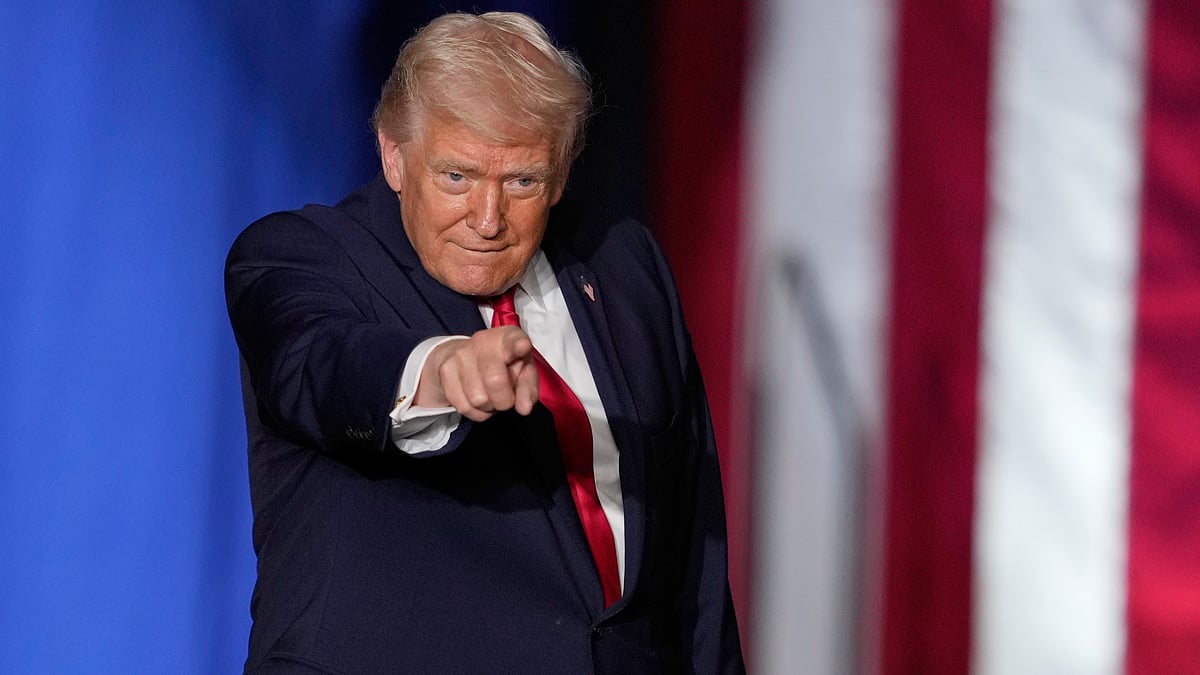
Iran’s top diplomat has struck a defiant tone amid escalating tensions with Washington, declaring that the country’s armed forces stand poised to deliver an “immediate and powerful” response to any US military action, just hours after President Donald Trump renewed his threat of force.
In a strongly worded social media post on Wednesday evening, Iranian foreign minister Abbas Araghchi said the nation’s military was on high alert and ready to retaliate without hesitation. “Our brave armed forces are prepared — with their fingers on the trigger — to immediately and powerfully respond to ANY aggression against our beloved land, air, and sea,” he wrote.
Araghchi said Iran had drawn “valuable lessons” from Israel’s days-long military offensive last June, an assault that was followed by US strikes on Iranian nuclear facilities under the Trump administration. Those experiences, he said, had only strengthened Tehran’s readiness.
“The valuable lessons learned from the 12-Day War have enabled us to respond even more strongly, rapidly, and profoundly,” Araghchi added.
His remarks came shortly after Trump revived threats of military action, as Washington ramps up pressure on Tehran over its recent crackdown on antigovernment protests. In a lengthy post on his Truth Social platform, the US president claimed that a “massive Armada” was heading toward Iran, warning that the fleet was “ready, willing, and able” to carry out its mission “with speed and violence, if necessary”.
Trump urged Tehran to return to negotiations, saying time was running out. “Hopefully Iran will quickly ‘Come to the Table’ and negotiate a fair and equitable deal – NO NUCLEAR WEAPONS – one that is good for all parties,” he wrote. “MAKE A DEAL!”
The president’s warnings came despite his repeated assertions that last year’s US strikes had “obliterated” Iran’s nuclear programme. He also cautioned that any future attack, should Iran refuse to strike a deal, would be “far worse” than those carried out in June.
Trump has repeatedly signalled he is weighing military action in response to Iran’s internal unrest, a stance that has fuelled anxiety across an already volatile region. While tensions briefly eased after demonstrations were quelled and Trump said Tehran had pledged not to carry out planned executions, they flared anew this week with the deployment of the USS Abraham Lincoln aircraft carrier to the region.
The move has heightened fears of a direct confrontation. Adnan Hayajneh, a professor of international relations at Qatar University, described the carrier’s deployment as a deliberate “show of power”, intended to send Tehran a blunt message. “If you cannot follow exactly what we want, we will let the missiles fly,” he said.
Hayajneh noted that Washington was still weighing diplomacy against military escalation, but said such threats were part of what he called “the American way” of forcing Iran back to the negotiating table. He added that the US was seeking to curb Iran’s nuclear and missile ambitions at a moment when Tehran is weakened domestically, regionally, and internationally.
Iran, for its part, insists its nuclear programme is strictly civilian and that it has the sovereign right to enrich uranium. The whereabouts of its stockpile of highly enriched uranium remain unclear following the June strikes.
Iranian President Masoud Pezeshkian weighed in on Tuesday, condemning the latest US threats as destabilising. He said they were “aimed at disrupting the security of the region and will achieve nothing other than instability”.
Araghchi also reiterated that Iran would not resume nuclear negotiations under the shadow of military intimidation. “Negotiations don’t go along with threats,” he told state media, stressing that talks could only occur once “menaces and excessive demands” ceased. He also denied reports of recent contact with US envoy Steve Witkoff.
Yet, even as Iran projects military readiness, Araghchi underscored Tehran’s openness to diplomacy — provided it is free of coercion. In his social media post, he said Iran had always welcomed a “mutually beneficial, fair and equitable” nuclear deal that guarantees the country’s right to peaceful nuclear technology while ensuring there are no nuclear weapons.
Al Jazeera reported that intense diplomatic activity was unfolding behind the scenes in Tehran, with mediators scrambling to defuse the crisis. “Publicly, Iran is signalling readiness to fight,” he said, “but also readiness to talk—whenever negotiations are proper and not imposed through military threats.”
Turkish foreign minister Hakan Fidan echoed that view, suggesting Iran remained prepared to re-engage on the nuclear file.
Meanwhile, the military posturing continues. Both Iran and the US Air Force have announced drills near the Strait of Hormuz, while Iran’s Islamic Revolutionary Guard Corps has warned that neighbouring countries would be deemed “hostile” if their territory is used in any US attack. Tehran has also reminded the region of its June strike on US forces stationed at Qatar’s Al Udeid airbase.
Saudi Arabia and the United Arab Emirates, which host US forces, have said they will not allow their airspace to be used for an attack on Iran. Egypt, too, has stepped in diplomatically, with foreign minister Badr Abdelatty holding separate talks with Araghchi and Witkoff in a bid to calm tensions.
Despite these efforts, Hayajneh expressed scepticism that regional calls for restraint would sway Washington. “At the end of the day,” he said, “Trump listens to himself.”
Join our official telegram channel (@nationalherald) and stay updated with the latest headlines