World
Iran’s Parliament speaker trolls Trump for ‘manipulative’ Truth Social posts
Critics say US President’s Fri–Mon posts sway oil and stock prices; Iran speaker M.B. Ghalibaf now echoes claim
On Sunday evening, Iran’s Parliament speaker M.B. Ghalibaf posted on X: “Heads-up: Pre-market so-called ‘news’ or ‘Truth’ is often just a setup for profit-taking. Basically, it’s a reverse indicator. Do the opposite: If they pump it, short it. If they dump it, go long. See something tomorrow? You know the drill.”
By Monday, the cryptic post had been viewed over eight million times and reposted nearly 9,000 times, largely by American users who recognised the satire. Ghalibaf appeared to be anticipating the now-familiar Monday morning messaging from US President Donald Trump on Truth Social.
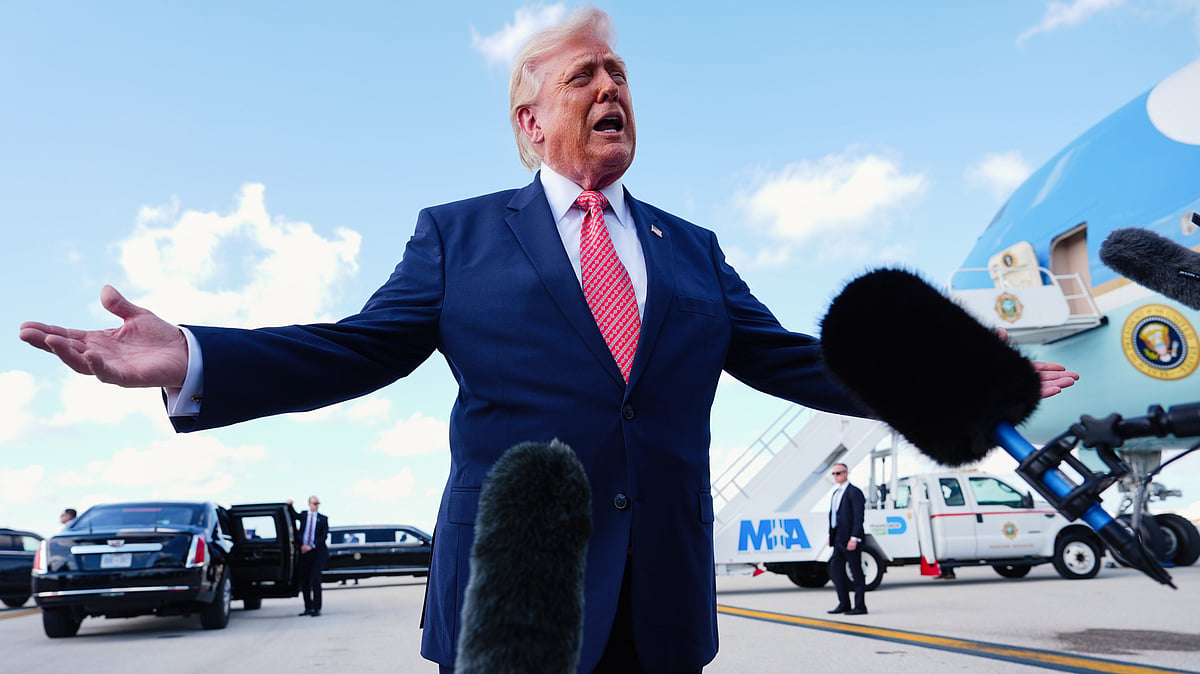
Sure enough, Monday’s early news cycle centred on peace talks with what Trump described as “reasonable leaders” in Tehran. Speaking to reporters aboard Air Force One while returning to Washington DC from a weekend trip, and in an interview with the Financial Times published the same morning, the US President struck an upbeat tone.
He claimed significant progress had been made with a “new and more reasonable regime in Iran” and suggested Tehran had agreed to major concessions. Markets reacted along expected lines: oil prices steadied and began easing, broadly in line with the pattern Ghalibaf had hinted at.
By late afternoon, however, the messaging shifted dramatically. Trump warned that the US could target Iran’s power plants, oil wells and desalination facilities, and even take control of Kharg Island, unless Tehran agreed to a deal. Meanwhile, secretary of state Marco Rubio said the military campaign was progressing on schedule and could achieve its objectives within months rather than years.
Ghalibaf’s Sunday post appeared to mock what critics describe as a recurring cycle of optimistic peace signals followed by hardline warnings from Washington in recent weeks. The pattern has become familiar enough that the Iranian Parliament speaker openly referenced it, while seasoned traders on Wall Street appeared to understand the implication.
Retail investors, less attuned to the rhythm, were left exposed to the volatility. The post also served as a signal that Tehran believes it has identified the communications playbook shaping expectations in oil and equity markets.
Putting the developments in context, Trump said aboard Air Force One on Sunday that negotiations with Iran were going “extremely well”, adding that Tehran had agreed to allow 20 oil tankers to pass through the Strait of Hormuz from Monday morning and had accepted several US demands. White House press secretary Karoline Leavitt told reporters, “Iran has been defeated. Any violence beyond this point will be because Iran refused to understand they have already been defeated.”
Iran moved quickly to reject claims that any talks had taken place, either in Islamabad or elsewhere. Reports also suggested the US was deploying additional troops in the region, while Iranian sources warned they were aware of what they described as quiet troop movements across Gulf countries. Other reports indicated Washington was examining a range of options, including potential moves involving islands in the Persian Gulf and control over Iranian uranium assets.
In the Financial Times interview, Trump said, “To be honest with you, my favourite thing is to take the oil in Iran,” comparing the approach to Venezuela, where Washington has sought long-term control over oil assets.
“…some stupid people back in the US say: ‘Why are you doing that?’ But they are stupid people… maybe we take Kharg Island, maybe we do not. We have a lot of options,” he said, adding that such a move could require US forces to remain in the region for an extended period.
He also suggested Iran had limited defensive capability on the island. “We could take it very easily,” he said.
Join our official telegram channel (@nationalherald) and stay updated with the latest headlines