World
Iran protests intensify despite Internet blackout after exiled crown prince’s call
Demonstrations stretch into Friday as authorities warn of crackdown and accuse foreign powers of fomenting unrest
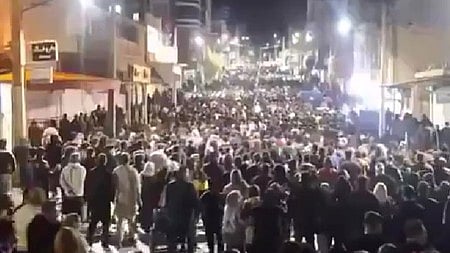
Protests in Iran intensified into Friday morning after the country’s exiled former crown prince, Reza Pahlavi, called on citizens to take to the streets, defying a nationwide shutdown of the Internet and international telephone services imposed by the authorities.
Activists shared short video clips online before communications were cut, appearing to show crowds chanting slogans against the government around bonfires in Tehran and other cities, with debris scattered across streets. The scale of the demonstrations could not be independently verified because of the communications blackout.
Iranian state media acknowledged the unrest for the first time on Friday, alleging that “terrorist agents” linked to the United States and Israel were behind acts of arson and violence. It reported unspecified “casualties” but provided no further details.
In a brief televised address, Iran’s 86-year-old Supreme Leader Ayatollah Ali Khamenei signalled a tough response, accusing protesters of acting to please foreign leaders. As members of the audience chanted “Death to America!”, Khamenei said demonstrators were “ruining their own streets to make the president of another country happy”, referring to US President Donald Trump.
The protests, which began in late December over Iran’s worsening economic conditions, have steadily evolved into the most serious challenge to the country’s theocratic leadership in several years. A collapsing currency, tightened sanctions and the aftershocks of last year’s conflict with Israel have fuelled public anger.
The current wave of demonstrations is also being closely watched as a test of Reza Pahlavi’s influence. The US-based son of Iran’s last shah, overthrown in the 1979 Islamic Revolution, urged Iranians to protest at 8 pm on Thursday and again on Friday.
In some demonstrations, crowds were heard chanting slogans in support of the monarchy, a striking development given that such expressions once carried the death penalty.
According to the US-based Human Rights Activists News Agency, at least 42 people have been killed in protest-related violence so far, while more than 2,270 have been detained. Iranian authorities have not confirmed those figures.
Analysts say the communications blackout was intended to limit the spread of images and information. “This is exactly why the internet was shut down — to prevent the world from seeing the protests,” said Holly Dagres, a senior fellow at the Washington Institute for Near East Policy. She warned that the blackout could also give security forces greater freedom to use force against demonstrators.
Pahlavi accused the government of trying to silence dissent by cutting off all lines of communication and urged European leaders to join the United States in pressuring Tehran. He called for technical and diplomatic efforts to restore internet access so that “the voice and the will” of Iranians could be heard.
The unrest has drawn sharp rhetoric from Washington. President Trump reiterated his warning that the United States would respond forcefully if Iranian authorities killed peaceful protesters, saying Tehran had been told it would “pay hell” for such actions. However, he ruled out meeting Pahlavi, saying it would not be appropriate for the US president to back any individual as a potential successor.
Despite repeated threats from abroad, Iran’s leadership has remained defiant. Yet with protests spreading, communications cut and public anger mounting, the confrontation between the state and its critics appears set to deepen in the days ahead.
With PTI inputs
Join our official telegram channel (@nationalherald) and stay updated with the latest headlines