World
Iran war: Confusion over ‘safe passage’ claims continue to cloud India’s Hormuz diplomacy
Jaishankar says no blanket deal with Iran as tanker reaches Mumbai and New Delhi balances energy security with diplomatic pressure
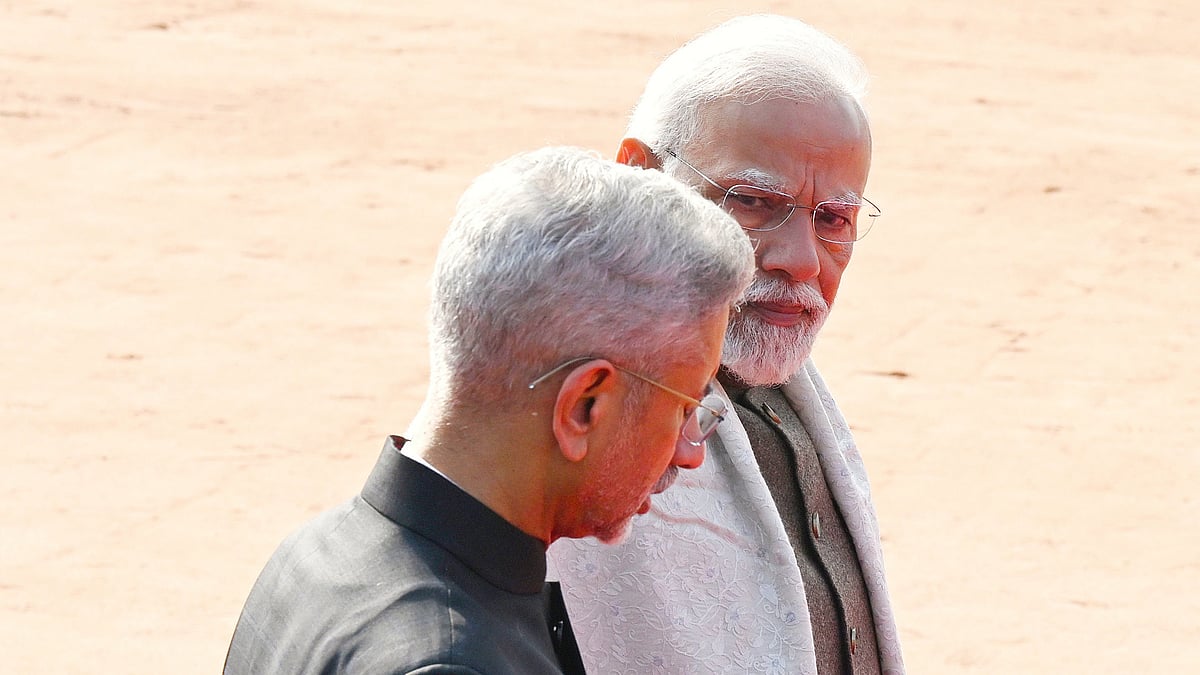
Confusion over claims of “safe passage” for Indian vessels through the Strait of Hormuz has highlighted the flip-flop nature of New Delhi’s diplomatic approach to the ongoing crisis in West Asia, with External Affairs Minister S. Jaishankar stating that India has no blanket arrangement with Iran for the movement of Indian-flagged ships.
Jaishankar said negotiations with Tehran had enabled some Indian tankers to transit the crucial shipping corridor but stressed that each movement was handled individually.
“India does not have a blanket arrangement. Every ship movement is an individual happening,” Jaishankar said in an interview with the Financial Times during a visit to Brussels.
The minister said ongoing discussions with Iranian authorities had already yielded results.
“I am at the moment engaged in talking to them and my talking has yielded some results,” he said, adding that talks would continue as many more vessels remained in the region.
The comments came amid uncertainty triggered earlier this week by reports that Iran had offered assurances allowing Indian ships to pass safely through the Strait of Hormuz — claims later publicly denied by Tehran.
The episode has underscored the delicate diplomatic balancing act New Delhi faces as the conflict threatens a maritime route that handles roughly 20 per cent of global oil and LNG (Liquefied Natural Gas) shipments.
Conflicting signals over shipping security
The confusion began when sections of the Indian media reported that Tehran had conveyed assurances that Indian-flagged vessels would not be obstructed in the strait despite the escalating conflict in West Asia.
The reports, attributed to unnamed sources, suggested India had secured diplomatic guarantees to ensure uninterrupted passage for its ships through the narrow waterway linking the Persian Gulf and the Gulf of Oman.
Iranian officials soon rejected the claim, stating that no special arrangement had been offered to India, according to statements carried by international media.
The denial cast doubt on earlier reports and highlighted the uncertainty surrounding maritime navigation in the strait as hostilities intensified in the region.
Iran has maintained that it has not formally closed the Strait of Hormuz, even as attacks on shipping have increased since the conflict began in late February, according to maritime security assessments.
At least 16 vessels have been attacked in or near the waterway since the hostilities escalated, according to security analyses cited by media reports.
Indian officials have said that around 28 Indian-flagged vessels carrying about 778 Indian crew members are currently operating in the wider Gulf region.
Against this backdrop, Jaishankar has been in contact with Iranian Foreign Minister Seyed Abbas Araghchi to discuss the safety of maritime traffic and the protection of India’s energy supply routes.
Officials said the conversations have focused on ensuring the safe movement of merchant shipping through the Gulf, although neither side has confirmed any formal arrangement for Indian vessels.
India backs anti-Iran UN resolution
Even as bilateral talks with Tehran continued, India also joined international efforts at the United Nations to address the escalating attacks linked to the crisis.
New Delhi co-sponsored a United Nations Security Council resolution condemning what it described as Iran’s “egregious” attacks on Gulf Cooperation Council countries and Jordan.
The Bahrain-led resolution was adopted by the 15-member council with 13 votes in favour, while China and Russia abstained.
More than 130 countries supported the measure, which called for an immediate cessation of hostilities and emphasised that navigational rights for merchant vessels must be respected.
The resolution also condemned attempts to obstruct international shipping through the Strait of Hormuz.
The diplomatic move illustrated India’s attempt to balance pressure on Tehran in multilateral forums while continuing direct engagement to secure maritime passage for ships carrying energy supplies to the country.
Join our official telegram channel (@nationalherald) and stay updated with the latest headlines