World
US voters have delivered 'no to war' message to Trump: Iran's chief negotiator on midterms
Mohammed Bagher Ghalibaf says Tehran endorses the American public's verdict after Republican losses in the midterm elections
Iran's chief negotiator with the United States, Mohammed Bagher Ghalibaf, has said American voters have sent a clear message against war, claiming that the Republican Party's losses in the midterm elections reflect public opposition to President Donald Trump's military campaign against Iran.
"We endorse this message," Ghalibaf, who is also Iran's parliament speaker, wrote on X, referring to the electoral outcome.
"If the US [government] betrays their public will to serve international paymasters and blackmailers, it will learn our NO comes with a Nightmare," he warned.
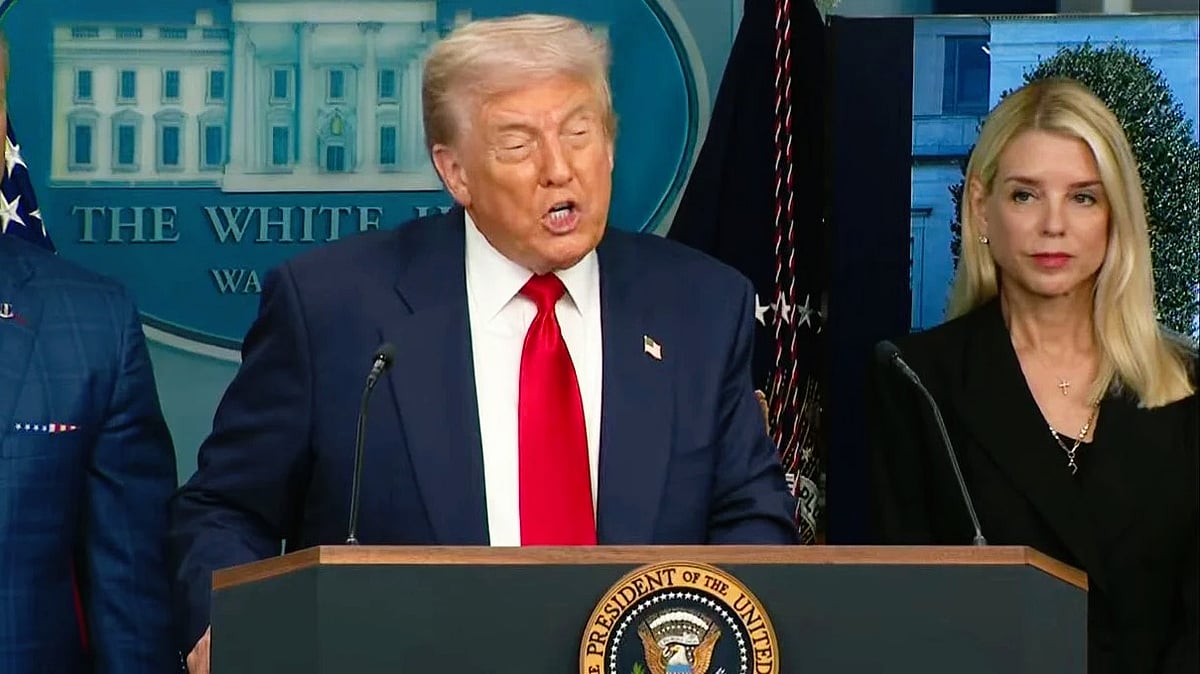
Trump acknowledged on Tuesday that the poor performance of Republican congressional candidates was partly linked to the war and the resulting rise in petrol prices. However, he said he did not regret launching a joint military attack with Israel on Iran in February.
Speaking to Fox News, Trump said some voters supported his actions against Iran but were unwilling to bear the short-term consequences of higher fuel prices.
"I think a part of it was Iran," he said, adding that he understood voters' concerns over petrol prices.
In an interview with CBS News, Trump said the conflict would end "when I say it ends".
Iran's Supreme Leader Mojtaba Khamenei, who has not appeared in public since the war began, said he did not expect US policy towards Tehran to change following the elections. In a statement, he warned that anyone expecting a shift in American "hostility towards the Iranian nation" was "gravely mistaken".
Trump has repeatedly warned in recent weeks that the US and Israel could resume full-scale military operations after the midterms if negotiations with Iran fail to produce an agreement.
In an interview with the Financial Times ahead of the elections, he said the US and Israel were "locked and loaded if we need to go", but suggested further military action might not be necessary.
Meanwhile, tensions continued to escalate around the strategically important Strait of Hormuz.
Iran's Islamic Revolutionary Guard Corps (IRGC) said on Wednesday that four oil tankers had caught fire after hitting naval sea mines in the waterway. It claimed two vessels were still burning and that two other tankers had been intercepted for attempting to use a prohibited southern route.
However, BBC Verify said it had found no evidence that four tankers had been destroyed.
Separately, the UK Maritime Trade Operations centre said a tanker was struck by two unidentified projectiles about 14 nautical miles north-east of Limah, off Oman's Musandam peninsula, on Tuesday evening. No casualties were reported.
On Monday, an Indian crew member aboard a wooden sailing vessel, or dhow, was killed in an attack north-east of Limah. Omani authorities rescued 13 other crew members.
The IRGC also claimed on Wednesday that it had shot down another US MQ-9 drone over the Strait of Hormuz. It had made a similar claim on Monday night, when US officials said American forces carried out limited strikes on Iran's Qeshm Island in response to the IRGC firing on a US aircraft.
Indirect negotiations to end the conflict have remained stalled for months. Iranian President Masoud Pezeshkian said on Tuesday that his government had been pursuing a resolution through dialogue, warning that a renewed war would benefit no one.
He also said Mojtaba Khamenei had authorised the government to negotiate on issues that had previously been considered off-limits.
Iranian foreign ministry spokesperson Esmaeil Baqai said on Monday that negotiations mediated by Qatar were based on a seven-step proposal submitted by Tehran in September. He added that the proposal had since been condensed and could be implemented within two days.
The Strait of Hormuz, through which around a fifth of global oil and gas shipments normally pass, has remained at the centre of the confrontation. The waterway was effectively closed after the war began, following Iranian missile and drone attacks on commercial vessels and a US naval blockade.
A preliminary agreement between Washington and Tehran to end the conflict and reopen the strait was reached in June but collapsed within weeks after attacks on shipping resumed and the US reinstated its blockade.
Iran has insisted on retaining some control over the waterway, while the US military has been providing protection to tankers carrying oil from Gulf Arab states.
Join our official telegram channel (@nationalherald) and stay updated with the latest headlines