World
About 1,900 Iranian troops, commanders killed in strikes: Israel
Military continues attacks in Iran and Lebanon as tensions escalate and civilian toll in Israel rises
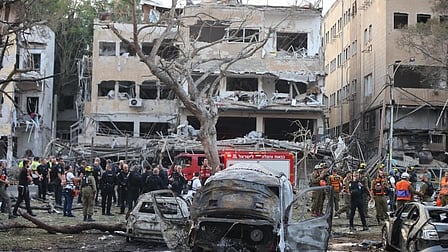
Israel’s military has said that around 1,900 Iranian soldiers and commanders have been killed since the start of the ongoing conflict, as Israeli forces continue strikes on targets in Iran and Lebanon.
Military spokesperson Effie Defrin made the claim during a press briefing on Monday, stating that Israel had carried out extensive operations since US-Israeli strikes on Iran began on 28 February. He also suggested that Israel would not rule out targeting Iran’s newly announced supreme leader if he posed a threat.
Defrin confirmed that a second person died earlier on Monday following an Iranian missile attack on Israel. The latest fatality brings the total number of civilians killed in Iranian strikes on the country to 12. In addition, two Israeli soldiers have died during combat with Hezbollah fighters in Lebanon.
According to Israel’s Health Ministry, 2,238 people have been taken to hospitals across the country since the beginning of the conflict. Of these, 91 remain hospitalised.
Israeli air operations continued on Monday, with the air force carrying out strikes in Tehran, Isfahan and areas in southern Iran. Defrin said the attacks were part of an ongoing campaign aimed at weakening Iran’s military capabilities.
He added that Israeli warplanes had struck six military airports in Iran since the start of the offensive. The strikes also targeted aircraft belonging to the Quds Force, destroying 16 cargo planes that Israel claims were used to transport weapons and funds to allied groups across the region.
Israeli forces have also intensified operations in Lebanon. According to Defrin, airstrikes in Beirut targeted 35 high-rise buildings believed to be used by Hezbollah. He said more than 700 Hezbollah sites across Lebanon had been struck so far.
Defrin indicated that Israeli military operations would continue for as long as necessary.
When asked whether Israel intended to target Iran’s newly announced Supreme Leader, Mojtaba Khamenei, whose appointment was made public on Sunday, the spokesperson said that anyone who posed a threat to Israel could become a target.
Meanwhile, US President Donald Trump said on 9 March that the joint US-Israeli strikes on Iran could end soon, though he did not provide a specific timeline. Speaking at a press conference in Florida, Trump said the campaign would conclude “very soon”, but acknowledged that it was unlikely to finish within the week.
His remarks appeared to send mixed signals, as he suggested that many US objectives had already been achieved while also backing earlier comments by US defence secretary Pete Hegseth, who warned that the conflict was only beginning.
Israel’s military has said that around 1,900 Iranian soldiers and commanders have been killed since the start of the ongoing conflict, as Israeli forces continue strikes on targets in Iran and Lebanon.
Military spokesperson Effie Defrin made the claim during a press briefing on Monday, stating that Israel had carried out extensive operations since US-Israeli strikes on Iran began on 28 February. He also suggested that Israel would not rule out targeting Iran’s newly announced supreme leader if he posed a threat.
Defrin confirmed that a second person died earlier on Monday following an Iranian missile attack on Israel. The latest fatality brings the total number of civilians killed in Iranian strikes on the country to 12. In addition, two Israeli soldiers have died during combat with Hezbollah fighters in Lebanon.
According to Israel’s Health Ministry, 2,238 people have been taken to hospitals across the country since the beginning of the conflict. Of these, 91 remain hospitalised.
Israeli air operations continued on Monday, with the air force carrying out strikes in Tehran, Isfahan and areas in southern Iran. Defrin said the attacks were part of an ongoing campaign aimed at weakening Iran’s military capabilities.
He added that Israeli warplanes had struck six military airports in Iran since the start of the offensive. The strikes also targeted aircraft belonging to the Quds Force, destroying 16 cargo planes that Israel claims were used to transport weapons and funds to allied groups across the region.
Israeli forces have also intensified operations in Lebanon. According to Defrin, airstrikes in Beirut targeted 35 high-rise buildings believed to be used by Hezbollah. He said more than 700 Hezbollah sites across Lebanon had been struck so far.
Defrin indicated that Israeli military operations would continue for as long as necessary.
When asked whether Israel intended to target Iran’s newly announced supreme leader, Mojtaba Khamenei, whose appointment was made public on Sunday, the spokesperson said that anyone who posed a threat to Israel could become a target.
Meanwhile, US President Donald Trump said on 9 March that the joint US-Israeli strikes on Iran could end soon, though he did not provide a specific timeline. Speaking at a press conference in Florida, Trump said the campaign would conclude “very soon”, but acknowledged that it was unlikely to finish within the week.
His remarks appeared to send mixed signals, as he suggested that many US objectives had already been achieved while also backing earlier comments by US defence secretary Pete Hegseth, who warned that the conflict was only beginning.
With IANS inputs
Join our official telegram channel (@nationalherald) and stay updated with the latest headlines