World
Jaishankar to host Quad ministers meet in Delhi amid Iran war
Critical minerals, maritime security and technology partnerships top agenda as India hosts key ministerial meeting ahead of Quad summit later this year
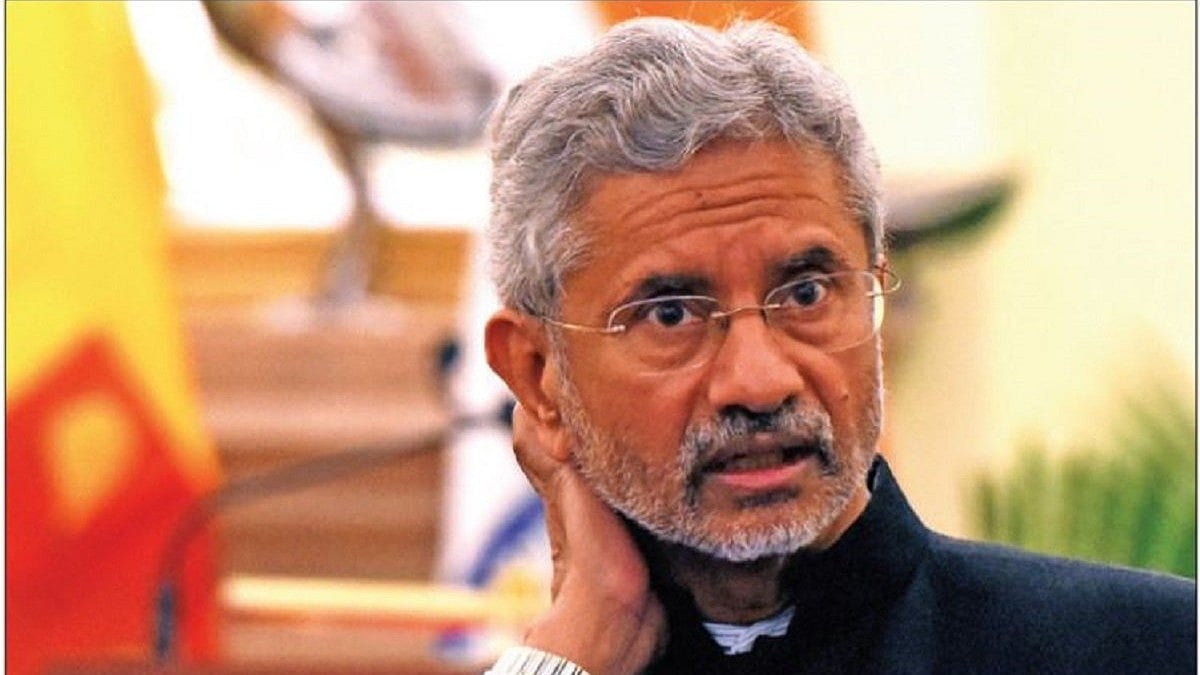
The foreign ministers of the Quad nations will meet in New Delhi on Tuesday against the backdrop of the ongoing conflict in West Asia, growing Chinese assertiveness in the Indo-Pacific and renewed scrutiny over the future trajectory of the four-nation grouping, which has itself weathered periods of uncertainty and near-collapse since its inception.
External Affairs Minister S. Jaishankar will host the meeting in India's capacity as the current chair of the Quadrilateral Security Dialogue, bringing together US Secretary of State Marco Rubio, Australian Foreign Minister Penny Wong and Japanese Foreign Minister Toshimitsu Motegi.
The ministers are expected to discuss the economic fallout of the West Asia crisis, regional security developments, maritime cooperation, critical minerals, emerging technologies and ways to strengthen supply-chain resilience in the Indo-Pacific.
The Ministry of External Affairs (MEA) said the meeting would focus on advancing the Quad's vision of a “free and open Indo-Pacific”, while reviewing progress on ongoing initiatives and exchanging views on global developments of mutual concern.
Grouping faces strategic test
The meeting comes at a significant moment for the Quad, which has expanded rapidly over the past few years but continues to face questions about its long-term cohesion amid shifting geopolitical realities and differing national priorities among its members.
Originally conceived in 2007 following cooperation among India, the United States, Japan and Australia during relief operations after the 2004 Indian Ocean tsunami, the Quad's first iteration quickly lost momentum.
The grouping effectively collapsed in 2008 after Australia, under then Prime Minister Kevin Rudd, withdrew from the arrangement amid concerns over relations with China, leaving the initiative dormant for nearly a decade.
The Quad was revived in 2017 as concerns intensified over China's expanding military footprint, territorial claims and growing influence across the Indo-Pacific.
Since then, the grouping has evolved from a largely strategic consultation mechanism into a broader platform covering maritime security, infrastructure, connectivity, critical technologies, healthcare, disaster relief and resilient supply chains.
However, analysts have continued to debate whether the Quad can maintain a unified strategic vision given the members' varying economic relationships with China and changing political dynamics in their respective countries.
The return of Donald Trump to the White House has also prompted questions in some quarters over the future direction of US engagement with multilateral groupings, although senior American officials have repeatedly reaffirmed support for the Quad.
Rubio dismisses doubts
Speaking after bilateral talks with Jaishankar on Saturday, Rubio sought to dispel any concerns regarding Washington's commitment to the grouping.
“The Quad is a forum of alignment between four countries which are not just strategically aligned on a bunch of key issues but four countries that have the ability to varying degrees to influence global events on these topics of mutual interest,” he said.
Responding to questions about the Trump administration's approach towards the grouping, Rubio noted that the Quad's current framework had itself emerged during Trump's first term.
“I want to remind you that the Quad, actually in the current form, started during President Trump's first administration. It picked up then and it has moved on,” he said.
Rubio argued that the Indo-Pacific's importance would continue to grow as a centre of global trade, maritime activity and energy flows.
“The work on Quad goes on. I think two days from now, you will see us on the podium talking about the Quad. And I can assure you, we will have a good, strong story to tell,” he added.
Maritime security and critical minerals
Officials familiar with preparations for the meeting said the ministers are expected to deliberate on the conflicts in Ukraine and West Asia while assessing their implications for regional stability and economic security.
Particular attention is likely to be devoted to critical minerals and advanced technologies, sectors increasingly viewed as essential for economic competitiveness and national security.
The four countries are also expected to review progress made under various maritime initiatives announced at previous Quad summits, including measures aimed at strengthening maritime domain awareness and enhancing security cooperation across the Indo-Pacific.
Groundwork for leaders' summit
Tuesday's meeting is expected to help shape the agenda for the next Quad leaders' summit, which India is likely to host later this year.
Highlighting the rationale behind the grouping, Jaishankar said the four countries shared common democratic values and a commitment to international law.
“We are doing a lot with each other because we are maritime powers. And I see that growing,” he said.
“We are market economies, we are open societies. We want business to be conducted and life to run on the basis of international law and market practices.”
“It is very important that the Quad cooperation as maritime democracies continues, and that is exactly what you will see,” the minister added.
For India, the New Delhi meeting represents both an opportunity to consolidate the Quad's expanding agenda and a test of the grouping's ability to remain strategically relevant in an increasingly fragmented geopolitical environment.
Join our official telegram channel (@nationalherald) and stay updated with the latest headlines