World
London Diary: “No Urdu please, we’re Brits”
An indication of the increasing significance of the Muslim vote in Britain, even as it’s being sought to be marginalised in India
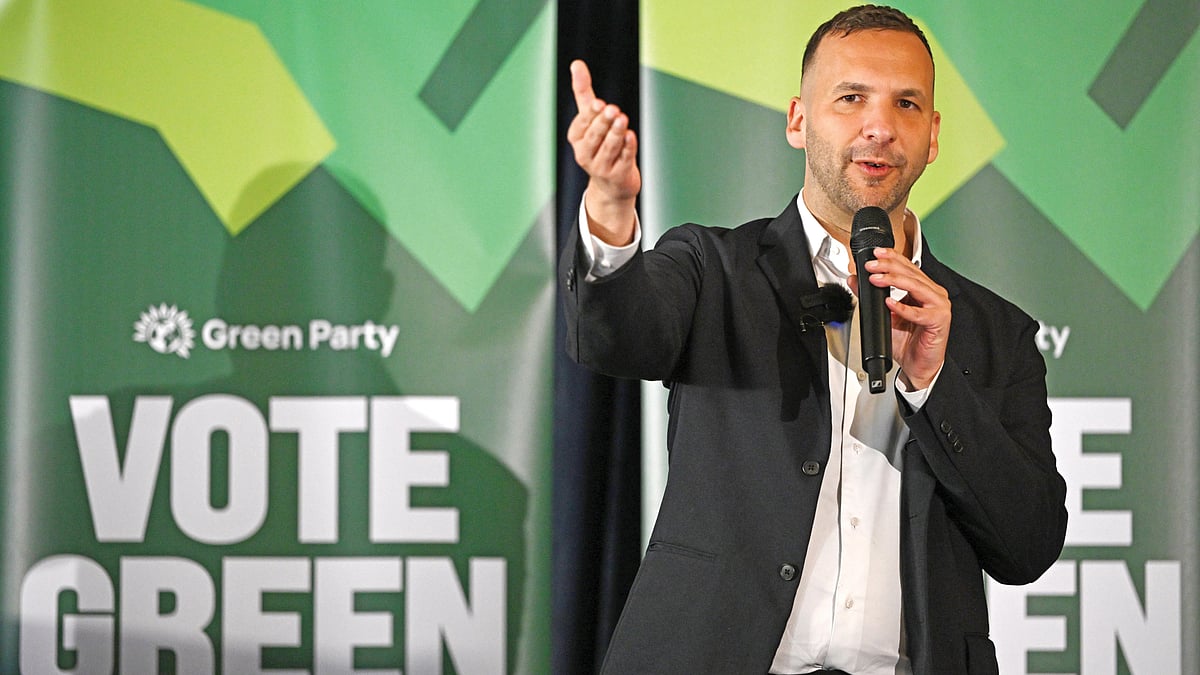
In a country which takes pride in its multiculturalism, and where the government spends an estimated £140-150 million a year on interpretation facilities, a row over Urdu-speaking voters being canvassed in their own language appears rather odd.
It is also, though, an indication of the increasing significance of the Muslim vote in Britain (even as it’s being sought to be marginalised in India).
At the centre of the row is the parliamentary bye-election in London’s Holborn & St Pancras constituency next month, necessitated by Keir Starmer’s resignation after being ousted as prime minister by Andy Burnham.
The constituency has a notable Asian community, including Urdu-speaking Pakistani voters who have traditionally voted Labour but have now turned against it because of its initially ambiguous response to the Gaza crisis. They are now being heavily wooed by the pro-Palestine Green Party. Its leader Zack Polanski, who is contesting the seat against Labour, has released a campaign video in Urdu.
A Green Party spokesman said: “The Greens believe that democracy doesn’t discriminate by languages spoken. Many people are bilingual. We’re proud to reach voters in as many languages as possible.”
Both Labour and the Tories have reacted sharply, saying that Polanski’s “attempt to appeal to group-based grievances by campaigning in foreign languages is poisonous”. Tory leader Katie Lam, shadow housing secretary, said, “We must ban this practice for good.”
****
Why everyone is talking about a sleepy English village
Forget the campaign by Scotland, Northern Ireland and Wales to secede from the United Kingdom — a small village in central England is seeking independence in protest against the government’s plans to settle 1,200 male asylum seekers at a disused military base.
On 15 September, Piddington — not to be confused with London’s Paddington — voted overwhelmingly to leave the Union. Given the Union’s non-binding, symbolic nature, nothing will change, of course. But as protests go, this was a more civilised way of registering unhappiness than the sort of hooliganism that has come to typify anti-immigration campaigns.
Not many people knew about this obscure village of just 300-odd people until recently. It has no shop, café or bar — just a church and village hall with a pop-up pub once a month. The referendum has suddenly catapulted it into the headlines. International media descended on Piddington with TV crews, laying siege to the village hall where the vote was held in festive mood.
Locals say that the village is too small to accommodate such a large number of asylum seekers — almost three times its population.
“This isn’t just about Piddington. This is about the whole country and Ireland. Wherever they’re putting these people, they’re ruining people’s lives,” Herbert Owen, who has lived there for more than 30 years, told The Times.
Meanwhile, 133 female residents have written an open letter to female MPs, saying they feared their ‘safety, security and freedoms will be under threat’. The Home Office has claimed it’s working with local authorities and police to ensure everyone’s safety.
****
How to bridge the class divide
If you thought that Britain’s (in)famous class system was a thing of the past in modern Britain with its stress on meritocracy, think again.
In a move somewhat akin to efforts in India to check caste prejudice, the British government has decided to put class discrimination at par with discrimination on grounds of sex, race and disability.
A special unit is to be set up in the Office for Equality and Opportunity to improve outcomes for the white working-class. This is the first time a government has created a dedicated team within Whitehall to reduce class inequality and discrimination.
Under the proposed plan, public bodies will be legally required to consider how to improve the lives of working-class families.
“We are seeing a growing divide between a small, detached elite, insulated by wealth and advantage, and everyone else facing increasingly uncertain prospects,” said Lee Elliot Major, social mobility professor at Exeter University, welcoming the move.
Sceptics, however, dismissed it as just another sop to millions of poor white working-class people who feel left out and are increasingly tilting towards far-right groups that routinely blame their problems on immigrants.
****
The truth about Roman roads
Did all roads really lead to Rome, as the overwrought proverb would have us believe?
The answer is no, according to a new study which shows that if you travelled by land 1,800 years ago — when the Roman empire stretched from Wales to the Levant — Rome was far from being its best-connected city. It wasn’t even on the most important road in Italy.
By modern standards, Roman roads weren’t that straight either, which means the saying ‘straight as a Roman road’ also falls by the wayside!
Tom Brughmans, of Aarhus University, Denmark, said ideas about the Romans learnt in childhood have had a surprising hold over academia. “These myths are so persistent, it’s actually prevented scholars from asking really interesting questions.”
And, lastly, Armando Iannucci, one of Britain’s best-known satirists, has spent decades studying the more irritating habits of people in public life. He has now coined a word for one of them: ‘modpest: someone who is modest to such an annoying degree that you want to hit them’.
Join our official telegram channel (@nationalherald) and stay updated with the latest headlines