World
No safe haven: Gaza’s children continue to pay the price
Across Gaza, tents turned into death traps, hospitals came under fire, aid dwindled, and civilians found no safe refuge
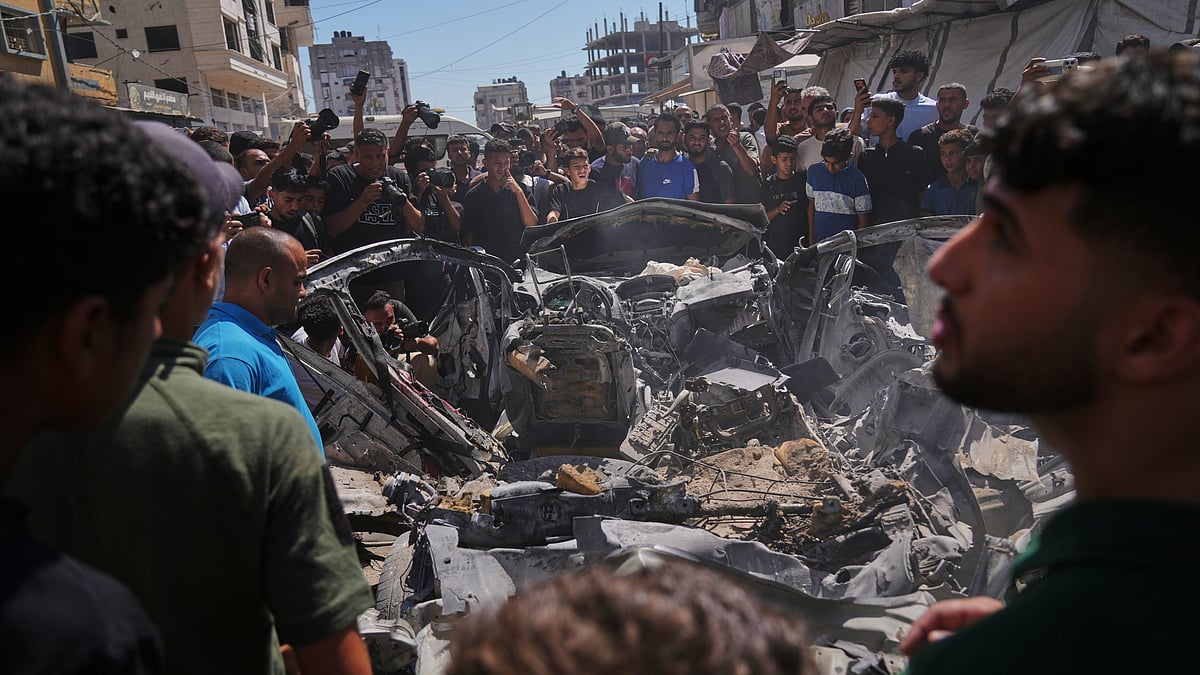
Children continued to bear the brunt of Israel's relentless assault on Gaza this week, as fresh strikes deepened a humanitarian catastrophe that has already claimed tens of thousands of lives, the Al Jazeera reported.
Across the besieged enclave, tents meant to offer refuge became death traps, hospitals came under fire, aid remained desperately inadequate, and families searching for safety found none.
The latest wave of attacks pushed the number of Palestinians killed since the October ceasefire to at least 1,108, according to Palestinian health authorities. Since Israel's military campaign began in October 2023, the cumulative toll has climbed to 73,231 dead and 173,686 wounded.
Among the week's victims were children whose lives ended amid the ruins of a war with no respite. On 8 July, a strike on a tent in al-Mawasi — an area Israel had designated a "humanitarian zone" — killed a 10-year-old child. The same day, a six-year-old was shot dead in Gaza City's Zeitoun neighbourhood, Palestinian health officials said. Days later, on 12 July, nine-year-old Tala Jumaa Abu Matar was killed near the Nuseirat refugee camp, according to medical sources cited by Wafa. Throughout the week, strikes repeatedly hit tents sheltering displaced civilians in al-Mawasi, illustrating how even the places advertised as safe have become perilous.
Aid workers also came under fire. On 9 July, World Central Kitchen driver Ahmad Nasser Saleem was shot dead while transporting coordinated humanitarian assistance from the Karem Abu Salem crossing, the Al Jazeera reported. According to reports, he was killed despite raising his hands, adding another name to the growing list of humanitarian personnel who have lost their lives during the conflict.
Gaza's already shattered healthcare system suffered further blows. On 10 July, an Israeli drone struck the courtyard of Kamal Adwan Hospital in northern Gaza, wounding medical staff despite the facility lying within an Israeli-controlled "green zone". Gaza's health ministry described the attack as part of what it called Israel's "systematic targeting of health facilities".
Fuel shortages have meanwhile pushed hospitals to the brink of collapse. With 38 medical facilities already destroyed or rendered inoperable, doctors have reportedly been forced to shorten surgeries to conserve dwindling fuel supplies. The health ministry has also warned that laboratories and blood banks face an imminent shutdown, threatening to cripple what remains of Gaza's healthcare network.
As bombs continued to fall, a parallel battle unfolded over humanitarian aid. Israel's military aid coordination body, COGAT, maintained that supplies entering Gaza had "significantly exceeded" the needs identified by the United Nations, with its chief accusing critics of echoing Hamas propaganda.
The United Nations painted a starkly different picture.
In its 10 July situation report, the UN Office for the Coordination of Humanitarian Affairs (OCHA) said food parcels distributed in early July met only about 75 per cent of minimum caloric requirements. Emergency distributions of high-energy biscuits had been suspended to preserve rapidly diminishing stocks, while only 56 per cent of aid entering through the Egypt corridor was successfully unloaded at the Karem Abu Salem crossing. Shelter assistance also declined sharply, with the number of families receiving support falling by 37 per cent between May and June amid funding shortages and restrictions on humanitarian materials.
The consequences have rippled across every aspect of civilian life. OCHA reported that around 350,000 people living with chronic illnesses continue to face severe disruptions in access to treatment because of restrictions on medical supplies. Health partners also recorded more than 18,000 new cases of chickenpox, skin infections and parasitic diseases in a single week, highlighting the worsening public health emergency unfolding inside the enclave.
Against this backdrop, political developments offered little immediate hope. Just days after Gaza's Hamas-run administration announced its resignation to make way for a proposed technocratic committee, Palestinian Authority President Mahmoud Abbas issued a decree calling legislative elections for 28 November — the first such vote in two decades. Yet with Gaza's infrastructure devastated, its civil registry outdated and Israel yet to permit voting in occupied East Jerusalem, the prospects for conducting meaningful elections remain deeply uncertain.
Beyond Gaza, the occupied West Bank continued to witness accelerating settlement expansion, demolitions and settler violence.
A report released by Israeli organisations Peace Now and Kerem Navot concluded that settlement activity between 2023 and 2025 amounted to de facto annexation on an unprecedented scale. According to the report, 185 new outposts were established, 118 Palestinian herding communities displaced, 102 new settlements created, and illegal agricultural outposts expanded to control more than 1.1 million dunams — around 18 per cent of the occupied West Bank.
The week's developments reflected that broader trend. Israeli forces uprooted hundreds of olive and grape trees in the northern Jordan Valley, destroyed more than 1,500 olive trees near Jenin, demolished homes and agricultural structures across multiple Palestinian communities, and oversaw the destruction of Yanun Elementary School, which had served 15 children. In occupied East Jerusalem, authorities compelled the Abu Tir family to demolish their own home, imposing an 80,000-shekel fine and leaving seven family members homeless.
Violence by Israeli settlers also intensified. OCHA documented at least 35 settler attacks causing casualties or property damage during a single week, bringing the total number of such incidents recorded in 2026 to more than 1,200 across over 240 Palestinian communities.
International scrutiny has likewise grown sharper. US Congressman Ro Khanna said he was detained for more than an hour by settlers while visiting the emptied Palestinian village of Khirbet Zanuta, accusing the Israeli military of misrepresenting the incident after soldiers blocked his departure. Separately, Haaretz reported that Israeli prison authorities had imposed fresh restrictions on Red Cross visits to Palestinian detainees despite a unanimous high court ruling permitting them, prompting rights advocates to accuse authorities of concealing abuses.
Even diplomatic engagement encountered new obstacles after Israel reportedly barred the Arab League's secretary-general from entering the occupied West Bank to meet President Abbas.
Yet it is Gaza that remains the epicentre of the crisis. Each passing day adds new names to the list of the dead, many of them children. Hospitals inch closer to total collapse, humanitarian agencies warn of deepening deprivation, and displaced families continue to move from one shattered shelter to another in search of safety that remains painfully out of reach.
Join our official telegram channel (@nationalherald) and stay updated with the latest headlines