World
Oil surges above $100 as US-Iran clashes rattle Strait of Hormuz
Brent crude spiked after fresh military exchanges between Washington and Tehran threatened a fragile ceasefire in one of the world’s most vital energy corridors
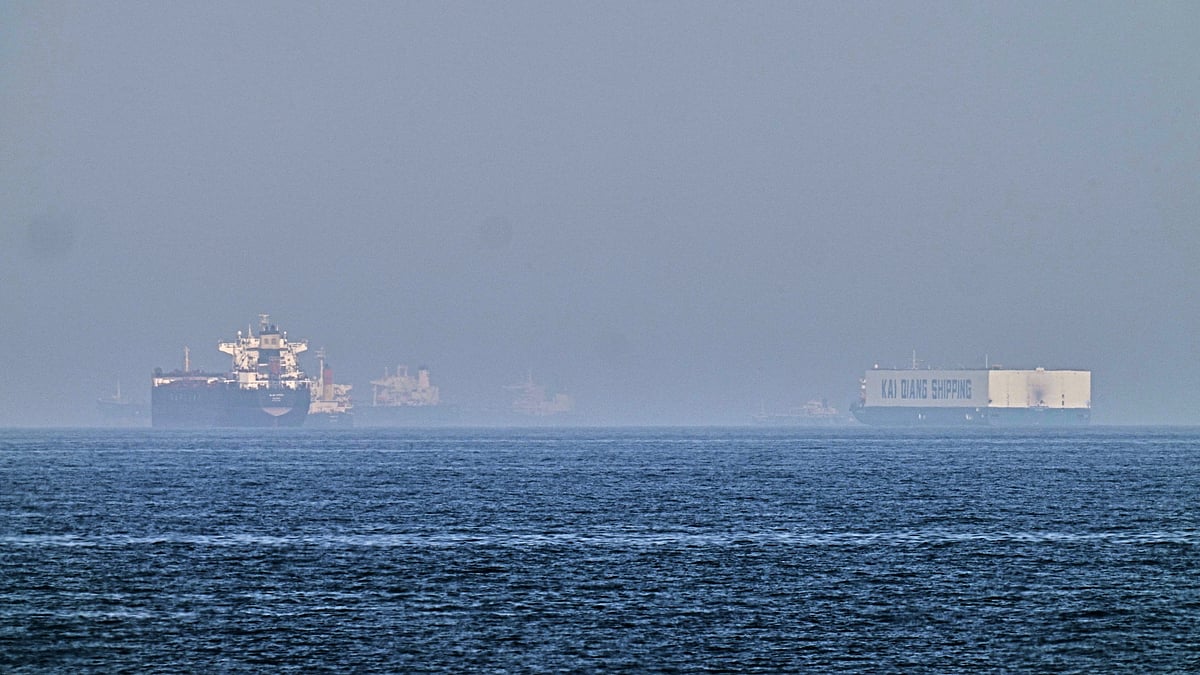
Global oil prices surged on Thursday after renewed clashes between the United States and Iran in the Strait of Hormuz heightened fears of further disruption to global energy supplies.
Brent crude futures climbed by as much as 7.5 per cent during volatile trading before easing slightly in early Asian trade on Friday. The international benchmark was trading at around $101.12 per barrel at 03:00 GMT after earlier touching an intraday high of $103.70.
The sharp movement in oil prices followed reports of military exchanges between US and Iranian forces in and around the strategic waterway, despite a ceasefire announced between the two sides on April 7.
The Strait of Hormuz remains one of the world’s most critical shipping routes, carrying nearly one-fifth of global oil and natural gas supplies.
According to the United States Central Command (CENTCOM), American forces launched retaliatory strikes after three US Navy guided-missile destroyers were targeted by Iranian missiles, drones and small attack boats in the strait, the Al Jazeera reported.
Earlier, Iran’s Khatam al-Anbiya Central Headquarters accused the United States of breaching the ceasefire by attacking an Iranian oil tanker and another vessel near the strategic waterway.
Iranian officials also alleged that US strikes targeted civilian areas, including Qeshm Island.
Despite the escalation, US President Donald Trump sought to minimise concerns, insisting that the ceasefire remained in place. Iranian state broadcaster Press TV similarly reported that conditions had “returned to normal”.
Shipping activity in the Strait of Hormuz has remained severely disrupted since late February amid growing fears of attacks on commercial oil tankers operating in the region.
Brent crude prices have now risen roughly 40 per cent since before the conflict began, with analysts estimating a global supply shortfall of approximately 14.5 million barrels per day.
The renewed tensions also weighed on global financial markets. Major Asian indices opened lower on Friday, with Japan’s Nikkei 225, South Korea’s KOSPI and Hong Kong’s Hang Seng Index each declining by more than 1 per cent.
On Wall Street, the benchmark S&P 500 ended the previous session down about 0.4 per cent after reaching a record high a day earlier.
Join our official telegram channel (@nationalherald) and stay updated with the latest headlines