World
Riyadh airport attacked again; officials report injuries at passenger terminal
Officials report multiple injuries as flights are diverted, with Saudi airports facing repeated attacks amid escalating conflict with Yemen’s Houthis
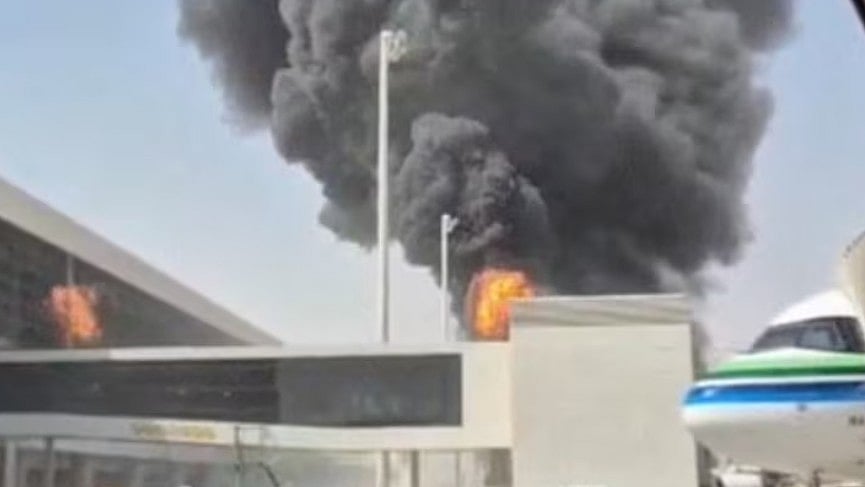
Riyadh’s King Khalid International Airport was reportedly attacked and evacuated on Saturday, with officials saying a missile hit a passenger terminal and wounded several people.
Flights were diverted or cancelled as repeated attacks on Saudi aviation infrastructure disrupted regional travel.
No group immediately claimed responsibility for Saturday’s attack, although the Houthis claimed earlier strikes amid escalating fighting in Yemen.
King Khalid International Airport in Riyadh was attacked again on Saturday and evacuated, according to two regional officials, with one saying a missile struck a passenger terminal and wounded several people.
The officials spoke on condition of anonymity because they were not authorised to brief the media. Ambulances were seen heading towards the airport, while a resident reported hearing at least two powerful explosions in the Saudi capital.
There was no immediate claim of responsibility from Yemen’s Houthi rebels, who have claimed earlier attacks on the airport. Saudi Arabia’s government-run Centre for International Communication did not immediately respond to a request for comment.
Flight-tracking service Flightradar24 reported that aircraft bound for Riyadh were being diverted. Kuwait Airways said it was cancelling services because the airport had closed, while Canada’s embassy advised citizens to avoid travelling to the facility, citing ongoing military activity.
The airport urged passengers to check with their airlines before setting out. FlightAware recorded at least 225 cancellations at the airport over the preceding 24 hours.
Saturday’s incident followed an attack two days earlier in which three Saudi citizens, including a pilot, were killed. Another strike on Wednesday killed a Sudanese national.
King Khalid International Airport has been targeted repeatedly in the week since a Saudi-led coalition launched a major offensive against Iran-backed Houthi forces in neighbouring Yemen, opening another front in the wider regional conflict.
Fighting between the Houthis and Saudi-backed Yemeni government forces has intensified, with coalition aircraft supporting efforts to reverse recent rebel advances along the Red Sea.
Those gains have strengthened the Houthis’ ability to monitor a shipping corridor that offers an important alternative to the Strait of Hormuz, where Iran has been attacking vessels.
The Houthis have said their current maritime campaign targets Saudi shipping in retaliation for a blockade imposed on them. However, concerns remain about the possibility of attacks affecting other vessels. The group previously targeted international shipping after the Gaza war began, describing those operations as support for Palestinians.
Saudi Arabia has sought assistance from the United States and other allies as attacks have struck airports, military installations and oil infrastructure. Officials said American support for the latest offensive had included intelligence sharing, identifying targets and operational planning.
Asked on Friday about the attacks on Riyadh airport, US President Donald Trump said: “It’s not good” and “I’m not happy.” There was no immediate indication of additional US military support in response.
Saudi Arabia said its foreign minister had spoken with his Omani counterpart on Saturday about diplomatic efforts to reduce regional tensions. Oman has previously acted as a mediator in regional disputes.
The repeated strikes have prompted widening disruption to air travel. Air India, flydubai, Lufthansa Group and Pakistan International Airlines are among the carriers that have suspended flights to and from Riyadh and other Saudi airports for the coming days.
Earlier this week, the Houthis warned international airlines against operating in Saudi airspace, describing it as an area of military operations.
The European Union Aviation Safety Agency has expanded its guidance on Saudi airspace, citing the rebels’ ability to reach targets farther inside the kingdom and an increased focus on aviation infrastructure. It warned that missile and drone attacks, along with interception operations, heightened the risk of civilian aircraft being misidentified.
Following Thursday’s attack, Saudi Arabia’s national airline said an aircraft had been damaged on the ground. No passengers were aboard.
Saudi authorities have also warned that filming or sharing information about missile and drone interceptions and impact sites could expose members of the public to legal action.
With agency inputs
Join our official telegram channel (@nationalherald) and stay updated with the latest headlines