World
Rubio heads to G7 to defend Iran war after Trump criticises NATO allies
Several G7 nations having expressed reservations about the US approach to the conflict
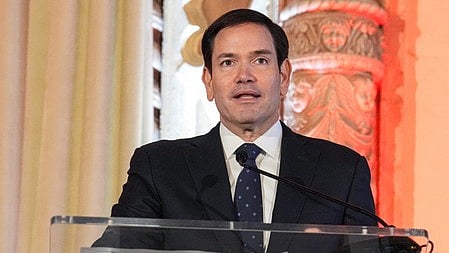
US Secretary of State Marco Rubio is set to meet his counterparts from the Group of Seven in France amid growing divisions between Washington and its allies over the ongoing conflict with Iran.
The gathering comes at a sensitive moment, just hours after President Donald Trump launched a scathing attack on NATO countries, accusing them of failing to support the United States and Israel in the war. His remarks are expected to complicate efforts by Rubio to build consensus around Washington’s strategy.
Speaking before departing for the meeting near Paris, Rubio struck an upbeat tone, saying he anticipated “great meetings” with fellow diplomats. However, he acknowledged the broader challenges, with several G7 nations having expressed reservations about the US approach to the conflict.
Of the G7 members, Britain, Canada, France, Germany, Italy, Japan and the United States, all but Japan are part of NATO, the transatlantic military alliance that has come under renewed criticism from Trump.
“We are very disappointed with NATO because NATO has done absolutely nothing,” the US president said during a cabinet meeting, reiterating longstanding grievances about burden-sharing and alliance commitments.
Rubio is expected to use the summit to address not only the Iran conflict but also wider security concerns, including the war in Ukraine and global energy stability. In a post on social media, he said discussions would focus on “security concerns we share around the world” and the situation in the Middle East.
However, the US faces an uphill battle in persuading allies to align more closely with its position. Several European governments have been openly sceptical of the military campaign, while also expressing frustration over what they see as a lack of consultation from Washington.
France, which is hosting the talks at a historic venue near Versailles, has been particularly critical. The country’s defence leadership has complained that the United States did not adequately inform allies before launching operations in the region, raising concerns about predictability and coordination.
Despite these tensions, discussions are under way among multiple countries on how to secure the Strait of Hormuz once hostilities ease. The strategic waterway has become a focal point of the conflict, with disruptions to shipping driving up global energy prices.
NATO Secretary-General Mark Rutte has sought to strike a more conciliatory tone, emphasising increased defence spending by European members and acknowledging past reliance on US military support. He also reiterated concerns about Iran’s nuclear and missile capabilities, suggesting that US actions are aimed at limiting those threats.
Meanwhile, Germany has called for a unified position among allies. Foreign Minister Johann Wadephul warned against further destabilisation and stressed the need to maintain support for Ukraine, cautioning that a weakening of transatlantic unity would have broader strategic consequences.
With the conflict approaching its fourth week and tensions showing little sign of easing, the G7 meeting is likely to expose underlying fractures within the Western alliance, even as diplomats attempt to chart a coordinated response to the crisis.
With PTI inputs
Join our official telegram channel (@nationalherald) and stay updated with the latest headlines