World
Here's why Russia's Victory Day parade won't display tanks, missiles for first time in nearly 2 decades
Moscow cites ‘current operational situation’ amid growing Ukrainian drone strikes deep inside Russia
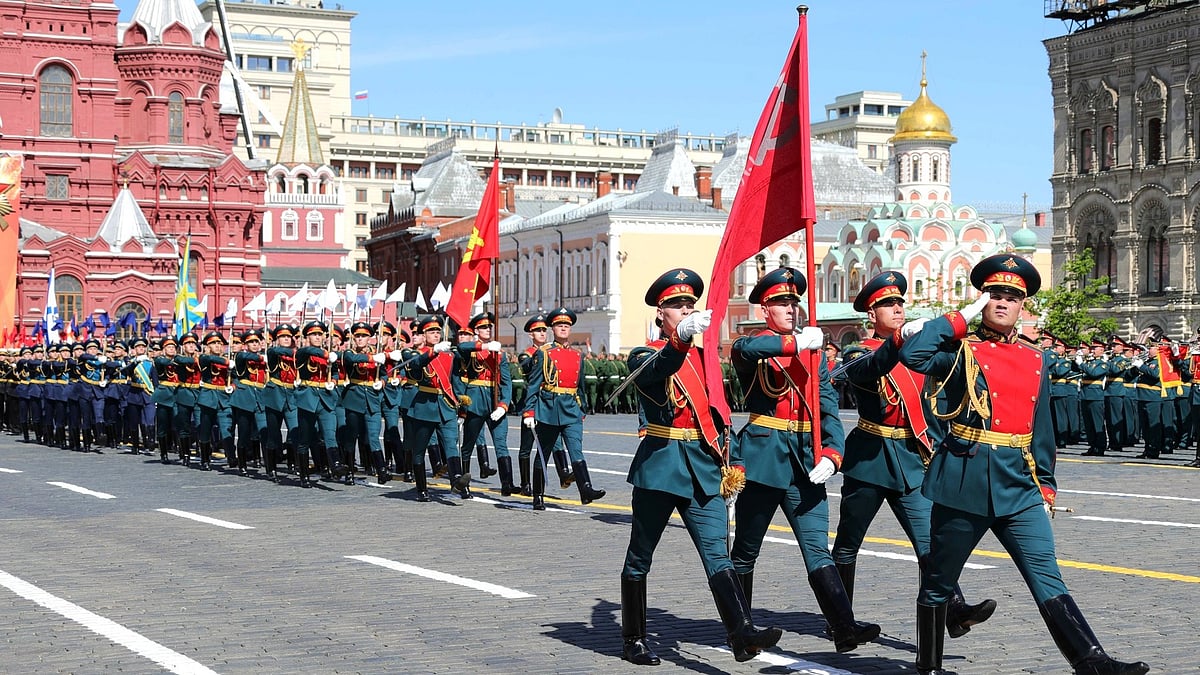
Russia will hold its annual Victory Day parade on 9 May without tanks, missile launchers or other military hardware for the first time in nearly two decades, according to the Russian Defence Ministry.
The decision marks a significant break from tradition during one of Russia’s most important national events, long used by the Kremlin to display military power and geopolitical influence.
No military hardware on Red Square
The Defence Ministry said the parade marking the 81st anniversary of the Soviet victory over Nazi Germany in World War II would proceed without the customary military equipment convoy.
The ministry cited the “current operational situation” for the move but did not elaborate further.
Kremlin spokesperson Dmitry Peskov blamed Ukraine’s “terrorist activity” for heightened security concerns, an apparent reference to Kyiv’s increasingly frequent long-range drone attacks inside Russia.
“All measures are being taken to minimise the danger,” Peskov said.
Ukraine has in recent months intensified strikes on Russian oil depots, military sites and infrastructure far from the battlefield using domestically developed long-range drones.
It will be the first time since 2008 that military vehicles and weapon systems will not roll through Red Square during the celebrations.
From 1991 to 2007, Victory Day parades in Russia largely avoided showcasing heavy military hardware such as tanks, ballistic missiles and large mechanised columns. Following the collapse of the Soviet Union, the Russian military faced severe financial and organisational difficulties, while the Kremlin also sought to distance itself from overt Soviet-style militarism.
During these years, parades mainly featured marching troops, veterans, ceremonial units and limited flypasts. Heavy weapons formally returned to Red Square only in 2008 under Vladimir Putin, marking a symbolic revival of Russian military confidence and state power.
Kremlin spokesperson Dmitry Peskov blamed Ukraine’s “terrorist activity” for heightened security concerns, an apparent reference to Kyiv’s increasingly frequent long-range drone attacks inside Russia.
“All measures are being taken to minimise the danger,” Peskov said.
Ukraine has in recent months intensified strikes on Russian oil depots, military sites and infrastructure far from the battlefield using domestically developed long-range drones.
What the parade will include
The Defence Ministry said the parade would still feature military personnel, including cadets and servicemen from higher military educational institutions, along with the traditional military aircraft flyover over Moscow.
However, tanks, artillery systems, missile launchers and armoured vehicles will be absent.
Victory Day commemorations remain one of the most symbolically important events in modern Russian political culture. The Soviet Union suffered the single highest human cost of the Second World War. Out of the estimated 70–85 million total deaths globally, the USSR alone accounted for roughly 26–27 million deaths — around 30 to 40 per cent of all war deaths worldwide.
In military terms, Soviet forces suffered about 8.7–11 million military deaths, which constituted nearly half of all Allied military fatalities in the war. The Eastern Front — where Nazi Germany fought the USSR — was by far the deadliest theatre of World War II and accounted for the majority of German military losses as well.
Vladimir Putin has increasingly used the event during his more than 25 years in power to promote nationalism, military pride and Russia’s status as a global power.
The Kremlin has also linked the Ukraine war to historical narratives surrounding the Soviet fight against Nazi Germany.
Last year’s parade showcased wartime arsenal
The 2025 parade was one of the largest since the start of the Ukraine war and featured more than 11,500 troops and over 180 military vehicles.
It included tanks, artillery systems, armoured infantry vehicles, Yars nuclear-capable intercontinental ballistic missile launchers and military drones used in the Ukraine conflict.
High-profile foreign leaders including Xi Jinping, Luiz Inácio Lula da Silva and Robert Fico attended the event.
Security fears growing in Moscow
Russian authorities have become increasingly concerned about Ukrainian drone attacks targeting Moscow and strategic infrastructure.
Last year, Russia imposed temporary restrictions on mobile internet services in the capital around Victory Day celebrations as a precaution against possible drone operations.
The 2023 parade had already been scaled down, featuring fewer troops and military equipment and no aerial flyover.
Victory Day on 9 May remains Russia’s most important secular state holiday and a major platform for projecting military power.
The decision to remove heavy military hardware from this year’s parade underscores the growing security pressure faced by Moscow as Ukraine expands its long-range strike capabilities deep inside Russian territory.
Join our official telegram channel (@nationalherald) and stay updated with the latest headlines