World
Storm deepens humanitarian crisis for displaced families in Gaza
In the absence of formal support, solidarity has become a lifeline
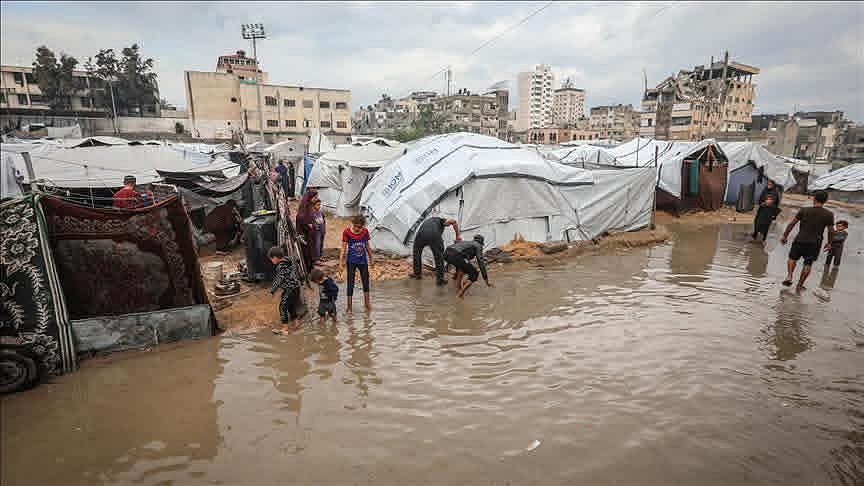
As Storm Byron bears down on the Gaza Strip, fear is rising among the 1.5 million displaced Palestinians living in sprawling tent camps—many of them spread across rubble, empty plots and the ruins of flattened neighbourhoods. After nearly two years of Israel’s war marked by relentless bombardment, displacement, hunger and chaos, the approaching storm represents yet another threat to survival.
Al Jazeera reported how meteorologists have warned of several days of heavy rain and strong winds, with risks of flash flooding and structural damage.
But Gaza, with its shattered infrastructure, blocked drainage systems and overwhelmed shelters, is in no condition to weather severe conditions. Most families are living under makeshift tents made of plastic sheets, shredded tarpaulins and scrap wood—structures unlikely to withstand even moderate winds.
In camps across Gaza City, the fragility is stark. Many tents sag under rainwater or flap violently in the wind. “When the wind starts, we all hold the poles to keep the tent from falling,” said Hani Ziara, who has been sheltering in western Gaza since his home was destroyed. His tent flooded overnight, forcing his children to wait in the cold outside. “What else can I do to protect them?” he asked.
Much of the ground has already turned to thick mud, and basic drainage trenches dug by volunteers crumble within hours. Families in low-lying areas expect rising water to flow directly into their shelters.
For many in the camps, the idea of preparing for a storm—securing shelter, storing food or stocking clean water—is unimaginable. Water deliveries are erratic, sometimes arriving only after days. Food supplies remain scarce, with occasional aid distributions providing only short-term relief.
“Our tent was flooded with rainwater. Everything we had was washed away,” said Mervit, a mother of five displaced near Gaza’s port. “We want to prepare, but how? We barely have enough food for tonight.”
In the absence of formal support, solidarity has become a lifeline. Neighbours gather scraps of metal and wood to reinforce tents. Women organise collective cooking whenever ingredients allow, and volunteers move between shelters to help raise sleeping areas off the ground or patch leaking roofs. These grassroots efforts intensify as the storm approaches, with residents trying to relocate the most vulnerable families to slightly safer ground.
But after months of repeated displacement, trauma and deprivation, the psychological toll is severe. “We are exhausted,” said Wissam Naser. “Every day there is a new fear—hunger, cold, disease, now the storm.”
As dark clouds accumulate over Gaza’s coastline, families brace for impact in shelters never designed to withstand the elements. Some weigh down tent walls with rocks and sandbags; others try to keep blankets dry in the safest corner they can find. Most have no real plan—only hope.
For Gaza’s displaced, this storm will not simply be a night of bad weather. It is another reminder of how precarious life has become, and how survival now depends less on preparation than on sheer endurance.
Join our official telegram channel (@nationalherald) and stay updated with the latest headlines