World
Supreme Leader Mojtaba Khamenei vows to protect Iran’s nuclear, missile capabilities
Iranian leader says Americans belong ‘at the bottom’ of Persian Gulf as US weighs new Hormuz strategy
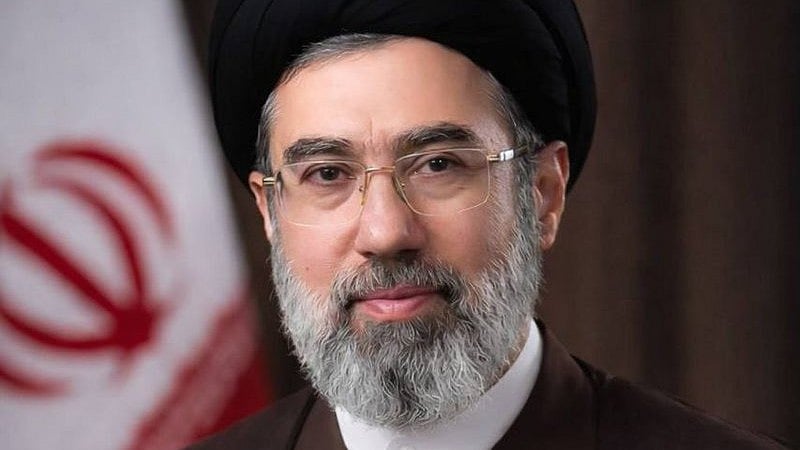
Mojtaba Khamenei on Thursday declared that Iran would never surrender its nuclear and missile capabilities, striking a defiant tone amid escalating tensions with the United States and fragile ceasefire negotiations following the Iran war.
In a written statement broadcast on Iranian state television, Khamenei said Iran’s military and technological capabilities were “national assets” that would be protected under all circumstances.
“Ninety million proud and honorable Iranians inside and outside the country regard all of Iran's identity-based, spiritual, human, scientific, industrial and technological capacities — from nanotechnology and biotechnology to nuclear and missile capabilities — as national assets, and will protect them just as they protect the country's waters, land and airspace,” Khamenei said.
Defiant message to US
Khamenei maintained the confrontational rhetoric that has characterised his leadership since assuming power after the killing of his father, former supreme leader Ali Khamenei, during the opening phase of the conflict on 28 February.
Referring to the United States as the “Great Satan”, a phrase long used by Iranian revolutionary leaders, Khamenei said American forces had no legitimate role in the Persian Gulf.
“Foreigners who come from thousands of kilometres away to act with greed and malice there have no place in it — except at the bottom of its waters,” he declared.
He also said a “new chapter” was being written in the region’s history.
Strait of Hormuz remains central flashpoint
The remarks came as the confrontation over the Strait of Hormuz continued to shake global energy markets.
Iran has maintained effective control over shipping movement through the strait, through which nearly one-fifth of global crude oil supplies normally pass.
Brent crude prices surged as high as USD 126 per barrel on Thursday amid fears of prolonged disruption.
Khamenei signalled that Tehran intended to maintain tight control over the waterway, portions of which lie within Iranian and Omani territorial waters.
He claimed Iran’s “legal rules and new management” of the Strait of Hormuz would ultimately benefit regional countries and improve Gulf security.
However, Gulf Arab nations, especially the United Arab Emirates, have criticised Iran’s actions and described its effective control over commercial shipping as comparable to piracy.
Reports have also suggested Iran had been charging certain vessels millions of dollars to transit through the strait.
Trump weighs fresh strategy
The remarks came as Donald Trump reportedly reviewed new options aimed at reopening the Strait of Hormuz while maintaining pressure on Iran.
According to a senior US administration official quoted in media reports, Washington is considering a plan under which the US Navy would continue blockading Iranian ports while working with allies to raise costs for Tehran if it attempts to obstruct energy flows.
The official said it was one among several diplomatic and military options being examined by the White House.
The US blockade is aimed at preventing Iran from exporting oil, a move designed to deprive Tehran of crucial revenue and potentially force production cuts due to storage shortages.
Nuclear issue remains unresolved
A recent Iranian proposal reportedly suggested postponing negotiations over Tehran’s nuclear programme to a later phase.
Trump has repeatedly said one of the central objectives of the war was preventing Iran from acquiring nuclear weapons capability.
Iran, however, continues to insist that its nuclear programme is peaceful, despite enriching uranium up to 60 per cent purity — levels close to weapons-grade material.
Pakistan facilitating indirect talks
Pakistan said on Thursday it continued to facilitate indirect communication between Washington and Tehran.
“If the two parties can engage in real-time conversations, that could ease the sticking points,” Pakistani foreign ministry spokesperson Tahir Andrabi said during a media briefing.
He declined to disclose details of any proposals exchanged between Iran and the United States.
Oil markets and global economy under pressure
The standoff has intensified pressure on the global economy, with rising oil prices fuelling concerns about inflation, supply disruptions and wider geopolitical instability.
The conflict has already severely disrupted Gulf shipping and energy flows, creating uncertainty across international financial and commodity markets.
The Iran-US ceasefire has now held for roughly three weeks, but both sides remain deeply divided over nuclear issues, sanctions and control of strategic maritime routes.
Join our official telegram channel (@nationalherald) and stay updated with the latest headlines