World
Trump orders US Navy to enforce Hormuz blockade after talks with Iran collapse
Move targets vessels paying toll to Tehran; escalation raises risks for global oil supply
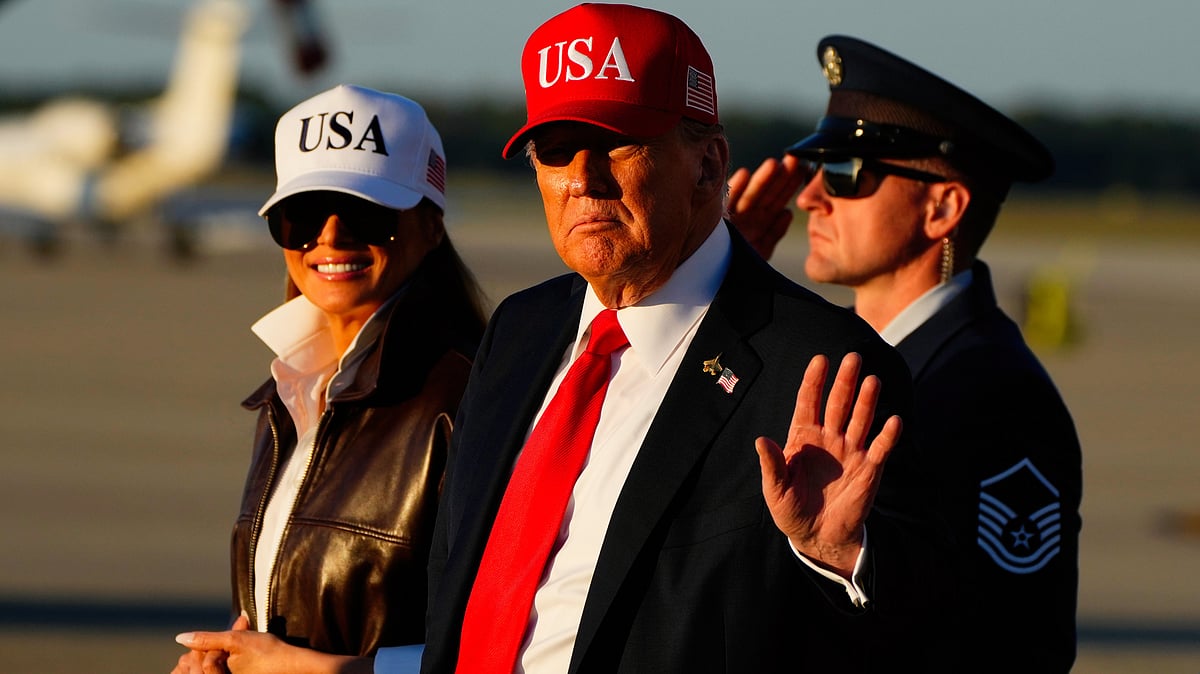
US President Donald Trump on Sunday announced that the US Navy would immediately begin enforcing a blockade on ships entering or leaving the Strait of Hormuz, following the collapse of peace talks with Iran over its nuclear programme.
In a post on Truth Social, Trump said he had directed the US Navy to “seek and interdict every vessel in International Waters that has paid a toll to Iran”.
“No one who pays an illegal toll will have safe passage on the high seas,” he said, adding that other countries would also participate in the blockade of the strategic waterway, which carries about a fifth of global oil supplies.
Talks collapse over nuclear issue
Trump said negotiations with Iranian representatives in Islamabad had made progress on several issues but failed on what he described as the “only point that really mattered”.
“The meeting went well, most points were agreed to, but the only point that really mattered, NUCLEAR, was not,” he said, reiterating that “IRAN WILL NEVER HAVE A NUCLEAR WEAPON”.
He said he had been briefed by Vice President J. D. Vance, Special Envoy Steve Witkoff and adviser Jared Kushner on the outcome of the talks.
Trump said the US delegation had found Iranian representatives — including Mohammad Bagher Ghalibaf and Abbas Araghchi — “very friendly and respectful”, but added that they were “very unyielding” on the nuclear issue.
The US President also issued a strong warning, saying Washington was prepared for further escalation.
“They want money and, more importantly, they want Nuclear. Additionally… we are fully ‘LOCKED AND LOADED,’ and our Military will finish up the little that is left of Iran,” he said.
Pakistan’s role acknowledged
Trump acknowledged the role of Asim Munir and Shehbaz Sharif in hosting the talks in Islamabad, describing them as “extraordinary men”.
He also referred to earlier tensions involving India, stating that Pakistani leaders had thanked him for helping avert a larger conflict, though he did not elaborate.
Impact on global energy flows
The announcement comes amid heightened tensions in the Strait of Hormuz, where Iran’s control over maritime movement has already disrupted oil and gas exports from the Persian Gulf, pushing global energy prices higher.
A US-led blockade could further escalate the situation, raising concerns over supply disruptions and increased volatility in global energy markets.
Conflict toll
Since the US and Israel launched military operations on 28 February, at least 3,000 people have been killed in Iran, 2,020 in Lebanon, 23 in Israel and more than a dozen in Gulf Arab states, according to available estimates.
The conflict has also caused significant damage to infrastructure across multiple countries in the region.
The Strait of Hormuz is one of the world’s most critical energy corridors, and any disruption — whether through Iranian restrictions or US-led enforcement actions — has immediate global economic implications.
Join our official telegram channel (@nationalherald) and stay updated with the latest headlines