World
US fires on and disables 2 more Iranian tankers as tensions rise in Hormuz
Washington says Tehran targeted Navy ships and violated truce amid rising fears over oil spill and shipping crisis
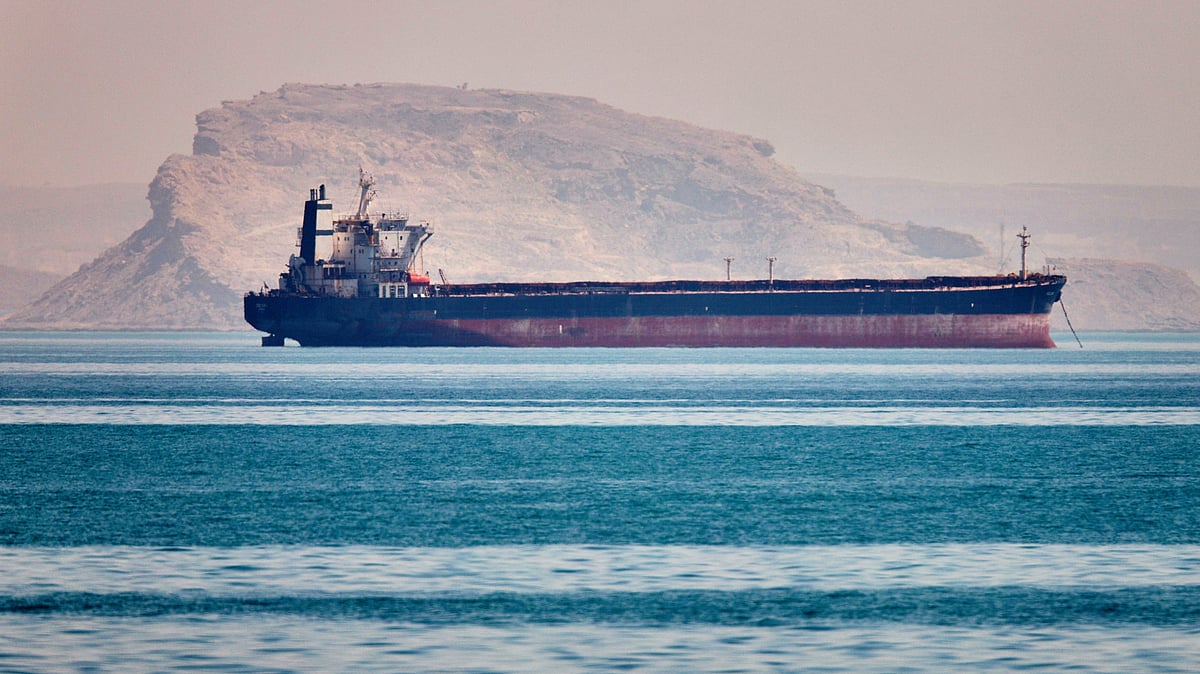
US forces overnight fired on and disabled two Iranian oil tankers after an exchange of fire with Iranian forces in the Strait of Hormuz, while the United Arab Emirates reported fresh Iranian missile and drone attacks.
The developments on Friday, 8 May further deepened uncertainty over a fragile month-old ceasefire that Washington maintains remains in force. The United States is meanwhile awaiting Iran’s response to its latest proposal aimed at ending the conflict, reopening the strategic waterway and curbing Tehran’s disputed nuclear programme.
US Secretary of State Marco Rubio said he hoped to receive “a serious offer” from Iran later on Friday.
The US military said its forces disabled two Iranian tankers that were attempting to breach an American blockade on Iranian ports. Hours earlier, it said US forces had thwarted attacks on three Navy ships in the strait and launched retaliatory strikes on Iranian military facilities.
Iran has largely blocked the crucial shipping route for global energy supplies since the US and Israel launched military operations on 28 February, triggering sharp increases in fuel prices and unsettling global financial markets. Washington has in turn imposed its own blockade on Iranian ports.
The UAE’s defence ministry said three people were wounded after air defences engaged two ballistic missiles and three drones launched by Iran. It was not immediately clear whether all the projectiles had been intercepted.
The US military released footage showing American fighter jets striking the smokestacks of the two Iranian tankers on Friday. Earlier this week, a US military aircraft reportedly disabled the rudder of another tanker that Washington claimed had tried to violate the blockade.
Late on Thursday, the US military said it had prevented Iranian attacks on three Navy vessels in the Strait of Hormuz and carried out strikes on Iranian military targets in response. It said no American ships were hit. “They threaten Americans, they are going to be blown up,” Rubio told reporters on Friday.
Iran’s foreign ministry condemned what it described as “hostile” US military action, saying it violated the ceasefire agreement. “Every time a diplomatic solution is on the table, the US opts for a reckless military adventure,” Iranian foreign minister Abbas Araghchi wrote on X.
A US strike overnight killed at least one sailor and injured 10 others aboard a cargo vessel that caught fire, according to a news agency affiliated with Iran’s judiciary. It remained unclear whether the vessel was one of the two tankers acknowledged by the US military.
US President Donald Trump has continued to insist that the ceasefire remains intact, while also warning that Washington could resume large-scale bombing if Tehran refuses to accept terms to reopen the strait and scale back its nuclear programme.
Pakistani Prime Minister Shehbaz Sharif said Islamabad had been in constant contact with both Washington and Tehran “day and night” in an attempt to preserve the ceasefire and secure a broader peace agreement.
Satellite images reviewed by the Associated Press appeared to show a major oil slick spreading in the Persian Gulf from the western side of Kharg Island, Iran’s main crude export terminal.
Images captured on Friday showed the slick covering around 71 square kilometres and suggested oil was continuing to leak from the terminal, according to Ami Daniel, chief executive of maritime intelligence firm Windward AI.
Daniel estimated that the equivalent of roughly 80,000 barrels of oil had spilled from Kharg Island since the slick was first detected in satellite imagery on Tuesday. The cause of the spill remains unknown and could involve a malfunction, an airstrike or another factor.
“This is the risk of fighting in an oil-rich area,” Daniel said, adding that any clean-up operation was unlikely while Gulf waters remained an active conflict zone. He said the slick appeared to be drifting southwest and could potentially reach the coastlines of the UAE, Qatar or Saudi Arabia within two weeks.
Nina Noelle, an international crisis operations expert with Greenpeace Germany, said more recent imagery suggested the spill was beginning to disperse and might not ultimately make landfall, though sensitive marine ecosystems could still be affected. “More likely, it will dissipate offshore under prevailing conditions,” Noelle said.
The Pentagon declined to comment on whether the US military was monitoring the spill or whether recent strikes had targeted Kharg Island. Based on earlier satellite imagery, the spill appeared to have begun before the latest round of US attacks.
Rubio also criticised Iran’s reported creation of a government body to regulate and tax ships transiting the Strait of Hormuz.
Shipping data firm Lloyd's List Intelligence reported on Thursday that Tehran had established the Persian Gulf Strait Authority. The move has intensified concerns over international shipping, with hundreds of commercial vessels reportedly stranded in the Persian Gulf and unable to access open waters.
“Is the world going to accept that Iran now controls an international waterway?” Rubio said. “What is the world prepared to do about it?”
Iran has effectively shut the strategic waterway — vital for transporting oil, gas, fertiliser and petroleum products — while the US continues its blockade of Iranian ports.
A Chinese-crewed oil tanker was also reportedly attacked near the strait. China, despite the disruption, has continued importing Iranian oil. China’s foreign ministry expressed concern over the incident, noting that the tanker was registered in the Marshall Islands and carried a Chinese crew. No casualties were reported.
Meanwhile, an oil tanker that transited the Strait of Hormuz in mid-April arrived off the South Korean coast on Friday carrying one million barrels of crude oil. South Korea, which imported more than 60 per cent of its crude through the strait last year, has imposed caps on petrol and other petroleum product prices.
With AP/PTI inputs
Join our official telegram channel (@nationalherald) and stay updated with the latest headlines