World
US Supreme Court strikes down Trump’s global tariffs in 6–3 ruling
Major setback as court says Constitution gives Congress — not president — power to tax
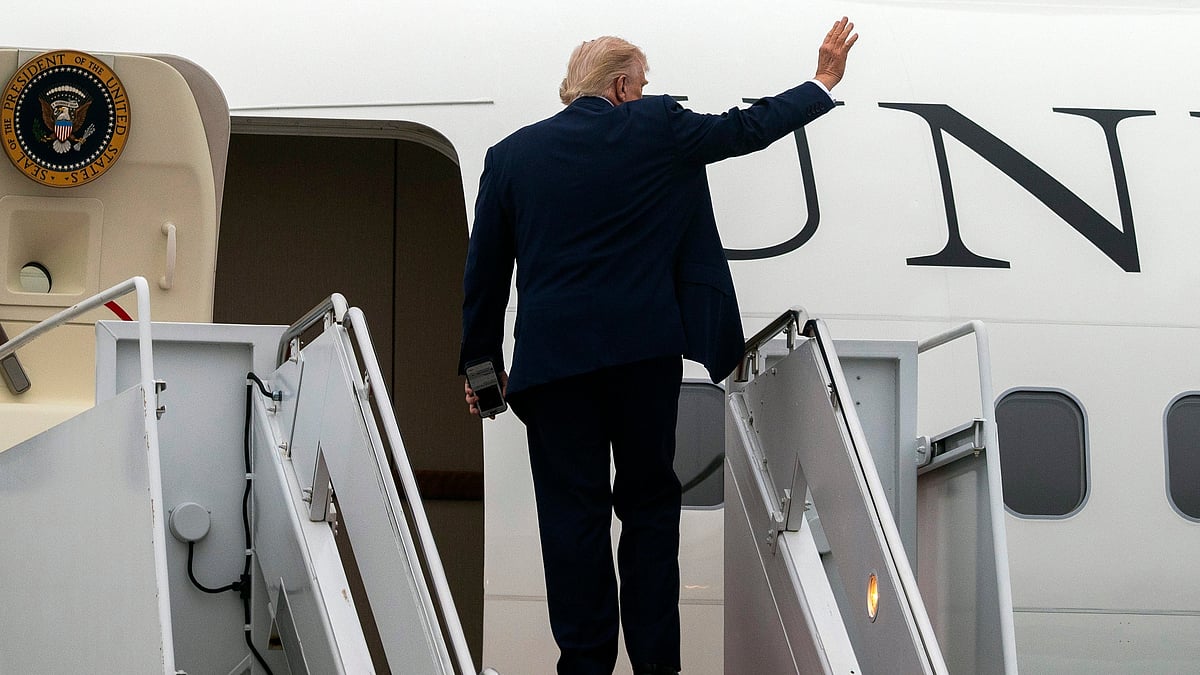
The US Supreme Court on Friday invalidated President Donald Trump’s sweeping global tariff regime, delivering a sharp blow to a cornerstone of his economic agenda.
In a 6–3 decision, the court ruled that Trump overstepped his authority by imposing broad import taxes under a federal emergency powers statute. The case focused on the so-called “reciprocal” tariffs he introduced on nearly every country, invoking a 1977 law that allows presidents to regulate imports during national emergencies.
It marks the first major component of Trump’s expansive policy programme to be squarely tested before the nation’s highest court — one he reshaped during his first term with three conservative appointments.
Writing for the majority, Chief Justice John Roberts said the Constitution “very clearly” assigns the power to levy taxes — including tariffs — to Congress.
“The Framers did not vest any part of the taxing power in the Executive Branch,” Roberts wrote, underscoring the separation of powers principle at the heart of the ruling.
Justices Samuel Alito, Clarence Thomas and Brett Kavanaugh dissented. In his dissent, Kavanaugh argued that the president had acted within the law. “The tariffs at issue here may or may not be wise policy. But as a matter of text, history, and precedent, they are clearly lawful,” he wrote.
The majority did not address whether businesses would be entitled to refunds for the billions of dollars already paid under the tariffs. Several companies — including retail giant Costco — have filed court claims seeking reimbursement.
Kavanaugh acknowledged the looming complexity. “The Court says nothing today about whether, and if so how, the Government should go about returning the billions of dollars that it has collected from importers. But that process is likely to be a mess,' as was acknowledged at oral argument,” he wrote.
Importantly, the ruling does not bar Trump from imposing tariffs under other statutory authorities. Those alternative trade laws, however, contain stricter procedural limits and narrower scopes. Senior administration officials have indicated they intend to preserve much of the tariff architecture through those avenues.
The judgment comes after a series of interim victories for Trump on the court’s emergency docket, where he had been allowed to advance assertive executive actions — from high-profile dismissals to sweeping federal funding cuts — while litigation continued.
Trump had framed the tariffs case as historic, warning that an adverse ruling would deal an economic “body blow” to the country. Yet opposition to his approach extended beyond Democrats. Libertarian groups and pro-business organisations — often aligned with Republican priorities — joined legal challenges. Public opinion surveys have shown limited enthusiasm for tariffs, particularly amid broader concerns about rising costs and affordability.
While the Constitution explicitly empowers Congress to impose tariffs, the Trump administration argued that the International Emergency Economic Powers Act of 1977 authorised the president to regulate importation — including through tariffs — during national emergencies. Previous presidents have invoked the law dozens of times, primarily for sanctions. Trump was the first to use it to impose broad-based import taxes.
In April 2025, he announced “reciprocal” tariffs on most countries, declaring chronic trade deficits a national emergency. That move followed earlier duties on Canada, China and Mexico, which he justified as necessary to combat a drug trafficking crisis.
The tariffs triggered multiple lawsuits, including from a coalition of Democratic-leaning states and small businesses ranging from plumbing suppliers to educational toy retailers and women’s cycling apparel companies.
Challengers contended that the emergency statute does not even mention tariffs and that Trump’s use of it failed established legal standards — including criteria that had previously derailed then-President Joe Biden’s USD 500 billion student loan forgiveness programme.
According to the Congressional Budget Office, the economic impact of Trump’s tariff programme was projected at roughly USD 3 trillion over the coming decade. Federal data from December showed the Treasury had already collected more than USD 133 billion under the emergency-based import taxes.
Friday’s ruling reasserts Congress’s constitutional authority over taxation — and sets the stage for a potentially turbulent next chapter in US trade policy.
With AP/PTI inputs
Join our official telegram channel (@nationalherald) and stay updated with the latest headlines