World
War drags on, leaving US and Iran with no easy way out
Strike patterns suggest coordination, not collapse, as conflict risks spiral
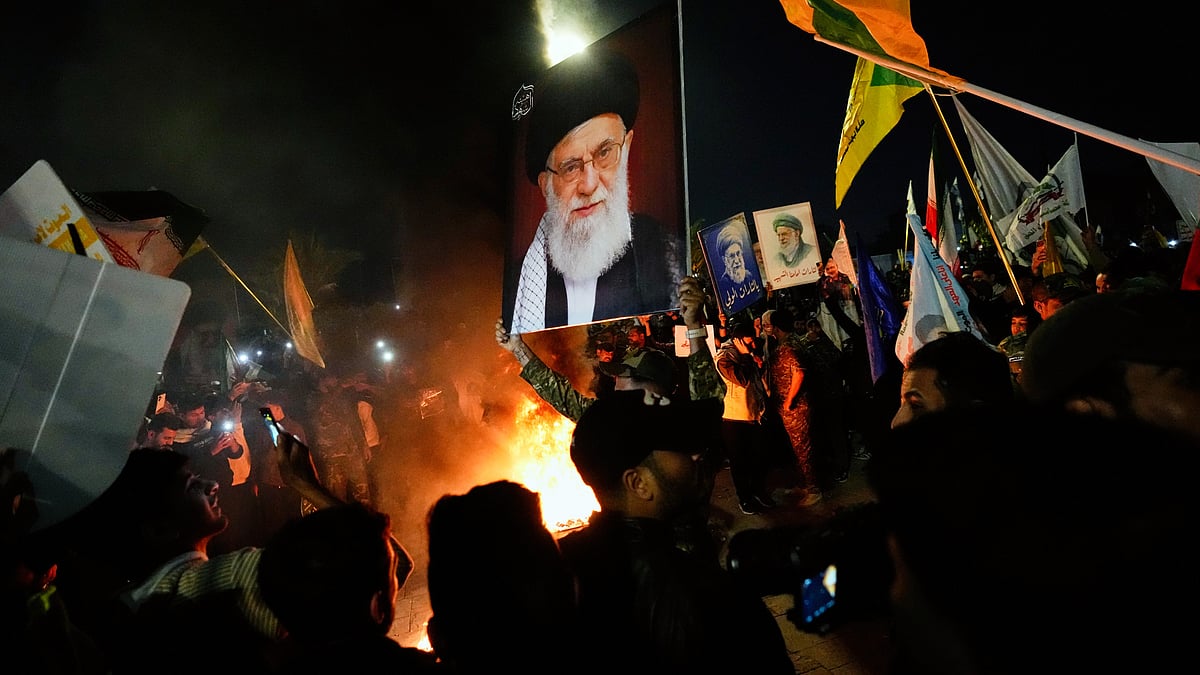
Despite repeated claims by the United States and Israel that Iran’s military capacity has been severely degraded, the conflict appears to be intensifying, with recent developments raising fresh questions over Tehran’s capabilities and leadership structure.
US President Donald Trump and Defence Secretary Pete Hegseth have maintained that sustained strikes have crippled Iran’s command system. However, events on the ground suggest otherwise, with escalation continuing “faster, sharper, and with fewer clear exit points”.
Missile reach raises alarm
A major concern emerged after Iran reportedly launched missiles towards the US-UK military base at Diego Garcia, located around 3,800 km away.
Although the missiles did not reach the island, the attempt suggests a potential expansion of Iran’s known strike range, previously estimated at around 2,000 km.
This raises the possibility that Iran’s capabilities may be evolving even under sustained military pressure.
Leadership vacuum, yet coordinated strikes
Uncertainty also surrounds Iran’s leadership following reported high-level casualties, including Supreme Leader Ali Khamenei.
His reported successor, Mojtaba Khamenei, has not appeared publicly, issuing only written messages, leaving questions over who is directing military operations.
Yet, Iranian strikes — including a reported attack on Dimona in Israel’s Negev desert — suggest coordination rather than disarray, challenging assumptions that leadership decapitation would lead to paralysis.
Diplomatic uncertainty deepens
The lack of visible leadership has also complicated prospects for negotiations. Iranian President Masoud Pezeshkian has maintained a low profile, further narrowing diplomatic channels.
Iranian officials have indicated deep mistrust of negotiations, pointing to past instances where talks were followed by military action.
Escalation cycle intensifies
Tensions escalated further after Trump issued a 48-hour ultimatum demanding Iran reopen the Strait of Hormuz, warning of strikes on energy infrastructure. Iran rejected the demand and threatened retaliation across the region, including the possibility of mining parts of the Persian Gulf.
The exchange highlighted a narrowing space for de-escalation, with both sides appearing locked into a cycle of retaliation.
Pause offers limited respite
Hours before the deadline, Trump announced a five-day pause on planned strikes, citing “very good and productive conversations” — a claim later denied by Iran.
While markets showed cautious relief, the pause is seen as temporary, with uncertainty over whether it signals genuine diplomatic movement or a tactical delay.
Strategic deadlock
Analysts suggest both sides face structural limitations: the US and Israel lack ground presence to secure decisive outcomes, while Iran risks overextension amid economic strain.
With limited negotiation channels and continued escalation, the conflict risks entering a more dangerous phase, with potential regional fallout affecting millions, particularly if disruptions to energy routes like the Strait of Hormuz persist.
Join our official telegram channel (@nationalherald) and stay updated with the latest headlines