World
Xi Jinping calls for greater political loyalty in PLA after military purges
Chinese leader stresses party control of armed forces as defence budget rises and military leadership reshaped
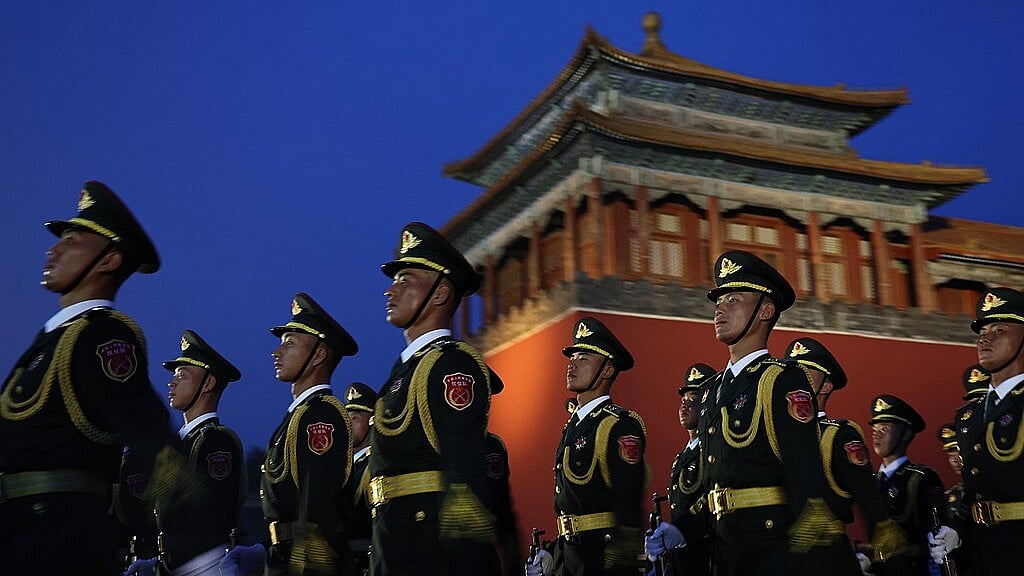
Chinese President Xi Jinping on Saturday called on the People’s Liberation Army (PLA) to strengthen political loyalty and discipline following a recent purge of senior military officials, while a top general urged defence personnel to resolutely obey Xi’s command.
Xi made the remarks during a meeting with a condensed delegation of military representatives from the PLA and the People’s Armed Police Force attending the ongoing session of the National People’s Congress (NPC), China’s parliament.
According to state-run Xinhua news agency, Xi stressed the importance of fully leveraging the unique strengths of political loyalty within the military and called for continued efforts to modernise China’s national defence and armed forces in a steady and sustained manner.
The meeting marked Xi’s first interaction with the military delegation since the removal of two senior PLA officials in January, including the highest-ranking officer, Gen Zhang Youxia. The development has been widely viewed as one of the most significant military purges in recent years.
Gen Zhang Youxia had served as Vice Chairman of the powerful Central Military Commission (CMC), the body that oversees China’s armed forces and is headed by Xi himself.
Leadership shake-up in Central Military Commission
Following Zhang’s removal, the six-member CMC has effectively been reduced to two members: Xi and Gen Zhang Shengmin, who heads the commission’s discipline inspection body.
In remarks delivered during the current parliamentary session, Zhang Shengmin called on the armed forces to deepen political rectification and strengthen loyalty to the Communist Party leadership.
“We must deepen political rectification, improve Communist Party conduct, fight corruption, and strengthen loyalty to the party's core and resolute obedience to the command of President Xi Jinping,” Zhang said.
He also urged the military to improve combat-oriented training and preparedness to safeguard China’s sovereignty, security and development interests.
Zhang further called for accelerating the development of integrated combat capabilities, enhancing operations in emerging domains and improving military governance.
Political control and military reforms
Notably, no military officials from the Politburo of the ruling Communist Party of China (CPC) attended the current “Two Sessions” meetings — the annual gatherings of the NPC and the Chinese People’s Political Consultative Conference (CPPCC), which began on 4 March.
According to the NPC’s official website, the military delegation attending the sessions has been reduced from 281 to 243 members, reflecting a series of expulsions of PLA officials in recent years on charges including corruption, indiscipline and disobedience of party leadership.
Since assuming power in 2012, Xi has repeatedly emphasised that the military must remain firmly under the leadership of the CPC.
Analysts say Xi has used a sweeping anti-corruption campaign within the military to tighten control over the armed forces and consolidate his authority within the party.
Critics argue that the campaign has helped Xi emerge as the dominant figure in Chinese politics, often described as the party’s “core leader” after founding leader Mao Zedong.
Defence spending rises amid economic pressures
Despite the recent leadership shake-up, China continues to expand its military capabilities.
On Thursday, Beijing announced that its defence budget would increase to about 1.91 trillion yuan (USD 277 billion) this year — a seven per cent rise from the previous year in yuan terms.
The increase forms part of China’s broader effort to accelerate the modernisation of its armed forces and narrow the military capability gap with the United States.
The announcement came as China lowered its economic growth target for the year to 4.5–5 per cent, the first time the official goal has fallen below five per cent in decades.
The reduced target reflects economic headwinds facing the world’s second-largest economy, including slowing domestic consumption and greater reliance on external trade.
Join our official telegram channel (@nationalherald) and stay updated with the latest headlines