Nation
Arunachal CM stresses responsible water management in Siang Valley amid protests over hydropower project
Arunachal CM says storage and preparedness are vital as government faces opposition to Siang Upper Multipurpose Project
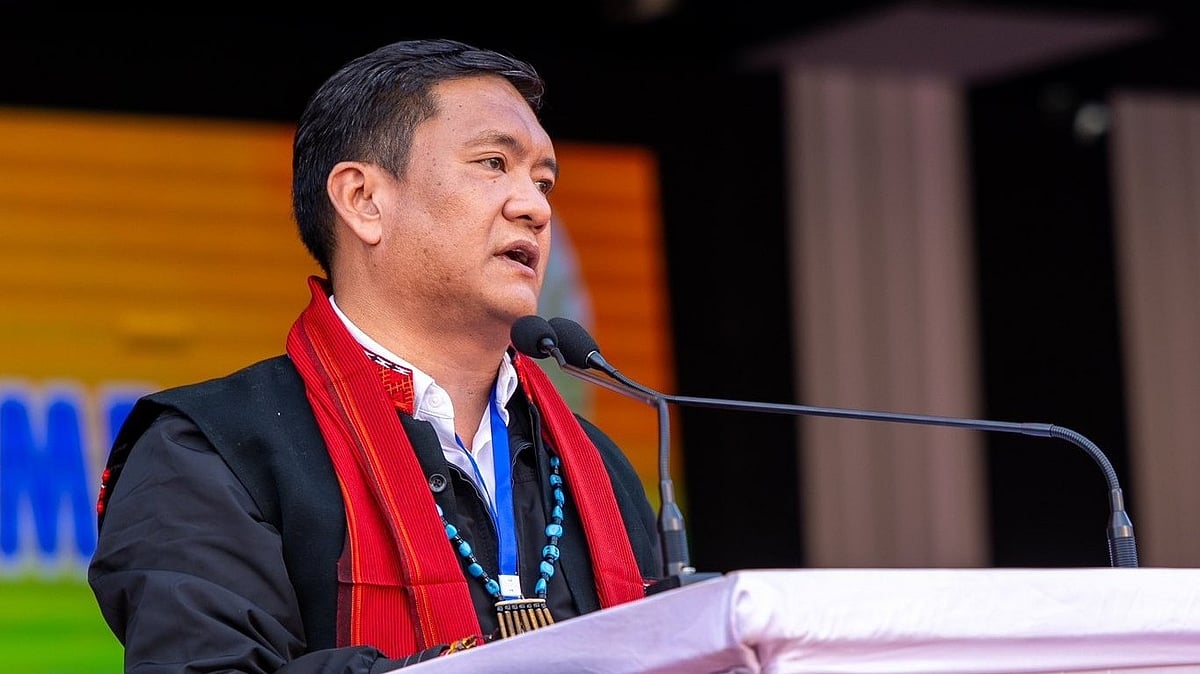
Arunachal Pradesh chief minister Pema Khandu on Wednesday stressed the need for responsible water management and storage in the Siang Valley, amid continuing protests by sections of local communities against the preliminary feasibility process for the proposed 11,000 MW Siang Upper Multipurpose Project.
Khandu, interacting with community-based organisations and officials from the Siang Valley, said the region faced the twin challenges of sudden high upstream river flows and water scarcity during dry months.
“The experiences of Sikkim and the wider Himalayan region remind us how quickly extreme water events can become major downstream disasters,” Khandu said in a post on X.
He said water security also meant ensuring availability during periods of scarcity, making storage and responsible water management important for building resilience.
“Storage means safety, and preparation means resilience,” he said.
The remarks came as opposition to the proposed Siang Upper Multipurpose Project (SUMP) continues in Siang and Upper Siang districts. The project, with a proposed installed capacity of around 11,000 MW, is being discussed not only as a hydropower project but also in the context of water storage, flood moderation and long-term water management in the Siang-Brahmaputra basin.
Sections of local communities, however, have opposed the pre-feasibility report (PFR) process, citing concerns over the project's potential impact on land, forests, livelihoods, the environment and traditional ways of life. Protests against the PFR and survey activities have continued in the valley, with demonstrators demanding that the process be stopped.
On Wednesday, protesters in Yingkiong raised slogans against the PFR and survey activities. An official said protesters also entered the residence of local MLA Alo Libang and raised slogans against him.
The government has maintained that the PFR is only a preliminary exercise to establish the project's feasibility and assess its possible implications. Khandu has said the exercise does not amount to a final decision to construct the project.
The government has also constituted an empowered high-level committee headed by rural development and panchayati raj minister Ojing Tasing to oversee and coordinate the PFR process. The committee is tasked with facilitating consultations and ensuring that concerns raised by local communities are considered.
The protests have intensified as the government has moved ahead with preparations for the PFR. Local groups have also opposed the deployment of security personnel in areas associated with the proposed survey.
Khandu's latest remarks place water storage and management alongside hydropower generation as part of the government's stated rationale for the proposed project, while the dispute over the PFR continues between the state government and sections of the local community.
Join our official telegram channel (@nationalherald) and stay updated with the latest headlines