Nation
Black-headed caterpillar infestation threatens coconut plantations in Coimbatore
Farmers urge swift intervention as destructive pest spreads across villages in Sulur taluk, raising fears of significant crop losses
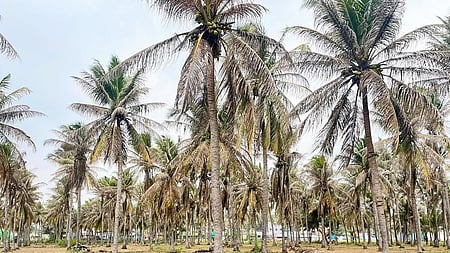
A rapidly spreading infestation of the black-headed caterpillar has emerged as a serious threat to coconut plantations in parts of Tamil Nadu's Coimbatore district, prompting farmers to seek urgent intervention from the horticulture department.
The outbreak has been reported in the northern parts of Sulur taluk, with growers warning that the pest is damaging coconut palms and spreading steadily to nearby villages.
The infestation was first detected in Mopperipalayam, where farmers said a large number of trees have already been affected. They fear the pest is now advancing to neighbouring villages, including Kaduvettipalayam, Kittampalayam and Paduvampalli, aided by prevailing northerly and easterly winds.
The black-headed caterpillar (Opisina arenosella) is one of the most destructive pests affecting coconut palms. Its larvae feed on the underside of leaves, stripping away chlorophyll-rich tissue and severely reducing the trees' ability to carry out photosynthesis.
As the attack intensifies, affected fronds gradually dry up, new leaf growth declines and coconut production falls, leading to significant economic losses for growers. Farmers in the affected areas said they have noticed discoloured and dried fronds, along with silken webs and insect droppings beneath the leaves, indicating widespread infestation.
Growers have appealed to the horticulture department to intensify containment measures before the pest spreads further and causes extensive damage to plantations across the region.
Officials have advised farmers to adopt an integrated pest management approach to control the outbreak. They recommended pruning and destroying heavily infested fronds to eliminate larvae and pupae and curb the pest's spread.
Biological control has also been suggested through the release of parasitic wasps, particularly Bracon species, which prey on the caterpillars. Given the current wind conditions, officials advised releasing the parasitoids from the western side of plantations during the cooler hours of the day to maximise their effectiveness.
As an additional measure, farmers have been asked to install one light trap per acre and operate it between 7 p.m. and 11 p.m. to attract and destroy adult moths before they can lay eggs.
Chemical treatment has been recommended only for severe infestations. Officials advised targeted spraying beneath affected fronds using approved insecticides, including Dichlorvos, or formulations containing Malathion, Quinalphos or Phosphamidon, strictly at the prescribed dosage.
The horticulture department has also urged farmers with coconut plantations located within a three-kilometre radius of the affected villages to release parasitoids as a preventive measure to reduce the risk of the infestation spreading further.
With IANS inputs
Join our official telegram channel (@nationalherald) and stay updated with the latest headlines