Nation
Declare drought and provide Rs 50,000 per hectare, Pawar tells Maha govt
Maharashtra says 83 talukas across 19 districts have received no rain for more than 20 days, but crop-loss assessments must wait until after 5 October
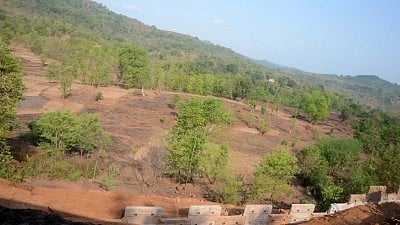
NCP-SP chief Sharad Pawar has urged Maharashtra chief minister Devendra Fadnavis to declare drought in severely affected parts of the state and introduce an immediate relief package for farmers facing crop losses, water shortages and fodder scarcity.
In a letter shared on X on Friday, the former Union minister presented nine demands aimed at addressing the worsening rural crisis caused by deficient and erratic monsoon rainfall across Marathwada and other regions.
Pawar called upon the government to bypass the usual procedural requirements, identify the worst-affected talukas and begin relief operations without delay.
His appeal came shortly after Fadnavis, speaking on Marathwada Liberation Day, reiterated his government’s commitment to making the region drought-free.
“Due to the failure of rains across most parts of the state this year, the farming community is facing a massive crisis. Standing crops such as soybean, cotton, pearl millet (bajra), maize, pigeon pea (tur), green gram (moong), and black gram (urad) have withered away, compounded by an increase in pest infestations. Consequently, the situation regarding agriculture, drinking water, and fodder supply is set to worsen,” Pawar warned.
He demanded financial assistance of at least Rs 50,000 per hectare for affected cultivators and a special payment of Rs 25,000 to every landless agricultural labourer household.
Pawar also sought an immediate farm loan waiver to enable farmers to obtain fresh crop credit. He proposed increasing the incentive subsidy for regular loan repayments from Rs 50,000 to Rs 1 lakh and extending the waiver to farmers who had defaulted on crop loans taken during 2025–26 because of the prevailing conditions.
Among his other demands was the retrospective implementation of the Re 1 crop insurance scheme to cover farmers affected by the current dry spell. He also asked the government to release the previously announced insurance compensation of Rs 17,000 per hectare for damage caused by last year’s unseasonal rainfall.
Pawar urged the administration to undertake dedicated water-conservation and agricultural works under the Mahatma Gandhi National Rural Employment Guarantee Scheme in the affected talukas.
He sought tanker supplies to protect fruit orchards, rapid surveys of water-scarce villages and the establishment of fodder camps according to local requirements. The Energy Department should also conduct a special drive to repair faulty transformers and address power disruptions during the drought, he said.
The NCP-SP leader proposed state- and district-level control rooms to track rainfall, crop conditions, drinking water availability, fodder supplies and livestock health daily.
He also demanded a complete educational fee waiver for students in drought-hit talukas, arguing that relief should cover full tuition costs instead of being limited to examination fees.
“Considering the gravity of this serious situation arising for farmers, farm labourers, livestock, and rural life, it is expected that the Chief Minister will take positive decisions on the above demands and implement necessary remedial measures immediately,” Pawar said.
Fadnavis has yet to issue an official response to the demands.
The letter followed a state Cabinet review of the monsoon situation on Tuesday. The Revenue and Agriculture departments reported that 83 talukas across 19 districts had received no rainfall for more than 20 days, prompting concern from the Chief Minister and other ministers.
Although the government did not announce an immediate relief package, Fadnavis directed the administrative machinery to remain on high alert.
The state subsequently explained that it could not declare drought immediately because crop-damage surveys and field verification must be conducted after 5 October under National Disaster Response Fund guidelines and central drought-management norms.
According to the agriculture department, assessments conducted before that date could make affected farmers ineligible for central assistance and produce an inaccurate estimate of crop losses. The government is preparing a broader package of relief measures and has directed departments to coordinate their response.
With IANS inputs
Join our official telegram channel (@nationalherald) and stay updated with the latest headlines