Nation
Delhi SIR: 33 lakh voters face notices, but ECI won’t say why
Plea in Supreme Court seeks names of voters served notices and criteria for ‘logical discrepancies’ and ‘No Mapping’ classifications
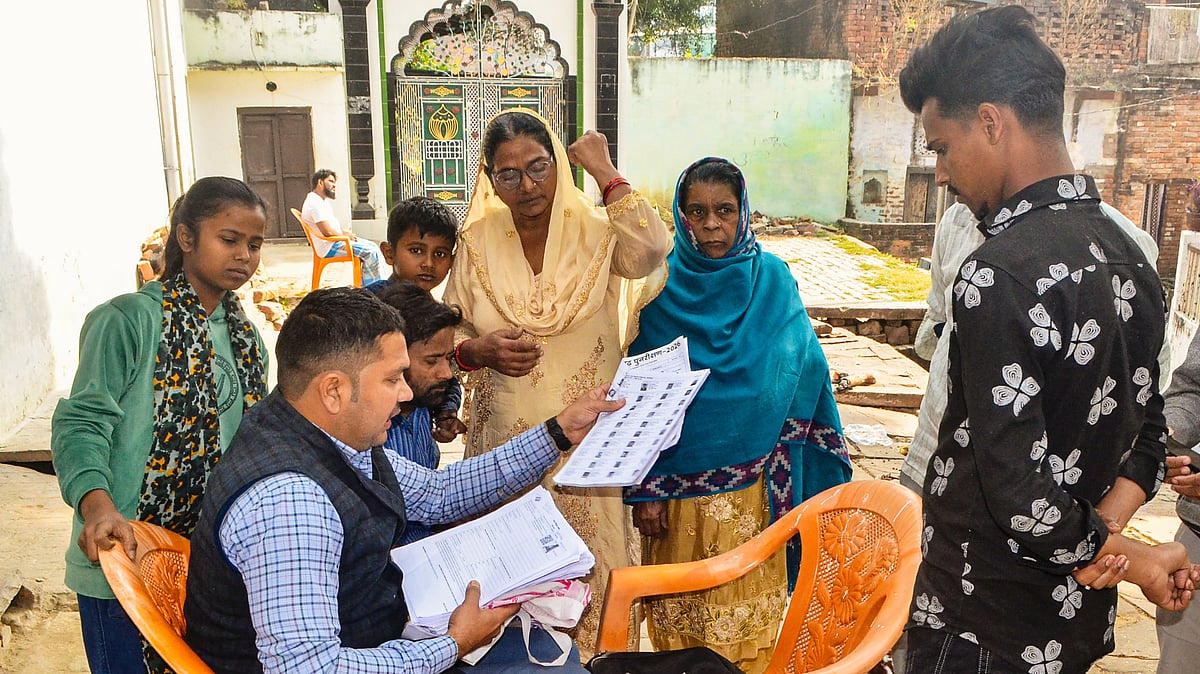
Around 33.13 lakh voters included in Delhi’s draft electoral roll have been identified for notices under ‘No Mapping’ or ‘Logical Discrepancies’, according to a Supreme Court petition.
Petitioners Anjali Bhardwaj and Amrita Johri have challenged the alleged failure to publish the names of those served notices and the specific grounds for doing so.
The Supreme Court is scheduled to hear the plea on 21 September, while residents of JJ Bela Estate are filing Form 6 applications after hundreds of names were excluded from the draft roll.
The process of issuing notices and conducting hearings has begun under the special intensive revision (SIR) of Delhi’s electoral rolls, but questions are being raised over the lack of public information on who has been served notices and the grounds on which they have been issued.
The Election Commission of India (ECI) and the Delhi chief electoral officer have not, according to a petition filed in the Supreme Court, published the names of voters classified under ‘No Mapping’ or ‘Logical Discrepancies’, or clearly disclosed the criteria used to place voters in these categories.
Congress booth-level agent-1 (BLA-1) in Okhla, Fauzul Azim, said only booth-level officers (BLOs) and election officials know which voters have not been mapped and who has been issued notices.
Mapping involves linking a current voter to their details in the 2002 electoral roll, including the part and serial numbers. Where a voter’s name does not appear in the 2002 roll, the linkage is established through the details of their parents recorded in that roll.
The issue has now reached the Supreme Court. Transparency activists Anjali Bhardwaj and Amrita Johri have filed a petition challenging the alleged lack of transparency in the Delhi SIR process. The petition says around 47.5 lakh electors were excluded from the draft roll, while another 33.13 lakh voters included in the draft were identified for notices on grounds of ‘No Mapping’ or ‘Logical Discrepancies’. Of these, 13,79,785 were classified as having no mapping and 19,33,134 under logical discrepancies.
The petitioners have alleged that the ECI and Delhi chief electoral officer have neither published the list of voters who were issued notices nor specified the precise grounds for issuing them. They have sought a consolidated, searchable list of all such voters, along with their addresses and the specific reason or category for each notice.
The petition also questions the use of the term ‘Logical Discrepancies’, arguing that neither the ECI’s 14 May communication nor the original SIR order sets out clear parameters or a methodology for deciding when a voter falls into the category.
According to the petitioners, discrepancies can include differences in names, parental details or age. They have also questioned whether the categories and criteria used in West Bengal’s SIR are being applied in Delhi.
The draft electoral roll published on 31 August contains 97.53 lakh electors who submitted their Enumeration Forms, according to figures cited in the petition. A further 47.56 lakh electors were excluded from the draft roll under the categories of absent, shifted, dead or duplicate (ASDD).
In a 9 September post on X, Bhardwaj questioned the Delhi chief electoral officer over reports that more than 33 lakh people included in the draft roll were being issued notices. She said 19.33 lakh voters had been classified under ‘anomalies’ or logical discrepancies and 13.79 lakh as ‘unmapped’.
Bhardwaj also questioned why the details of those receiving notices had not been made public. She said the Election Commission’s guidelines required lists of voters classified under logical discrepancies and no mapping to be published on the Delhi CEO’s website and displayed at relevant offices.
Bhardwaj and Johri subsequently sent a detailed representation to the Delhi chief electoral officer on 13 September. The Supreme Court is scheduled to hear their plea on 21 September.
JJ Bela Estate residents file Form 6
The SIR exercise has also triggered uncertainty among residents of JJ Bela Estate in central Delhi.
National Herald reported on 12 September that 728 voters from old Part 33 under the Chandni Chowk Assembly constituency had been excluded from the draft roll on the basis of ASDD categorisation. Minutes of a BLO-BLA meeting showed that 632 voters in JJ Bela Estate had been marked as ‘shifted’.
A subsequent National Herald reality check found more than 500 residents of JJ Bela Estate who had filled enumeration forms still living in their settlements and trying to have their names restored to the electoral roll.
Kamal Master, a resident of the area, said voters in JJ Bela Estate had submitted 462 Form 6 applications to BLOs since the publication of the draft roll. “The remaining voters still have to fill Form 6. The Election Commission has assured us that the names will be included in the voter list. Now let’s see what happens,” he said.
Asked whether BLOs had helped residents fill the forms, Master said educated children living in the settlements had helped people complete them. “We got the educated children from the slums to fill the forms. Everyone has worked hard,” he said.
Join our official telegram channel (@nationalherald) and stay updated with the latest headlines