Nation
Five decades of mining cost Goa’s Sirigao village Rs 4,000 crore: Study
The report commissioned by Sirigao residents comes amid rising environmental concerns as Bicholim opens its doors to large-scale real estate development
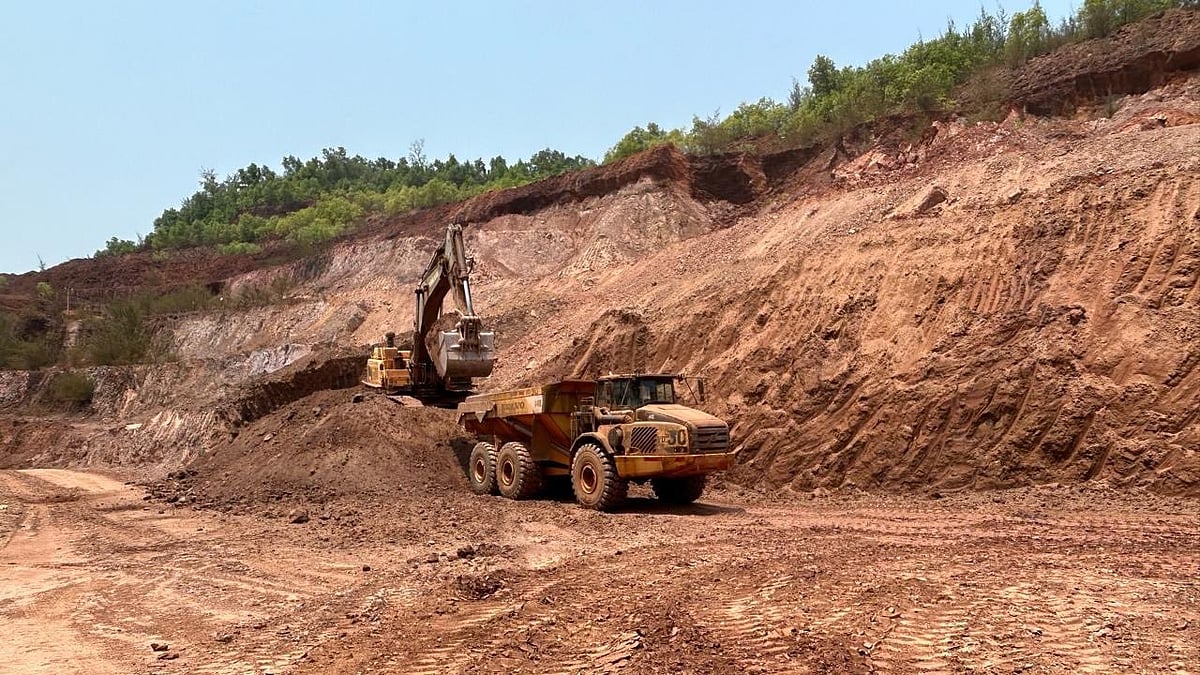
Five decades of iron ore mining in Sirigao have caused an estimated Rs 4,000 crore in environmental, economic and social damage, against gross ore sales of Rs 7,000 crore, according to a new study
The report documents the loss of water sources, agricultural livelihoods and natural resources, alongside mining-related health concerns
The findings come ahead of Goa’s 2027 assembly elections, as land use, mining rehabilitation and opposition to a luxury township in Bicholim sharpen the debate over the state’s development priorities
Five decades of iron ore mining in Sirigao, a village in North Goa’s Bicholim taluka, have left an estimated environmental, economic and social damage bill of Rs 4,000 crore, according to a study released on Tuesday.
The assessment comes at a politically significant juncture for Goa. With assembly elections due in early 2027, the state is grappling with the consequences of decades of mining, the pressures of large-scale real estate development and growing demands from village communities for greater control over their land and natural resources.
Authored by Dr Sagar Dhara of the South Asia People’s Action on Climate Change (SAPACC), the report was commissioned by Sirigao residents and released by environmental advocacy organisation Goa Foundation.
Completed in September after two years of research, the study estimates that iron ore extracted from the village generated gross revenue of approximately Rs 7,000 crore over five decades. The estimated cost of the resulting damage amounts to nearly 60 per cent of that revenue.
The environmental cost of mining
The study places direct losses suffered by residents at Rs 1,000 crore, covering damage to agriculture, fisheries, water resources, health and residential properties.
A further Rs 2,000 crore has been attributed to wider environmental and social costs, including declining ecological productivity and carbon emissions. The report estimates that at least Rs 1,000 crore would be needed to begin restoring the damaged ecosystem.
According to the assessment, Sirigao has lost access to its traditional sources of clean water, leaving residents dependent on alternative supplies.
The researchers documented declining agricultural output, including paddy, cashew, coconut and mango production, alongside losses in dairy farming, traditional fisheries and access to forest produce.
The report also raises concerns over the long-term health implications of exposure to contaminated air and water. Through scientific modelling, it estimates a lifetime cancer risk of between 6,900 and 8,200 cases per million people associated with pollution exposure. These figures represent modelled risks.
The study also links mining dust to respiratory ailments and documents structural damage to houses that residents attribute to mining-related vibrations.
A long history of mining disputes
Iron ore mining has historically been a major contributor to Goa’s economy, generating export earnings, employment and business opportunities across its hinterland. Its environmental consequences, however, have been the subject of prolonged litigation and public protests.
The industry faced a major disruption in 2012 following the findings of the Justice M.B. Shah Commission, which highlighted widespread regulatory violations and irregularities in mining operations.
Goa Foundation subsequently approached the Supreme Court, which in 2014 ruled that mining operations conducted after the expiry of leases in November 2007 were illegal.
In February 2018, the Supreme Court quashed the second renewal of 88 mining leases, bringing extraction to a halt. Commercial mining resumed in April 2024 after a six-year shutdown, with Vedanta’s Sesa Goa beginning fresh extraction at the Bicholim mineral block under the new auction-based leasing framework.
The latest assessment brings renewed attention to the question of compensation and rehabilitation for communities affected by historical mining operations.
Real estate development adds to Bicholim’s land-use debate
Bicholim has also emerged as a focal point of resistance to large-scale real estate development in Goa’s hinterland.
Earlier this year, residents of Karapur and Sarvan villages launched an agitation against One Goa, a proposed luxury township promoted by the House of Abhinandan Lodha.
According to The Indian Express, protesting villagers said the development would cover more than 53 hectares, with its first phase envisaging 1,388 villa plots, a five-star hotel and an artificial beach. Residents expressed concerns about agricultural land conversion, water availability and the environmental impact of the project. The developer maintained that it had secured the necessary approvals.
In September, villagers called off their 161-day agitation after the local panchayat issued a stop-work notice to the developer, following intervention by Chief Minister Pramod Sawant and district authorities.
While the mining assessment and the township dispute concern separate activities, both have brought questions of water security, ecological carrying capacity, land use and community participation into focus across Bicholim.
Environmental concerns ahead of 2027 polls
The findings assume added significance ahead of the Goa Assembly elections, with the term of the current 40-member legislature scheduled to expire on 14 March 2027.
The BJP government led by Sawant faces the challenge of balancing economic opportunities arising from mining and real estate investment with concerns over environmental protection, infrastructure capacity and the preservation of traditional livelihoods.
For Goa’s mining belt, the debate increasingly encompasses the distribution of economic benefits, accountability for environmental damage and the long-term consequences of land conversion.
Study seeks compensation and ecological restoration
The Sirigao report recommends that mining companies and leaseholders compensate residents for health-related harm and livelihood losses, alongside funding the restoration of contaminated soil and water resources.
It also proposes restrictions on the consumption of locally sourced water and homegrown produce until independent testing establishes their safety.
Among its more sweeping recommendations are the cancellation of existing mining permissions and a requirement for unanimous approval from the Sirigao Gram Sabha before any fresh mining activity is permitted.
The report further proposes substantial bank guarantees from future mining operators, to be held by the high court, to ensure adequate financial resources are available for environmental protection and restoration.
As Goa approaches another electoral cycle, the Sirigao findings bring renewed attention to who bears the long-term environmental and social costs of the state’s economic development.
With PTI inputs
Join our official telegram channel (@nationalherald) and stay updated with the latest headlines