Nation
Govt blocks Bitchat, but determined users can still bypass the ban
Removal of offline messaging app from app stores and blocking of its website could leave ordinary users locked out while determined users find alternatives
Bitchat, the offline messaging app developed by Twitter co-founder Jack Dorsey, has been removed from Apple’s App Store and Google Play in India following blocking directions from the Union ministry of electronics and information technology (MeitY). Its website has also become inaccessible through several Indian internet service providers.
Dorsey made the App Store removal public on 3 October, posting a screenshot of a notice from Apple’s App Review team. According to the notice, Apple removed the app “per demand from the Union ministry of electronics and information technology (MeitY)” because it “includes content that is illegal in India”. Apple also blocked TestFlight testing of the app in India.
The notice cited Section 69A of the Information Technology Act, 2000, but did not specify what content was considered illegal or which of the grounds under Section 69A was invoked. The app was also no longer available for download from Google Play in India.
Bitchat remains available on Apple's App Store in other countries.
What is Bitchat?
Bitchat is an open-source messaging app launched in July 2025. Unlike conventional messaging services, it can operate without an internet connection or mobile network.
Phones running Bitchat connect with each other over Bluetooth, allowing messages to hop from one device to another and form a mesh network that can extend beyond the range of a single Bluetooth connection.
Messages are end-to-end encrypted, while the app does not require users to provide a phone number or create an account. It also has an internet-based mode, but its offline mesh capability has attracted users in countries where governments have imposed internet shutdowns, including Nepal, Indonesia, Uganda and Iran.
India had targeted Bitchat earlier
The latest action is the second known attempt by the Indian government to restrict Bitchat in less than three months.
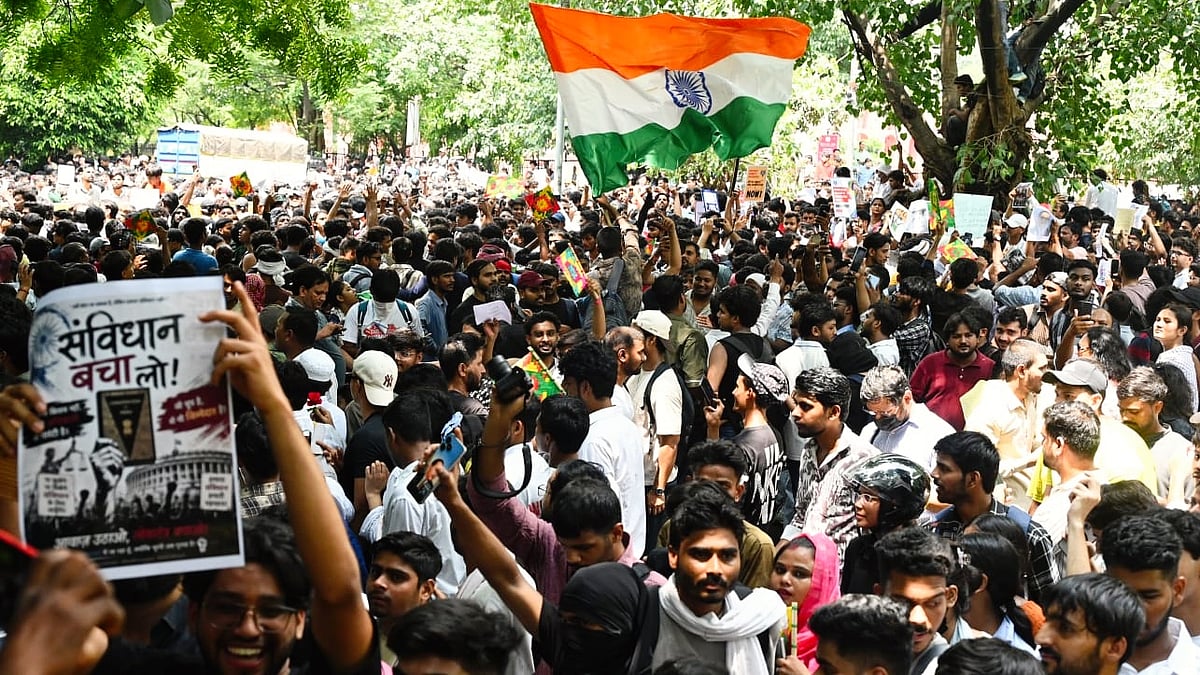
In July, during student protests at Jantar Mantar over the NEET paper-leak controversy, mobile internet access was suspended around Parliament and Jantar Mantar. Protesters turned to Bitchat to communicate.
According to Sensor Tower data shared with TechCrunch, India accounted for 85 per cent of Bitchat's global downloads between 17 and 23 July.
On 23 July, the Indian Cyber Crime Coordination Centre (I4C), which functions under the Union home ministry, issued a notice to GitHub seeking the removal of three pages hosting Bitchat's source code and Android releases within three hours.
The notice argued that the app's design made it difficult for law enforcement agencies to intercept communications, identify users and conduct investigations. Dorsey responded that the Indian government did not like technologies such as Bitchat and wanted it taken down.
The repositories remained accessible at the time. That notice relied primarily on provisions of the IT Act concerning intermediary liability rather than Section 69A's blocking powers. According to MediaNama, the July orders were later withdrawn.
India is not the first country where Bitchat has faced restrictions. Apple removed the app from its China App Store in February this year following a request from Chinese authorities.
The Internet Freedom Foundation has called the latest removal unconstitutional, arguing that Section 69A permits blocking of unlawful information but does not provide for removing an entire messaging application because it can function during internet shutdowns. It has said it will file applications under the RTI Act seeking a copy of the blocking order.
The problem with a single gatekeeper
Apple and Google have complied with MeitY's directions, but their users face different consequences.
For iPhone users in India, the App Store is effectively the only practical way to install an app. Apple's guidelines require applications to comply with the law in every territory where they are offered, and the company has previously acted on government requests, including in China and now India.
The episode therefore highlights the significance of controlling an application's main distribution channel. A government seeking to restrict access does not necessarily have to reach individual users or developers if the company controlling the principal distribution platform complies with its request.
Apple has built its brand around privacy and device-level security. The issue here is different: an iPhone sold and used in India cannot necessarily be relied upon to provide access to communication tools that the government seeks to restrict.
Android offers more ways around the block
Removing Bitchat from Google Play does not by itself prevent Android users from installing it.
Users can download installation files, or APKs, from other sources and install them directly. Blocking Bitchat's website makes that more difficult, but does not eliminate the possibility.
Bitchat also added a feature in July that allows Android users to share the application itself with nearby phones without an internet connection. An application capable of spreading directly from phone to phone is consequently harder to suppress through directions to app stores and internet service providers alone.
However, sideloading applications is becoming more difficult.
Since September, certified Android devices in Brazil, Indonesia, Singapore and Thailand have begun requiring developers to register their identities with Google. Apps from unregistered developers can still be installed using developer tools or an advanced installation process involving a 24-hour waiting period.
Google plans to extend developer verification to certified Android devices globally, including India, in 2027. Sideloading will remain possible, but the process is expected to become more cumbersome.
Alternatives outside Apple and Google
Bitchat is also not the only messaging or software option outside the control of Apple and Google.
GrapheneOS is an open-source, security-focused version of Android designed for Google Pixel phones. It does not ship with Google services by default, although users can install them in a sandbox.
LineageOS, a widely used community-built Android operating system, supports a much wider range of devices, including older and mid-range phones. Because it does not ship with Google's mobile services, it is not affected by Google's developer-verification requirements in the same way as certified devices using Google Mobile Services.
Other alternatives include /e/OS, which provides phones with a de-Googled operating system, as well as mobile Linux distributions such as postmarketOS and Ubuntu Touch.
There are also messaging applications designed to function outside conventional internet infrastructure. Briar, for instance, allows users to communicate over Bluetooth and Wi-Fi without the internet and can use Tor when an internet connection is available. It is distributed through F-Droid, an alternative app repository for free and open-source software.
Who does the removal affect?
The government's stated concern, according to the July notice, is that applications such as Bitchat can make lawful interception and investigation more difficult.
Removing the application from two major app stores and blocking its website, however, does not necessarily eliminate access for users who have the technical knowledge or resources to find alternatives.
Android users can sideload the application, while iPhone users with App Store accounts registered in other countries may still be able to download it. The application's source code is also publicly available, while other applications offer similar forms of offline communication.
The result could therefore be that restrictions impose a greater burden on ordinary users than on those determined to circumvent them.
Most users do not unlock bootloaders, install alternative operating systems or sideload applications. Such processes can carry practical risks, including voiding warranties or rendering a phone unusable if performed incorrectly. Custom operating systems can also create compatibility problems with banking and UPI applications.
For such users, access to a messaging application may depend entirely on whether it remains available through the default app store.
That means the people most affected could include students at a protest where mobile internet has been suspended, people living in areas under an internet shutdown who need to contact family members, or ordinary users who simply rely on the software distribution system built into their phones.
The restriction may therefore make access to Bitchat considerably harder for the average user without necessarily making the technology inaccessible to those with the motivation and technical means to circumvent the block.
Join our official telegram channel (@nationalherald) and stay updated with the latest headlines