Nation
Haryana Human Rights Commission slams civic bodies over septic tank deaths
Rights panel says probe into workers’ deaths violates Article 21, flouts Supreme Court ban on unsafe manual sewer entry
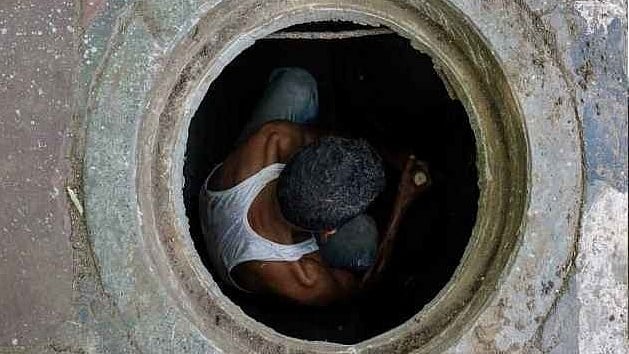
The HHRC (Haryana Human Rights Commission) has sharply criticised civic authorities and the police for what it described as a 'lackadaisical approach' in investigating the deaths of two workers who allegedly suffocated while cleaning a septic tank in Hansi last year, calling the handling of the case a grave violation of the right to life and dignity under Article 21 of the Constitution.
In an order dated 17 December 2025, the commission said the incident reflected a continuing failure of authorities to enforce the Supreme Court’s clear directives banning manual entry into sewers and septic tanks without protective equipment.
The case relates to the deaths of two workers who were allegedly forced to enter a hotel’s septic tank without safety gear in October 2025. The HHRC took suo motu cognisance of the incident following reports that the workers were made to carry out hazardous cleaning work in violation of existing laws and court rulings.
Commission’s strong observations
The full bench of the HHRC — comprising Chairperson Justice Lalit Batra and members Kuldip Jain and Deep Bhatia — noted that such incidents continue to occur despite the Supreme Court’s landmark judgment in Safai Karamchari Andolan vs Union of India, which prohibits manual sewer cleaning without mechanisation and adequate safety measures.
The commission said it would not allow the matter to be “brushed aside” and asserted that accountability for the deaths would be firmly fixed.
Although an FIR was registered on 19 October 2025, the HHRC found that the investigation had not progressed at the expected pace. After examining a status report submitted by the Hansi Superintendent of Police, the commission observed that it was “conspicuously silent” on fixing responsibility, even though the district attorney had already opined that a cognisable offence was prima facie made out.
“The failure to act decisively in pursuance of the said legal opinion reflects a lackadaisical approach on the part of the Investigating Agency in a matter involving loss of human lives and grave violation of human rights,” the commission said.
Officials summoned, multiple reports sought
Taking a stern view of the slow progress, the HHRC directed the investigating officer and the Deputy Superintendent of Police (Crime), Hansi, to appear before it in person along with the complete case records.
To ensure a comprehensive review of accountability and relief, the commission issued a series of directions, asking multiple authorities to submit detailed reports within a fixed timeframe.
It ordered that within six weeks:
The Deputy Commissioner must submit a report on the compensation and relief paid or sanctioned to the families of the deceased workers, any interim assistance provided, and the proposed rehabilitation measures for their dependents.
The Municipal Council or the gram panchayat of Rampura village must report on the circumstances leading to the incident, the licensing and inspection status of the hotel premises, and any violations of the Prohibition of Employment as Manual Scavengers and Their Rehabilitation Act, 2013.
The hotel management must file a compliance report detailing steps taken to suspend unsafe manual entry into septic and sewer tanks, availability of safety gear, procedures for gas testing, rescue arrangements, provision of oxygen cylinders and masks, and progress towards mechanisation.
The commission also directed the Superintendent of Police to personally monitor the investigation and submit an action-taken report a week before 15 January, the next date of hearing in the matter.
Broader concern over manual scavenging
The HHRC said the deaths in Hansi underline a disturbing pattern of continued manual scavenging practices, despite statutory prohibitions and repeated judicial interventions.
Under the 2013 Act, employing any person for manual scavenging or hazardous cleaning of sewers and septic tanks without protective gear and mechanised support is a criminal offence. The Supreme Court has further strengthened these safeguards by mandating strict action against employers and officials responsible for such violations.
The commission reiterated that allowing workers to enter confined spaces such as septic tanks without safety equipment not only violates statutory law but also amounts to an affront to basic human dignity.
Next steps
With the matter now under close scrutiny, the HHRC made it clear that it expects concrete outcomes rather than routine procedural compliance. It said the upcoming hearing would focus on:
Whether criminal liability has been properly fixed,
Whether victims’ families have received timely and adequate compensation, and
Whether systemic measures are being put in place to prevent recurrence.
The commission underlined that the deaths were not merely an “accident” but a consequence of institutional failure, adding that meaningful accountability is essential to deter similar incidents in the future.
The case will be taken up again on 15 January, when the commission will review the progress of the investigation and the responses of the district administration, police and the hotel management.
Join our official telegram channel (@nationalherald) and stay updated with the latest headlines