Nation
In Ujjain, whiffs of a scandal and lust for land
A Rs 30,000-crore makeover has transformed Ujjain into a land goldmine — and fuelled allegations of insider advantage
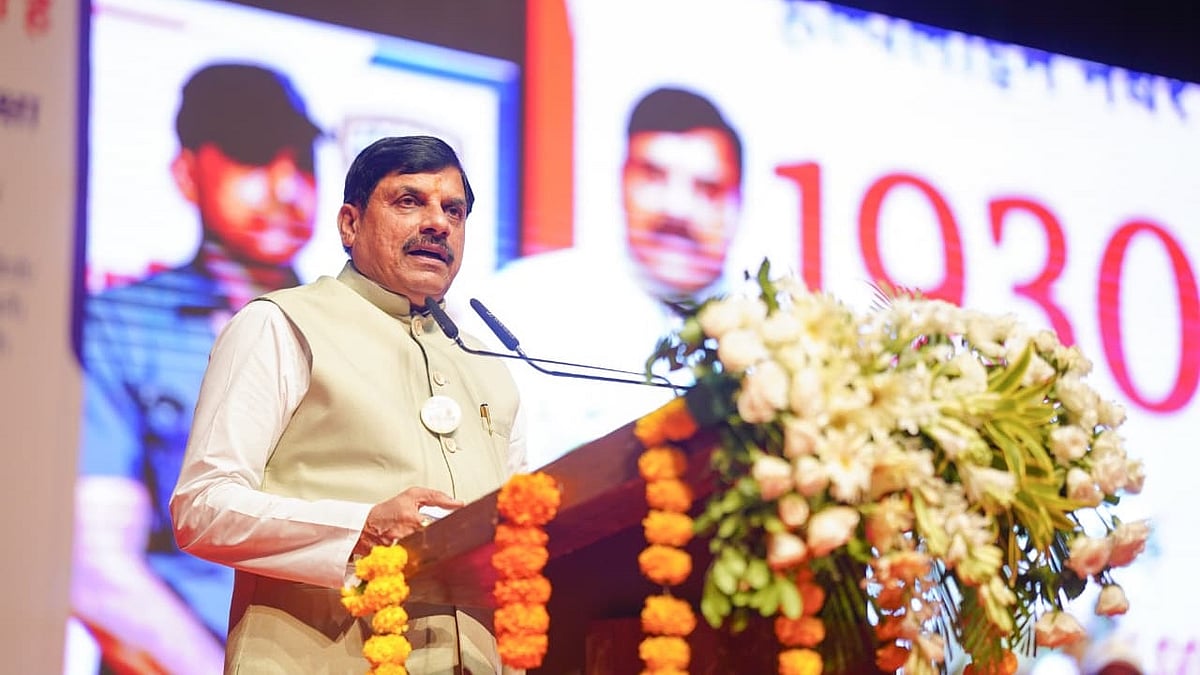
When the relatively low-profile Mohan Yadav from Ujjain was installed as chief minister of Madhya Pradesh in December 2023, among the several signals sent out was that a son of the soil was being anointed to prepare the religious city to host the Simhastha Mahakumbh in 2028.
Ujjain, like Ayodhya, would be primed as the next major centre of religion, culture, tourism and infrastructure development. Home to one of the 12 Jyotirlingas, Ujjain has witnessed a massive surge in public investment, economic zones, urban expansion and real estate activity in anticipation.
The state government has accelerated road infrastructure and urban development projects. Several highways, housing projects and satellite townships have already begun taking shape.
The scale of investment has grown dramatically over successive Simhasthas. During the 2004 Simhastha, the BJP government led by Uma Bharati earmarked around Rs 256 crore for the religious congregation. By 2016, expenditure had risen to nearly Rs 5,000 crore, much of it on creating permanent infrastructure to develop Ujjain into a major pilgrimage centre. Ahead of the 2028 Simhastha, however, the scale is unprecedented. Over the past 30 months alone, more than Rs 30,000 crore has been earmarked for Ujjain's transformation.
Of this, around Rs 25,000 crore has been allocated for Simhastha-related infrastructure. Another Rs 3,000 crore has been sanctioned for the 48.1-km Indore-Ujjain Greenfield four-lane corridor, along with Metro connectivity, six-lane highways, IT parks and an industrial township at Vikram Udyogpuri.
Additionally, Ujjain received Rs 940 crore under the Smart City Mission from the Ministry of Urban Development. More than half of this amount, around Rs 497 crore, was spent on the redevelopment of the Mahakal temple. Going a step further for the temple redevelopment project, 5.27 acres of waqf land, designated as a graveyard with a mosque, was acquired for parking facilities without obtaining the mandatory no objection certificate from the Waqf Board.
Revenue department records show a sharp rise in property registrations in both Indore and Ujjain over the past two years. Local real estate players believe that infrastructure expansion and favourable policies under the new master plan will continue driving land prices upwards in the run-up to 2028. With land values spiralling, builders and businessmen from Indore and Dewas, both within 50 km of Ujjain, have flocked to the city in search of opportunities.
Someone who bought five acres of land 8 km from Ujjain for Rs 25 lakh claims he is now receiving offers of as much as Rs 5 crore for the same plot. He is not selling. Residential and commercial property within Ujjain city and along the Ujjain-Indore and Ujjain-Dewas corridors has seen an exponential rise in valuations over the past two years.
The chief minister has announced that farmers whose land is acquired for development projects will be compensated at four times the applicable collector guideline rate.
The collector guideline rates themselves vary considerably depending on the locality and nature of the land, but market prices in many areas have surged well beyond those official benchmarks. Collector rates in Ujjain range from Rs 2,800 to 8,900 per sq. m for residential plots, and Rs 12,000-16,000-plus per sq. m for constructed properties. Rates vary widely by locality and are generally 7.5 per cent higher for stamp duty (plus 3 per cent registration fees).
Commercial prices have kept pace with the rise in market prices, and builders are snapping up land around proposed infrastructure projects. Anecdotal evidence suggests that land prices in some villages have increased nearly tenfold since 2024.
What happened in Ayodhya appears to be unfolding in Ujjain as well.
The change of land use from strictly agricultural to residential, and from residential to commercial, is the name of the game. Even when Mohan Yadav was higher education minister, it was alleged that the use of around 50 acres of agricultural land in Savarkhedi village he owned was changed to residential. While the uproar prompted the Shivraj Singh Chouhan government to reverse the order, even BJP legislators have alleged that Mohan Yadav regularised the conversion after taking over as chief minister.
In May 2026, a Bhopal-based Hindi newspaper reported that a BJP MLA from Ujjain, Chintamani Malviya, had purchased land worth Rs 3.82 crore near the Mahakal temple parking area, though the registered purchaser was Utopia Bottle and Resort Pvt Ltd. Malviya suspected the chief minister of leaking the information to the media.
Malviya claimed that the purchase was legal. He, however, challenged the media to publish reports about "a political family" grabbing all available land in Ujjain and intimidating business rivals. In a two-minute video, Malviya alleged that this powerful family had coerced a widow into selling land for as little as Rs 16 lakh per acre.
He also claimed the same family had grabbed prime land for hotel development while the legitimate owner continued to fight for justice. He also alleged irregularities involving 52 acres of land in Umer village, where records were purportedly manipulated using the name of a deceased individual.
Without naming anyone, Malviya further claimed that more than 1,000 acres of government land and buildings had been leased to a trust for 30 years at a token amount of Re 1. He warned that if attempts to target him continued, he would make public evidence exposing the political family.
"The way I have been branded, if I retaliate, hundreds of fake registries will surface," he said, adding that "those who terrorise their own party workers and leaders cannot survive in politics for long."
The confrontation between Mohan Yadav and Malviya reportedly began after Yadav became chief minister. Malviya, an MP from Ujjain between 2014 and 2019, was also a professor at Samrat Vikramaditya University. Having been reduced, as it were, to an MLA in 2023, he was served notices by the university administration asking him to vacate the government bungalow allotted to him. Malviya suspected Yadav's hand in the move.
Tensions escalated further when Malviya received a show-cause notice from the BJP after he publicly opposed and punctured Mohan Yadav's pet project — the Land Pooling Act, introduced to facilitate the acquisition of more than 800 acres of land for Simhastha 2028 and the development of a permanent 'Kumbh City' at an estimated cost of Rs 5,000 crore.
With support from the RSS farmers' wing, the Bharatiya Kisan Sangh, Malviya succeeded in escalating the issue to Union home minister Amit Shah, who reportedly urged Mohan Yadav to scrap the Act, thus shelving Yadav's dream of Kumbh City.
The simmering political rivalry received a fresh fillip after a recent investigation by the Indian Express reported that chief minister Yadav's extended family had acquired approximately 168 acres of land across Ujjain district, valued at more than Rs 45 crore, in areas expected to benefit from upcoming government infrastructure projects.
According to the report, since Yadav took office on 13 December 2023, members of his family and their associated real estate companies purchased at least 137 plots spread across nearly 168 acres. Records also indicate that some of these plots were subsequently sold between 2024 and 2025.
The investigation further reported that several of the acquired plots fell within areas where agricultural land was proposed to be converted into residential or commercial zones under the Ujjain Master Plan 2035, substantially increasing their future value.
Although the master plan was released in May 2023, before Yadav became chief minister, the report highlighted his long association with Ujjain's development. He served as chairman of the Ujjain Development Authority from 2004-10, headed the Madhya Pradesh Tourism Development Corporation between 2011 and 2013, and has represented Ujjain South in the Assembly since 2013. The chief minister's sister Kalawati Devi is chairperson of Ujjain Municipal Corporation.
Ownership records cited in the report indicated that land purchases were made by chief minister Yadav's wife Seema, daughter-in-law Shalini Yadav, brothers Nandlal and Narayan Yadav, Narayan's wife Rekha, their son Abhay Yadav, and first cousins Govind and Nilesh Yadav, either directly or through family-controlled real estate companies.
The report does not allege that these transactions were illegal. BJP leaders and the Ujjain district magistrate have maintained that neither Mohan Yadav nor his wife or son purchased any land after December 2023, when he assumed office as chief minister. Yadav's supporters have also argued that the relatives named in the report are independent individuals engaged in separate businesses and that linking their transactions to the chief minister is unfair.
The fact is that land scams are rampant in Madhya Pradesh. A BJP MLA from Katni has been accused of acquiring 1,000 acres of land in the name of a tribal person. In Singrauli, a BJP leader has been accused of diverting hundreds of acres of forest land to private individuals. In the same district, road and railway projects were reportedly delayed for more than a decade owing to alleged irregularities in land acquisition.
Whether it is the Ken-Betwa river-link project, Adani's Dhirauli coal block, or any other development project, allegations of manipulation of land records and violations of acquisition rules have been common. Watchdog institutions such as the Economic Offences Wing, the Income Tax Department and the Lokayukta Police are flooded with complaints of corruption. But the poor conviction rate suggests a sluggish approach.
Some social activists and journalists sympathetic to Yadav argue that relatively junior government functionaries, such as a patwari or even a minister's personal assistant, possess far greater landholdings than those attributed to the chief minister's family. Critics counter that such comparisons only underscore how deeply allegations of land-related corruption have become embedded in Madhya Pradesh's political and administrative system.
Whether the allegations surrounding Ujjain ultimately result in legal consequences remains to be seen. What is already evident, however, is that the city's transformation into the state's next major pilgrimage hub has triggered a scramble for land on a scale not witnessed before.
Join our official telegram channel (@nationalherald) and stay updated with the latest headlines