Nation
IndiGo declares it is 'back on its feet', but scrutiny widens on systemic failure
Former Delhi chief minister Arvind Kejriwal alleges that a collapse of this scale cannot be dismissed as an operational blip
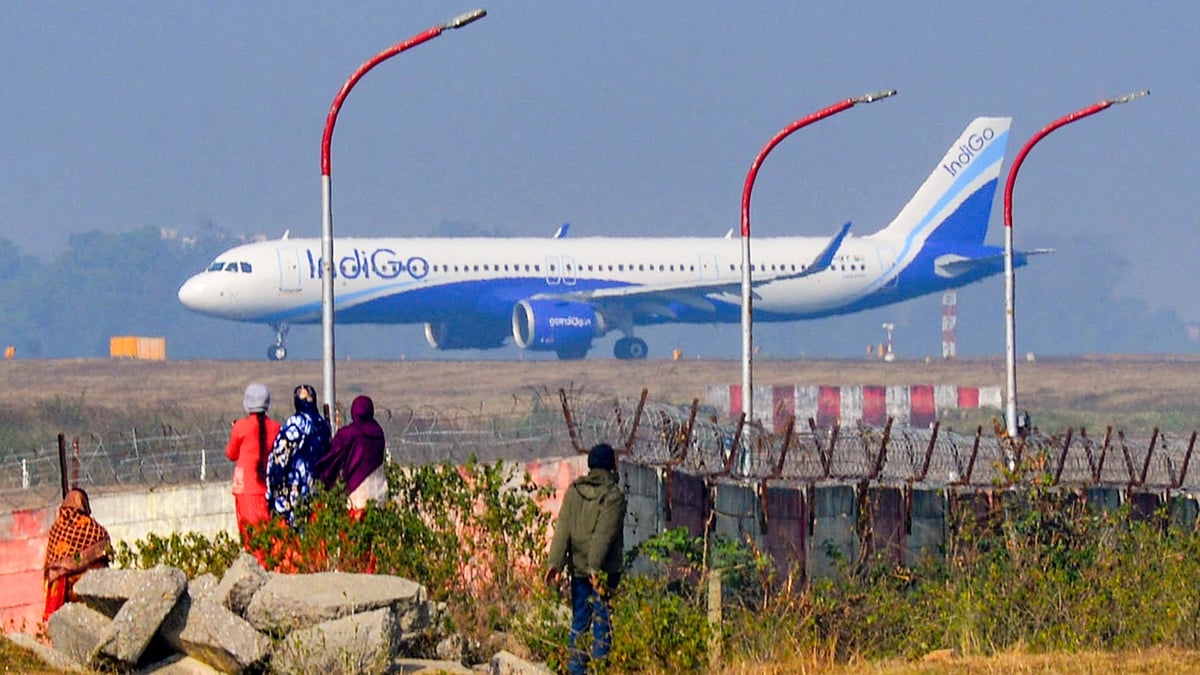
Crisis-hit IndiGo on Tuesday sought to draw a firm line under its unprecedented operational collapse, with CEO Peter Elbers releasing a video message claiming that the airline is “back on its feet” and that operations have now “fully stabilised”. Elbers said flights listed on IndiGo’s website were operating on an “adjusted network”, on-time performance had normalised, and the carrier was once again serving all 138 destinations.
He presented a rapid recovery trajectory: from 700 flights on 5 December, IndiGo climbed to 1,500 on 6 December, 1,650 on 7 December, and more than 1,800 flights by 9 December. “We’ve let you down… and we’re sorry for that,” he said, acknowledging the thousands whose plans were derailed.
Elbers emphasised that lakhs of customers had already received full refunds, with more processed daily. He confirmed that “most bags stuck at airports” had now been delivered, and that refunds and customer support remained ongoing.
But the airline remained silent on a critical legal requirement: automatic compensation for last-minute cancellations, as mandated by the civil aviation ministry’s passenger charter. Under the rules, any cancellation not communicated at least two weeks in advance must trigger compensation without passengers needing to request it — a point Elbers avoided.
IndiGo’s confident messaging comes even as the Directorate General of Civil Aviation (DGCA) has imposed a notable penalty: the airline has been ordered to cut 5 per cent of flights on heavy-traffic, high-density routes for the rest of the winter schedule.
The regulator’s reasoning, according to officials, is that IndiGo’s aggressive winter timetable — already strained by chronic crew fatigue, duty-time limits, and rapid fleet deployment — left insufficient buffer capacity, making the airline acutely vulnerable when pilot sick reports surged.
The DGCA’s 8 December directive also requires IndiGo to file a revised winter schedule and is accompanied by show-cause notices to the CEO and COO, as well as a four-member inquiry panel examining operational lapses.
Industry experts note that such a capacity reduction on core metro routes is unusual — and a sign that the regulator believes IndiGo’s earlier schedule was structurally unsustainable, regardless of the airline’s attempts to paint the meltdown as a temporary shock.
Amid IndiGo’s self-declared stabilisation, the political backlash is far from over. AAP leader and former Delhi chief minister Arvind Kejriwal, speaking in Rajkot, alleged that a collapse of this scale — over 4,000 flights cancelled since 2 December — cannot be dismissed as an operational blip.
“This is India of the 21st century, and we can’t even manage our own airlines,” he said. “Either the Indian government is incompetent… or they are complicit. I think it’s more likely the latter. This inquiry, this committee — they’re just fooling us. This is a huge scam.”
His remarks reflect growing frustration that the government is attempting to present IndiGo as the sole villain while evading scrutiny of regulatory failures that allowed the crisis to build.
In the Rajya Sabha on Monday, civil aviation minister Ram Mohan Naidu maintained that IndiGo alone bore responsibility for the chaos.
“No airline, however large, will be permitted to cause hardship to passengers through planning failures,” he said, promising “strict and appropriate action”.
This posture, critics argue, is an effort to wash the government’s hands of deeper structural shortcomings:
Chronic DGCA understaffing
Long-flagged concerns about pilot fatigue and FDTL changes
Lack of supervision over IndiGo’s winter scheduling build-up
The national risk created by a market where one airline holds 65 per cent of the domestic share
The 5 per cent capacity cut only reinforces these questions. If IndiGo’s schedule was so overstretched that the regulator had to forcibly trim it, analysts ask, why did oversight fail until after the collapse? And how did a carrier so central to India’s aviation ecosystem reach a breaking point without earlier intervention?
IndiGo may now be operating a steadier flight roster, but stabilisation does not resolve the larger issues:
Will automatic compensation be paid?
Why did the DGCA intervene so late?
How will winter scheduling be regulated in future?
Does IndiGo’s market dominance pose systemic risks?
Elbers’ message attempts to reassure passengers and reclaim narrative control. But with political pressure rising and the DGCA’s own penalties acknowledging structural failings, the debate is only beginning.
IndiGo may say it is “back on its feet”. The aviation sector — and its regulators — still have difficult questions to answer.
With PTI inputs
Join our official telegram channel (@nationalherald) and stay updated with the latest headlines