Nation
ISRO damage control over privatisation fears, says role will not be diminished
Nine associations want clarity on how private-sector push will affect ISRO’s existing workforce, recruitment and core functions
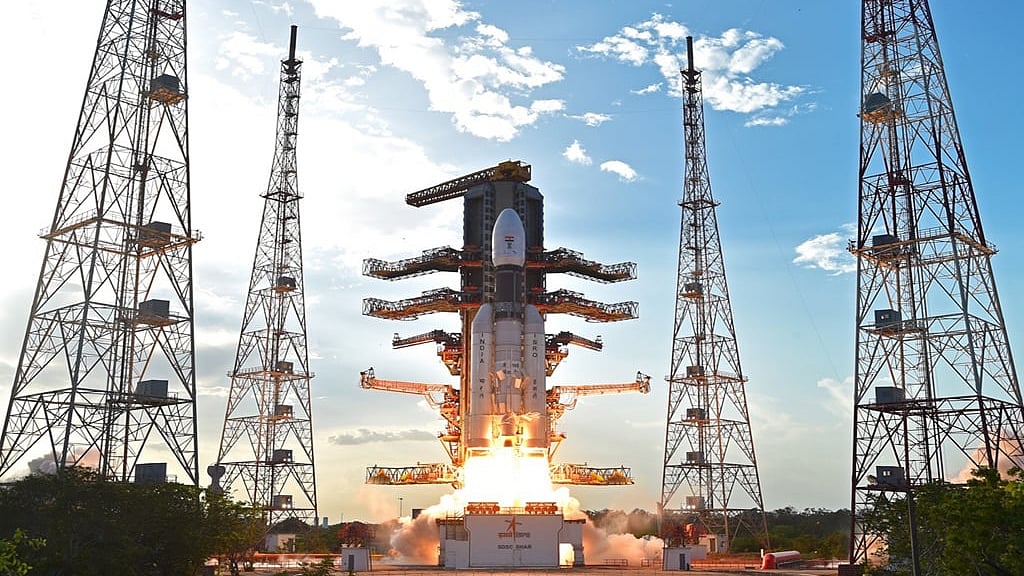
The Indian Space Research Organisation (ISRO) has seemingly moved into damage-control mode over concerns that the government’s push for greater private-sector participation could diminish the space agency’s role, insisting that it will neither be privatised nor lose its importance in India’s space programme.
ISRO chairman V. Narayanan on Monday, 7 September said the agency remained a government organisation and that the growing involvement of private companies and startups was intended to expand India’s space ecosystem rather than reduce ISRO’s responsibilities. His remarks came a day after ISRO issued a detailed clarification rejecting reports and speculation about its privatisation and saying it would remain the country’s principal institution for advanced space research, strategic missions, space science and frontier capabilities.
The intervention followed a 4 September letter from nine employee associations to Narayanan, seeking official clarity on the proposed transfer of ISRO’s manufacturing and operational functions to private entities and public sector undertakings. The associations also sought clarity on the consequences of the changes for existing employees, future recruitment and the agency’s future role.
The employees’ apprehension has been fuelled in particular by comments made by Pawan Goenka, chairman of the Indian National Space Promotion and Authorisation Centre (IN-SPACe), on 21 August that ISRO would eventually stop making launch vehicles, with their production being undertaken by private companies or PSUs.
The staff associations questioned whether Goenka’s remarks reflected an approved government policy and why there had been no formal communication from the department of space explaining its legal and administrative basis, phasing and implications for the existing workforce.
The reassurance comes at a particularly sensitive moment for ISRO, which has already been dealing with a reported exodus of more than 100 scientists. The departures, including of personnel associated with critical missions such as 'Gaganyaan', have reportedly prompted the Department of Space to tighten rules governing resignations and voluntary retirement from key projects. The reported movement of experienced scientists to private space and aerospace companies, which can offer more attractive positions and remuneration, has added to concerns about ISRO’s ability to retain its technical talent.
The issue is not simply about private companies entering a sector where they have traditionally supplied components to ISRO. The government’s space-sector reforms, initiated in 2020 and subsequently institutionalised through the Indian Space Policy 2023, envisage industry taking on a much larger role across the space value chain. A consortium led by Hindustan Aeronautics Ltd and Larsen & Toubro is already producing ISRO’s Polar Satellite Launch Vehicle (PSLV), while technology for the Small Satellite Launch Vehicle (SSLV) has been transferred to HAL.
That is why the employee associations have argued that the issue requires more than an assurance that ISRO itself will not be formally privatised. They have questioned whether the agency could eventually be reduced to a research and development institution while the realisation, testing and operation of launch vehicles and infrastructure move outside the public sector. They have also raised concerns over sanctioned posts, future recruitment, career progression and the possible loss of in-house technical expertise.
Narayanan, however, sought to present the expansion of private participation as necessary for India’s increasingly ambitious space programme. Speaking to reporters after the inaugural ceremony of the ninth edition of the Bengaluru Space Expo (BSX), he said India’s space programme was 64-65 years old and currently had 56 space assets in orbit serving the country, but that the requirements ahead were far greater.
Recalling the space-sector reforms introduced six years ago, he said ISRO was expected to hand-hold private companies and startups and help build a larger space ecosystem.
"In fact, whenever a PSLV or a GSLV is lifting off, almost 80 per cent budget is invested in Indian industries. A total of 450 industries are working for us," he said.
Narayanan also acknowledged that the concerns raised by the employee associations were genuine and said it was the organisation’s responsibility to address them. "So, surely, my colleagues, whatever they have, it is a genuine concern. It is our responsibility to clarify," he said.
He said India would ultimately need around 50 launch vehicles a year, making a substantially larger industrial base essential. "The country's requirement is around 50 launch vehicles per year. We have to go ahead," Narayanan said.
He stressed that ISRO was not being privatised and would remain a government organisation. "We are working — it's a government investment, and we are working there. But the only thing is, we now (have) so many activities. The space ecosystem in the country has to grow and the space economy has to grow," he said.
Asked about the concerns emerging from within ISRO, Narayanan said the employees would be addressed. "We will address the employees," he said.
He also pointed to the dramatic expansion of India’s launch programme over the decades. When he joined ISRO 43 years ago, he said, a launch would take place only once in three years. The agency now wants to scale up to 50 launches a year.
"So many activities are going on. Probably one or two things are only known outside, but it is our responsibility to put everything in the ISRO side. Fifty launches per year is going to be a reality," he said, adding that it would be accomplished by Indians in India.
The issue has also acquired a political dimension, with the Opposition accusing the government of deliberately shrinking ISRO’s role. Congress MP and general-secretary (communications) Jairam Ramesh called the employee associations’ intervention "courageous and commendable", alleging that in the name of promoting startups, the Modi government was deliberately curtailing ISRO’s role and transferring capabilities built over decades to private companies whose long-term commitment, he said, was uncertain. Ramesh also cited concerns previously expressed by former ISRO chairman G. Madhavan Nair over private companies and PSUs taking over the manufacture of launch vehicles.
With PTI inputs
Join our official telegram channel (@nationalherald) and stay updated with the latest headlines