Nation
Maha widens drought response across 304 talukas, prioritises water and fodder
Collectors get greater powers to approve relief works as state accelerates conservation projects and restricts movement of fodder outside the state
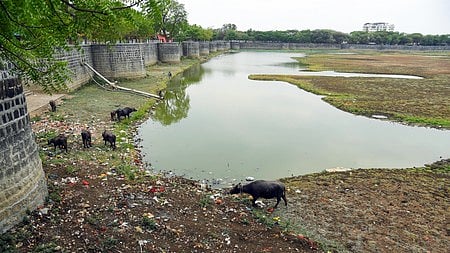
Maharashtra has announced measures to tackle drought and water scarcity after declaring drought in 304 talukas
District Collectors can approve drought-related works costing up to Rs 25 lakh per project under the MLA local development programme
The measures cover drinking water, conservation projects, fodder supplies and coordination of public health services
The Maharashtra government has announced a broad package of measures to address drought and water shortages, giving district authorities greater powers to approve works while prioritising drinking water supplies and fodder availability.
The state, which has declared drought in 304 talukas following deficient rainfall, outlined the measures in a statement issued late on Sunday. The statement brings together government resolutions, circulars and directives issued between 5 October and 6 November.
The response includes faster approvals for water and soil conservation projects, expanded fodder cultivation and district- and taluka-level committees to coordinate implementation.
For works under the 2026–27 District Annual Plan (General), the deadline for administrative sanctions has been extended to 30 November. Directives from the Chief Secretary also empower local secretaries and District Collectors to expedite technical approvals.
Collectors can sanction drought- and water scarcity-related projects costing up to Rs 25 lakh each in rural and urban areas under the MLA Local Area Development programme. MPs have been asked to recommend priority projects under their local area development programme.
Conservation works in the 304 talukas facing Trigger-1 and Trigger-2 conditions include deepening and widening streams, developing farm ponds, building recharge shafts, installing check-dam gates and creating rainwater harvesting structures. These works are being undertaken through non-governmental organisations and the VB G RAM G scheme.
A high-powered state committee chaired by the chief minister will monitor soil and water conservation projects.
To strengthen fodder supplies, the government is expanding cultivation on agricultural land, suitable forest land and reservoir submergence areas. Committees headed by Collectors will identify land with irrigation facilities for short-duration fodder crops that allow multiple harvests.
The government has fixed a base price of Rs 12 per kg for fodder and a ceiling of Rs 8 per kg for silage, excluding transport costs. The Forest Department has suspended routine grass auctions until further orders to preserve supplies for livestock and wildlife.
District Executive Drought Management Committees will determine whether fodder camps are required, with provision for one camp per revenue circle depending on livestock numbers and water availability.
Corporate social responsibility funds will support fodder depots, water supply, sanitation, CCTV systems and balers. The government has prohibited transporting fodder outside Maharashtra and diverting it for uses such as biofuel production, power generation and industrial packaging.
Drinking water measures include deepening wells, desilting, acquiring private borewells, introducing temporary supplementary piped supplies and constructing recharge shafts near water sources.
Schools and anganwadis must have clean drinking water, working handwashing facilities and regular biological testing of water samples. Tankers or temporary pipeline extensions will be used where construction remains incomplete.
Local bodies can secure the restoration of disconnected electricity supplies to water schemes by paying one month’s security deposit and reconnection charges. New electricity connections for water supply will also be permitted on payment of standard connection charges despite outstanding dues.
Taluka-level Chief Minister’s Relief Fund cells and coordination committees are also being established to help manage public health services in drought-affected areas.
With IANS inputs
Join our official telegram channel (@nationalherald) and stay updated with the latest headlines