Nation
Mumbai’s first non-AC local with automatic doors arrives for trials
The 12-coach train aims to prevent footboard travel, but ventilation and door performance during peak-hour overcrowding will face scrutiny
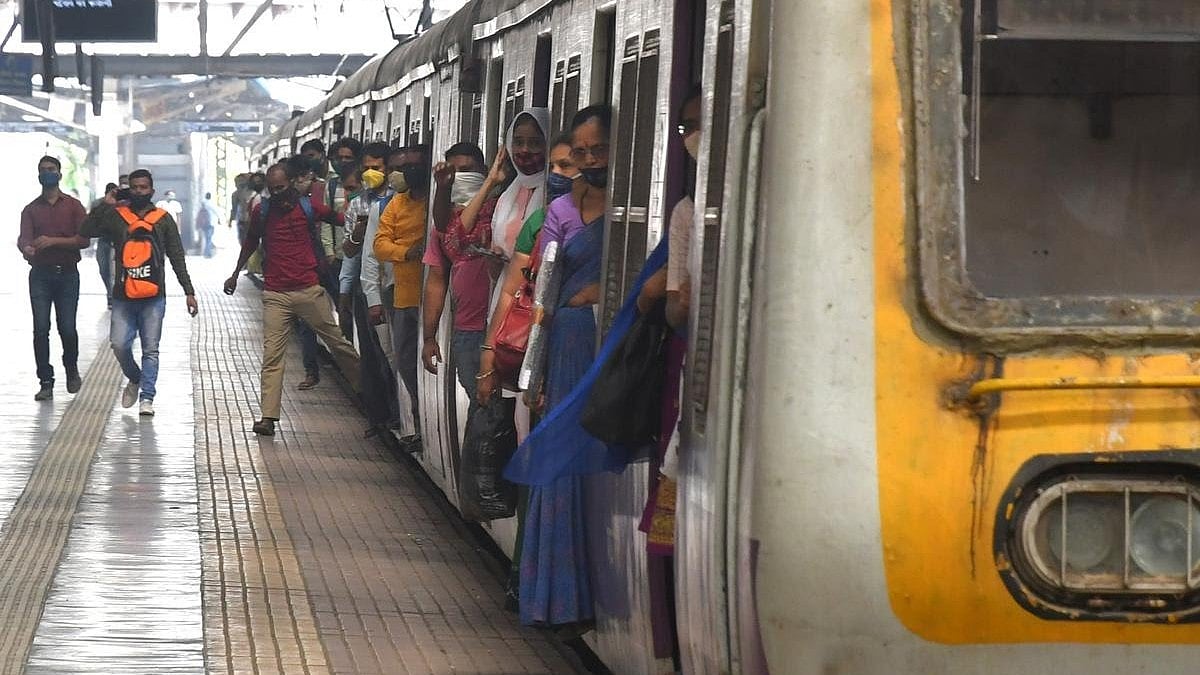
Mumbai’s first non-AC local train with automatic doors has arrived for safety and operational trials
The 12-coach rake features louvred doors, roof-mounted ventilators and passages between coaches
Trials will assess ventilation, crowd management and door performance before passenger services are approved
Mumbai’s first non-air-conditioned suburban train fitted with automatic doors has arrived in the city, bringing a potential safety upgrade to a network where overcrowded coaches and passengers travelling on footboards remain a daily concern.
Built by the Integral Coach Factory (ICF) in Chennai, the 12-coach rake will undergo safety and operational trials before authorities decide whether it can enter passenger service, according to a November 7 report in The Times of India.
Its arrival marks a fresh attempt to address one of the most visible dangers of Mumbai’s commute: passengers gripping doorway bars and standing on narrow footboards as trains move between stations. The new train’s doors are designed to remain closed during the journey and open at stations.
The challenge will be making that system work on a heavily used suburban network while maintaining adequate ventilation inside non-AC coaches.
The rake has louvred sections in its doors to allow air to circulate even when they are closed, along with roof-mounted ventilators, an India Today report said. These features seek to compensate for the loss of airflow through open doorways, on which conventional local trains depend.
Vestibule connections will also allow passengers to move between coaches. This could help spread crowds more evenly through the train, although its usefulness during peak-hour journeys will need to be assessed.
The train has already undergone trials on the 63-km Khajuraho–Mahoba section. Central Railway will now test it on suburban routes in Mumbai, with the findings to be assessed before the rake is put forward for fitness certification and clearance for passenger operations, The Times of India reported.
The renewed focus on automatic doors follows the June 9, 2025, accident near Mumbra, when commuters at the doorways of two overcrowded trains travelling in opposite directions fell onto the tracks. Five people died and several others were injured.
Following the accident, Maharashtra Chief Minister Devendra Fadnavis said Mumbai’s suburban trains would eventually have air-conditioned coaches with automatic doors. He said the Centre had agreed to the proposal, intended to introduce Metro-like safety features without increasing fares.
Mumbai’s existing AC local trains already operate with doors that remain shut while the train is moving. The new non-AC rake offers another approach to introducing that protection across the suburban system.
The scale of the safety challenge extends well beyond any single train. According to the Mumbai Railway Police’s official website, around 70–80 lakh passengers use the suburban network each day.
Government Railway Police figures reported by The Indian Express show that 2,287 people died on the network in 2025, compared with 2,468 in 2024 — a decline of about 7 per cent. Even with that reduction, the annual toll amounted to more than six deaths a day.
These figures include several causes of death and should not be read solely as a measure of passengers falling from trains. In 2025, falls from moving trains accounted for 525 deaths, while 1,063 people died while crossing tracks. The corresponding number of deaths from falls in 2024 was 570.
Automatic doors are intended to reduce the risk associated with open doorways, but their introduction presents operational difficulties.
At busy stations, large numbers of passengers must board and alight within short halts. Doors will need to close fully before departure, making crowding around entrances a potential source of delays. Trials will have to establish whether the system can function reliably under those conditions.
Earlier experiments illustrate the difficulty. In 2019, Western Railway fitted automatic doors to selected compartments of a 15-coach train at its Mahalaxmi workshop. The modifications, costing around Rs 75 lakh, covered general, first-class, ladies’ and differently abled compartments. The initiative did not lead to regular passenger services, with inadequate ventilation among the concerns.
The Indian Express also reported that a Western Railway experiment in 2016–17 encountered repeated obstruction warnings as overcrowding prevented doors from closing, disrupting schedules.
That exercise recorded peak-hour carbon dioxide levels of 2,150 parts per million inside coaches, against a limit of 700 ppm cited in the report. A separate Central Railway experiment in 2025 reportedly faced overheating door motors and sensor malfunctions.
The latest rake’s ventilation features will therefore be central to its assessment, alongside the reliability of its doors and its effect on station halts.
For commuters, its arrival is a preliminary step. Whether automatic doors can become a practical safety feature on non-AC Mumbai locals will depend on how the train performs under the crowded conditions it has been built to address.
With agency inputs
Join our official telegram channel (@nationalherald) and stay updated with the latest headlines