Nation
Police officers who arrest without written grounds must face departmental inquiry: SC
Court says illegal arrest cannot be validated by a subsequent chargesheet and lays down safeguards for any re-arrest
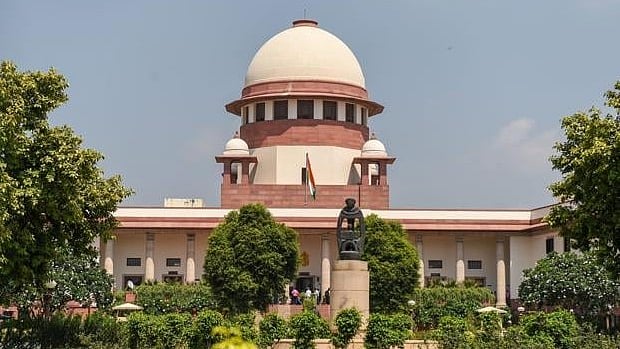
SC says arrest without written grounds violates Article 22(1) and makes the arrest illegal.
Police officer responsible must face a departmental inquiry and possible service-record action.
Any re-arrest requires written grounds, senior approval and a magistrate’s permission.
The Supreme Court on Monday held that a police officer who arrests a person without furnishing the grounds of arrest in writing must face a departmental inquiry, with adverse findings potentially resulting in disciplinary action and an entry in the officer’s service record.
A bench of Justices Ujjal Bhuyan and Atul S Chandurkar held that failure to furnish written grounds of arrest violates the constitutional safeguard under Article 22(1) and renders the arrest illegal. The court also laid down a procedure to be followed if the investigating agency seeks to re-arrest a person whose initial arrest was declared illegal.
The court said the grounds of arrest must be provided in writing, in a language understood by the accused, and furnished to the arrested person “as a matter of course without exception”. It reiterated that the safeguard is a fundamental right and not a mere procedural requirement.
A subsequent chargesheet or an order taking cognisance cannot validate an arrest that was unconstitutional at the outset, the court said. The principle applies to arrests under both the Indian Penal Code and special laws and is not dependent on the nature or gravity of the alleged offence.
The court was hearing a plea concerning the arrest of Shiromani Akali Dal-affiliated Mullanpur Dakha constituency in-charge Jaskaranjit Singh in a case involving allegations of sexual assault of a minor. It declared his arrest illegal after finding that the grounds of arrest had not been furnished to him.
On re-arrest, the court said the investigating agency must first furnish the grounds of arrest and then approach the concerned magistrate, explaining both the need for custody and why the grounds had not been supplied during the original arrest.
The application must carry the endorsement of the investigating officer’s immediate senior authority. The magistrate must then consider the request expeditiously, preferably within a week, while following principles of natural justice.
The court also directed that the investigation be handed over to another officer if re-arrest is sought after an Article 22(1) violation. The superior authority must additionally order a departmental inquiry against the officer responsible for the original lapse.
If the inquiry finds the officer at fault, the court said departmental action should follow, along with an entry in the officer’s service book.
The Supreme Court directed that a copy of its judgment be sent to the directors general of police of all states and Union territories.
The court stressed that constitutional safeguards governing personal liberty cannot be treated as technicalities. It reiterated that when an arrest violates Article 22(1), release from custody is release from illegal and unconstitutional detention, rather than release on bail.
Join our official telegram channel (@nationalherald) and stay updated with the latest headlines