Nation
Post-vice presidential limbo: Dhankhar waits for his bungalow
Months after a sudden exit citing “health reasons”, India’s former vice-president finds protocol slower than speculation
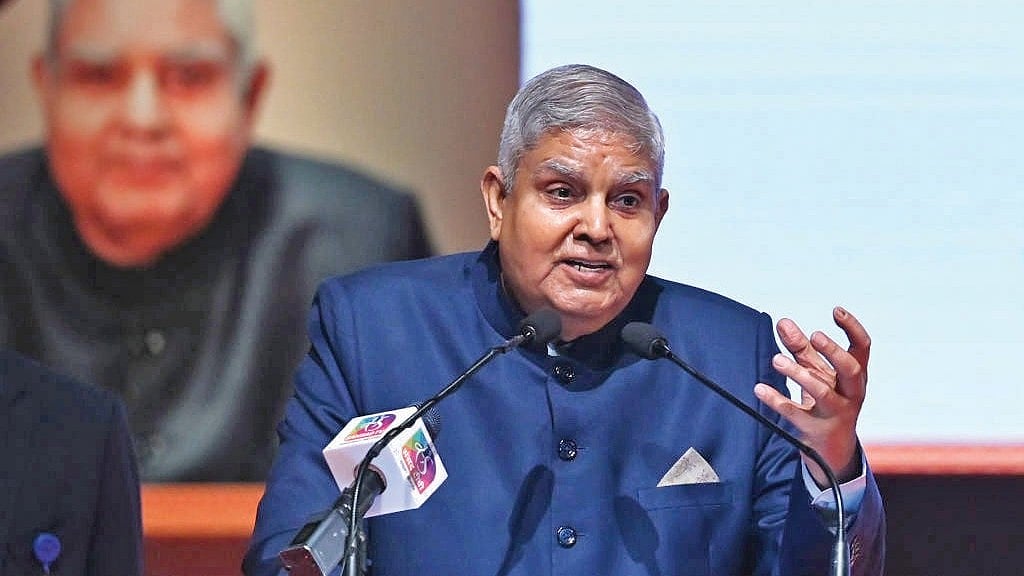
Jagdeep Dhankhar may have vacated the vice-president’s chair in July, but months later, he appears stuck in a curious halfway house — formally out of office, informally very much part of familiar political and social networks.
Dhankhar — also the de facto chairperson of the Rajya Sabha in his capacity as vice-president — resigned on 21 July, the opening day of the monsoon session of Parliament, citing health reasons. The abrupt timing ensured instant speculation, and the absence of any detailed explanation since has allowed that speculation to flourish unchecked. What has not materialised, however, is the official residence routinely allotted to former vice-presidents.
By September, Dhankhar had vacated the vice-president’s enclave and moved into a private farmhouse in south Delhi’s Chhatarpur area. The property belongs to Abhay Chautala, a senior leader of the Indian National Lok Dal and a member of one of Haryana’s most influential political families. Chautala, son of former Haryana chief minister Om Prakash Chautala, has long been a prominent Jat leader and a central figure in regional agrarian politics, with a career marked by electoral battles, factional splits and frequent run-ins with the BJP.
The living arrangement has not gone unnoticed in political circles. Dhankhar himself hails from Rajasthan’s Jat community and has often foregrounded his identity as a farmer’s son who rose through grit and loyalty rather than elite privilege.
That shared Jat social and political ecosystem — spanning western Uttar Pradesh, Rajasthan and Haryana — has historically cut across party lines, and Dhankhar’s post-resignation choice of shelter fits neatly within that landscape.
On 22 August, Dhankhar wrote to the housing and urban affairs ministry seeking the official accommodation he is entitled to as a former vice-president. According to people close to him, the request is still pending.
The rules, after all, are unambiguous: a former vice-president is entitled to a Type VIII bungalow, a pension of nearly Rs 2 lakh a month, secretarial staff, medical support and personal attendants. For someone who once presided over the Rajya Sabha with visible relish (and bias, the Opposition would add), the wait has been conspicuously long.
Meanwhile, Dhankhar’s political silence was finally broken in November — not with answers about his resignation, but with a public appearance that sent its own signal. Addressing an event steeped in civilisational and nationalist rhetoric, he spoke in glowing terms about India’s cultural resurgence, leaving little doubt that while he may have exited constitutional office, he has not drifted ideologically. The message was subtle but clear: the fold remains intact, even if the chair does not.
Speculation over the reasons for his sudden exit — friction with the government, unease over his sudden and unexpected assertive conduct in the Rajya Sabha, or a polite nudge towards the door — continues to circulate, unanswered. Dhankhar has neither confirmed nor denied any of it.
For now, the tableau is unmistakably Delhi: a former vice-president without his official bungalow, housed on the property of a regional strongman from the same social milieu, publicly reaffirming old certainties while letting others guess at the rest. In politics, as in housing, Dhankhar may be between addresses — but not between allegiances.
With PTI inputs
Join our official telegram channel (@nationalherald) and stay updated with the latest headlines