Nation
R Rajagopal gets passport, says government must clarify SIR-linked denials
The former Telegraph editor said he was neither asked to submit fresh documents nor called to appear in person again
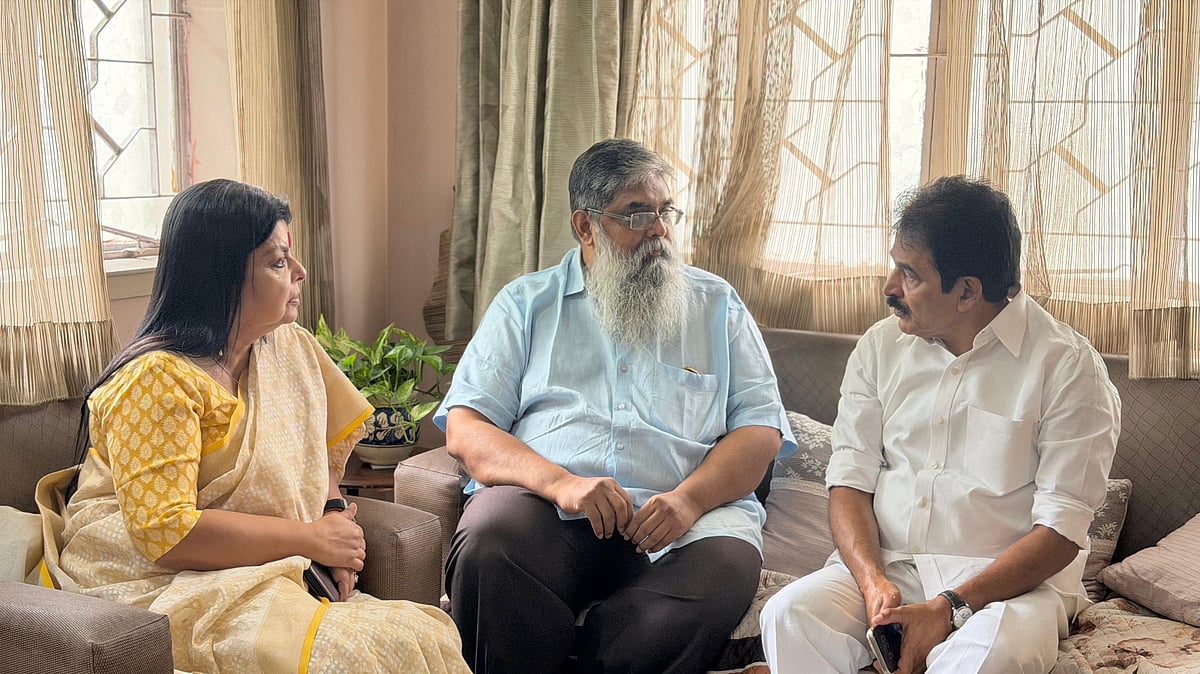
Former The Telegraph Editor R Rajagopal has received his renewed passport after a months-long ordeal, but says the larger question raised by his case remains unanswered: can data from the Special Intensive Revision (SIR) of electoral rolls be used to deny a citizen a passport?
Rajagopal, whose name was deleted from West Bengal’s electoral rolls during the SIR exercise, told The Probe that his fight was never only about securing his own passport renewal. He said the lack of clarity from the government on whether electoral roll revision data can be relied upon in passport verification continues to leave other citizens vulnerable.
“As far as I am concerned, nothing has changed. I didn’t speak for my passport alone. I wanted clarification from somebody in authority to tell us whether SIR data can be used to deny passport to a citizen. Neither the MEA, MHA nor the West Bengal government has still clarified this. Until this is clarified by the government, this confusion will continue to persist,” Rajagopal told The Probe after receiving his passport.
Rajagopal’s passport had expired in October 2025. When he applied for renewal in February this year, what should have been a routine process instead became a nearly 100-day struggle involving the police, the Regional Passport Office and the Security Control Organisation under the Kolkata Police Special Branch.
According to Rajagopal, his application was diverted for security scrutiny, and, on 17 June, the Regional Passport Office informed him that an adverse police verification report had been filed, citing the deletion of his name from the electoral roll. He was then asked to appear before the passport office on 17 July.
In the intervening months, Rajagopal said, he found himself gathering decades-old family records from Kerala in an effort to establish his identity — despite having held an Indian passport for decades.
He told The Probe that the manner in which his case was ultimately resolved only deepened his concerns. Rajagopal said that after his case drew public attention, a passport official called him three days ago and asked him to send an email to the Regional Passport Office seeking re-verification. He did so, and soon afterwards received the renewed passport by speed post on 4 July.
Rajagopal said he was neither asked to submit fresh documents nor called to appear in person again. That, he argued, suggested that the documents already on record had always been sufficient for renewal, raising questions about why his application had been held up in the first place.
He told The Probe that the outcome appeared to have been influenced by sustained media scrutiny and interventions by bodies such as the Editors Guild of India and the Press Club of India, both of which took up his case with the authorities.
“Obviously, it looks like they acted under pressure from the media, the Editors Guild of India, the Press Club of India and others who took up my matter. But what about those whose matters were not taken up by anyone? They deserve relief too. That is why I don’t feel jubilant about getting my passport alone,” he said.
Rajagopal said he had also read of at least 17 others who may have been similarly affected and warned that the actual number could be higher. If police authorities were using SIR data arbitrarily in passport verification, he said, it posed a serious risk to ordinary citizens.
His own case before the SIR appellate tribunal, challenging the deletion of his and his late father’s names from the electoral rolls, remains pending.
Rajagopal also expressed concern for others facing similar problems, including author and journalist Samrat Choudhury, whose passport case was also reported by The Probe. Choudhury, who has held an Indian passport since 1993, was informed on 24 June that his passport had been impounded after an adverse police report allegedly said his citizenship was “not established”, without setting out reasons.
Born before 1987, Choudhury is a citizen by birth under Indian law and is not legally required to prove descent from Indian parents. Yet he was reportedly asked to furnish a wide range of documents, including his parents’ passports, Aadhaar, voter ID and school records. His case remains unresolved.
Rajagopal told The Probe that his own visit to the Regional Passport Office in Kolkata had left him disturbed by the number of people he saw in distress. He said he saw several applicants in tears, including one man working abroad who pleaded for help because his job was at risk if his passport issue was not resolved.
“That is why, even today, when I get my passport, I am not happy about it,” Rajagopal said.
Join our official telegram channel (@nationalherald) and stay updated with the latest headlines