Nation
Silence on domestic abuse can't be used to discredit women: Supreme Court
Court rejects man’s plea against conviction for raping and murdering six-year-old stepdaughter, on grounds that wife stayed silent
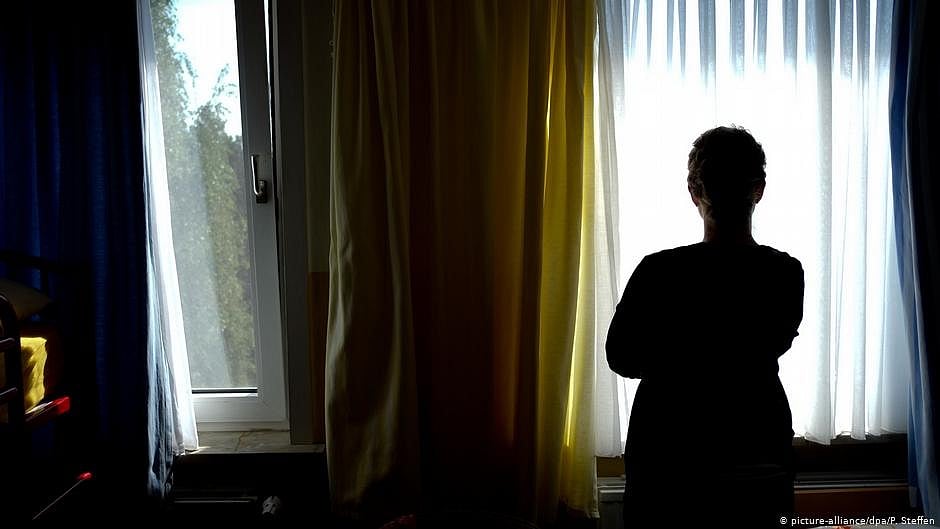
Supreme Court says woman’s failure to report sexual or physical abuse by her spouse cannot, by itself, cast doubt on her credibility, noting that silence is common among abused women in India.
Citing NFHS-5, court says 29.3 per cent of ever-married women aged 18-49 reported experiencing physical or sexual violence by their spouses, with around three-fourths of victims never seeking help or disclosing the abuse.
Court upholds man’s conviction but commutes death sentence to imprisonment for remainder of natural life, rejects his challenge to his wife’s testimony.
The Supreme Court on Thursday, 24 September said a woman cannot be viewed with suspicion for failing to report sexual or physical violence by her spouse, observing that silence in cases of domestic abuse is often the norm rather than an exception in India.
The court made the observation while rejecting the defence of a man convicted of repeatedly sexually assaulting and murdering his six-year-old stepdaughter. He had argued that his conviction could not rest on the testimony of his wife, who remained silent about the abuse for a prolonged period.
A bench of Justices Vikram Nath, Sandeep Mehta and Vijay Bishnoi said courts must account for the realities of abuse within the home and ensure that the constraints imposed by an abuser are not subsequently used to his advantage.
"A court alive to the realities of abuse within the home must be vigilant not to lend itself to this stratagem, and must ensure that the disabilities which the abuser imposed upon his victim are not permitted to enure to his benefit," the bench said.
The court cited the fifth National Family Health Survey (NFHS-5), conducted between 2019 and 2021, which found that 29.3 per cent of ever-married women aged 18-49 had experienced physical or sexual violence at the hands of their spouse.
Of those who had experienced such violence, around three-fourths had never sought help or disclosed the abuse to anyone, the court noted. "These figures, drawn from the largest such survey in the country, establish that the silence of abused woman is not the exception but the norm, and that the failure to report is the overwhelmingly common response and not an aberration calling for suspicion," it said.
The bench upheld the man's conviction but commuted his death sentence to imprisonment for the remainder of his natural life.
The judgment came on his appeal against a November 2019 verdict of the Madhya Pradesh High Court's Indore bench, which had upheld his conviction and death sentence.
In its 157-page judgment, the Supreme Court noted that the victim's mother was the sole eyewitness to the events. She had been married previously and had four children from that marriage. After her first husband's death, she married the appellant and brought her daughter into his home.
The man had argued that the woman's conduct was "irreconcilable" with that of a truthful witness or mother because she had not complained to the police or her family even though the abuse allegedly continued for months.
The court rejected that argument, stressing that victims and witnesses do not respond to trauma in a uniform or predictable manner.
"It must be emphasised that human beings do not react to trauma, to terror and to abuse in a uniform or a predictable manner, and that there is no standard or model response against which the conduct of a victim or a witness may be measured and, if found wanting, condemned as false," the bench said.
The court also referred to its recent judgments cautioning against assessing women who are victims of, or witnesses to, sexual offences through stereotyped expectations of how they should behave.
It said silence or delayed disclosure could arise from fear, shame, social constraints or a reasonable apprehension of the consequences of speaking out and should not, by itself, be treated as evidence that an allegation is false.
In this case, the court noted that the victim's mother was a widow without independent means who had entered a second marriage with the appellant and brought her child into his home.
Her movements were controlled, her contacts regulated and her access to a telephone restricted to numbers approved by her husband, the court said.
"A woman so placed is not a free agent who may be expected to walk into a police station at the first opportunity. She is, in a real and not a merely rhetorical sense, a captive," it said.
The court said treating her silence as complicity while disregarding the resistance she displayed whenever she could would amount to a misreading of the evidence.
It also rejected the argument that an unlocked door meant she was free to leave, pointing to her lack of money, absence of a safe refuge and the threats allegedly made by her husband, as well as the need to care for her seriously injured child.
The bench observed that abusers can exploit the very conditions of secrecy, isolation and fear they create to later attack a victim's credibility.
"It is a recurring feature of cases of this nature that the very conditions of secrecy, isolation and terror by which the abuser secures his dominance and the silence of his victim are afterwards pressed into service, in the courtroom, as arguments to discredit that victim when at last she speaks," it said.
The court concluded that the mother's conduct did not undermine her credibility and was consistent with the truth of her account.
"For the reasons we have given, we hold that the conduct of the mother of the victim, far from impairing her credibility, is consistent with the truth of her account, and that the submission founded upon it must be rejected," the bench said.
With PTI inputs
Join our official telegram channel (@nationalherald) and stay updated with the latest headlines