Nation
The long road home
Sri Lankan refugees in Tamil Nadu are caught between two uncertainties, writes K.A. Shaji
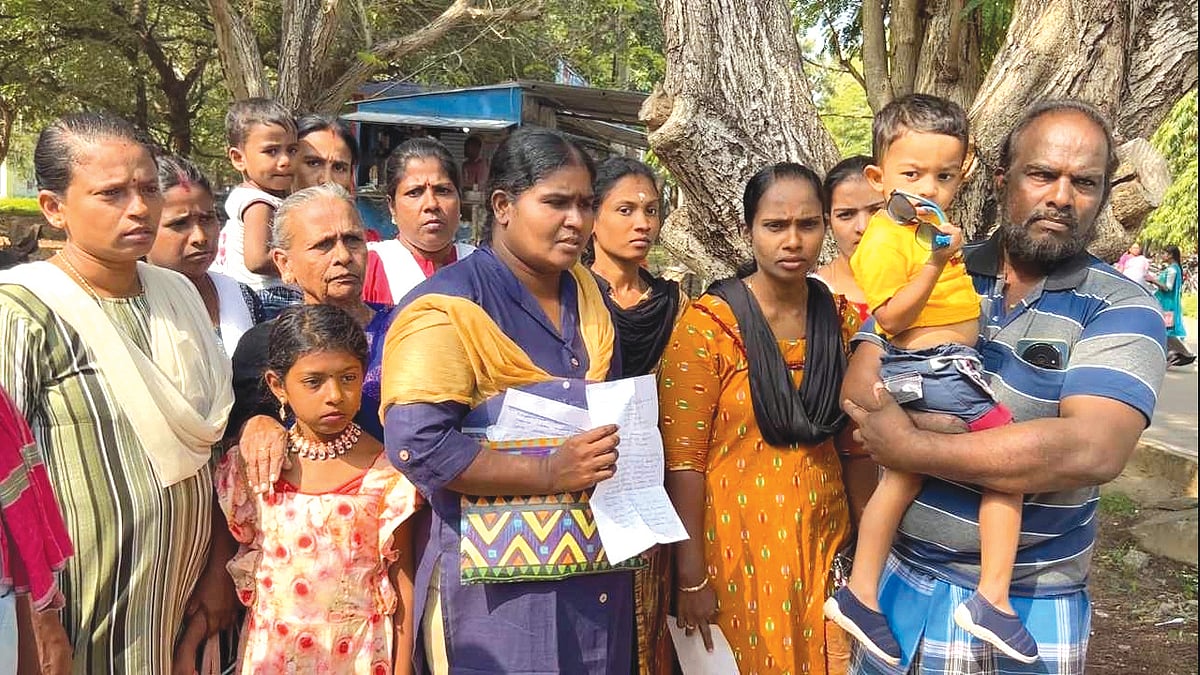
K. Mahendran was barely 11 when his family fled war-torn Sri Lanka. When assailants came looking for boys above the age of 10, he and his brother hid between the roof and false ceiling of their home in Mannar, a Tamil-majority town.
The family escaped to the coastal fishing village of Pesalai, where they waited 15 days before crossing the Palk Strait on 22 July 1990. At Dhanushkodi, his father carried the children ashore, wading through waist-deep water.
Thirty-six years later, Mahendran, now 47, lives in Pudukkottai in southern Tamil Nadu. His father died seven years after their arrival in India. Mahendran studied at Loyola College in Chennai and now sells furniture on instalments. When asked where his ‘native place’ is, he still says Ceylon. His two children, however, would say Tamil Nadu.
That difference captures the dilemma facing nearly 90,000 Sri Lankan Tamil refugees in India. In August, Sri Lanka removed a major legal obstacle to their return. The Sri Lankan cabinet approved special arrangements for refugees who fled during the civil war without valid passports or through unauthorised departure points. Henceforth, those whose Sri Lankan identity is satisfactorily established can return (after security clearance) through authorised ports without being prosecuted for having left the country via ‘irregular’ channels.
The arrangement covers those who left before 1 August 2006, up until 19 May 2009, when the civil war ended with the killing of LTTE leader Velupillai Prabhakaran. A Sri Lankan government notification made it clear that while those suspected of serious offences can still face legal action, the rest will be issued temporary passports.
In August last year, a 75-year-old Tamil refugee returning from India was arrested at Jaffna airport though no criminal track record was pending against him. For most refugees, being relieved of the fear of prosecution has not eased the fear of returning. After three decades of living in camps across Tamil Nadu, they are unsure of what awaits them in Sri Lanka.
“How do they expect us to live?” asks V. Vaithyalingam, an inmate of Mandapam camp near Rameswaram. “How do they expect us to survive there?”
Nearly 90,000 Sri Lankan Tamil refugees are still registered in India, almost all in Tamil Nadu: about 56,600 live in 105 government-run camps and another 32,800 outside camps. This is a fraction of the 304,269 who arrived in Tamil Nadu as refugees from 1983 onwards when the Simhala majority began targeting the Tamil ethnic minority.
The difference in the numbers reflects decades of movement. Thousands repatriated voluntarily or returned independently; others left for third countries; still others died. Many moved out of the formal refugee system. The Union government says 99,469 had been repatriated by March 1995, after which there was no organised programme for many years.
For those who stayed, India is no longer simply a temporary refuge. Children were born here, marriages took place, livelihoods were built.
The paradox is stark. India has become their home without affording them permanent legal standing. Sri Lanka defines their nationality, but many no longer know what that means. They can live, study and work in India under refugee protection and state welfare, but they do not enjoy the legal rights of citizens. Their status remains tied to refugee registration and permissions governing their stay.
Decades of residence do not automatically confer Indian citizenship. Under the Citizenship Act, those treated as illegal migrants are ordinarily barred from citizenship by registration or naturalisation unless specific exceptions apply. Being born in Tamil Nadu therefore does not automatically resolve the question for many children of refugee families.
The Citizenship (Amendment) Act, 2019, sharpened exclusion by creating a faster naturalisation route for specified persecuted minorities from Afghanistan, Bangladesh and Pakistan, while leaving Sri Lankan Tamils outside its ambit.
The result is a peculiar legal limbo: a Tamil refugee can spend 30-40 years in India, build a livelihood and educate children here while technically remaining a foreigner.
Staying can mean a continuation of permanent impermanence; returning could mean going to a country where their homes, livelihoods and social connections may have disappeared.
Land is among the first concerns. Some remember abandoned homes; others have lost documents, face property disputes or have no land. After 30 years, isn’t starting “life from scratch, worse than a refugee life here?” wonders Mahendran.
Successive Sri Lankan governments have offered housing and livelihood assistance, but the latest decision creates no new comprehensive resettlement programme.
With productive years spent in India, returning to Sri Lanka will restart the cycle of uncertainty, especially for those children who have known only Tamil Nadu. Some have married into Indian families; others have children of their own pursuing higher education in India. Only 92 refugees returned in 2025, compared with 203 in 2024, minuscule figures when compared to those who stayed.
“There is no evidence that the latest legal change has triggered a rush towards Sri Lanka. That is not necessarily a rejection of the idea of return. It is evidence of how much more complicated return has become,” says Manuraj Shanmughasundaram, a lawyer dealing with refugee rehabilitation in Tamil Nadu.
The civil war ended in 2009, but residual trauma remains. Returnees must establish their identity and undergo checks. For those who fled amid fear of state forces and militants, this can be unsettling. Identity and citizenship records may be missing. Which documents will be accepted? What happens when papers no longer exist? Doubts remain.
Sri Lanka has taken an important step by acknowledging that people who fled during wartime should not face prosecution decades later. But it is only the first step. The responsibility cannot lie solely with the refugees.
“A dignified return would require secure access to land and housing, functioning documentation systems, employment and livelihood opportunities, education and healthcare. It would require transparent security procedures and sustained support after arrival,” says demographer S. Irudayarajan.
Mahendran still dreams of ‘Ceylon’, even as he acknowledges what Tamil Nadu has given his children. After three decades, legal return is a real option. But can it be exercised with dignity intact? That is the larger question.
K.A. Shaji has chronicled rural distress, caste and tribal realities, environmental struggles and development fault lines. More by the author here
Join our official telegram channel (@nationalherald) and stay updated with the latest headlines