Nation
Vietnam signs BrahMos missile deal, Indonesia pact nearing completion: Defence Secretary
Development marks a major boost for India's defence exports as Southeast Asian nations strengthen maritime deterrence amid tensions in the South China Sea
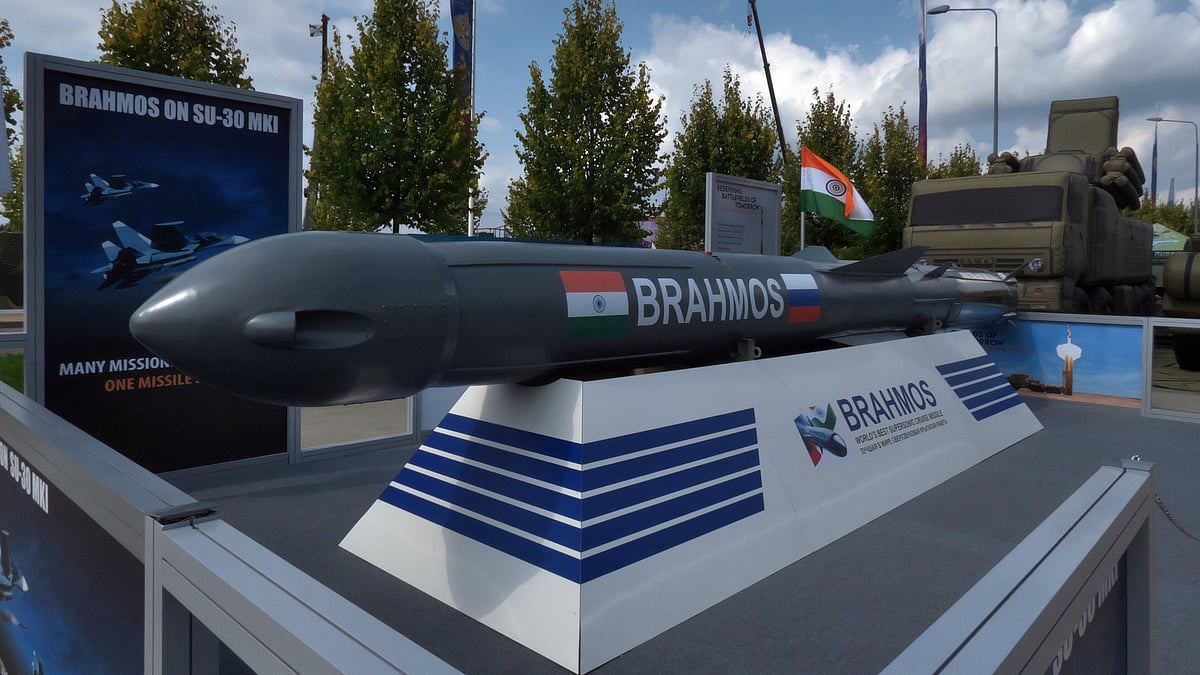
Defence Secretary Rajesh Kumar Singh on Saturday said Vietnam has already signed a deal to procure the BrahMos supersonic cruise missile, while a similar agreement with Indonesia is in its final stages, signalling a significant expansion of India's defence footprint in Southeast Asia.
Speaking on the sidelines of the Shangri-La Dialogue in Singapore, Singh said the Vietnam agreement had been concluded, though it had not yet been publicly announced.
“My understanding is that with both Indonesia and with Vietnam, the deal is in the final stages; in fact, for Vietnam, I understand that it has already been signed, probably not publicly announced, but it's already been signed,” he said.
The Philippines became the first overseas buyer of the BrahMos missile system in 2022 when it signed a contract worth nearly USD 375 million with India. Indonesia announced in March this year that it had entered into an agreement with India to procure the missile system, while reports earlier this month suggested that Vietnam was close to finalising a deal.
Neither the Indian government nor the prospective buyers have disclosed the financial value of the Vietnam and Indonesia agreements.
The deals are strategically significant as both Vietnam and the Philippines have overlapping maritime claims with China in the South China Sea, one of the world's busiest trade routes. India's growing defence engagement with Southeast Asian countries has attracted increasing attention as regional states seek to strengthen their deterrence capabilities amid continuing tensions in the disputed waters.
BrahMos roots trace back over two decades
The BrahMos supersonic cruise missile is widely regarded as India's most successful defence export product and is the result of a long-running Indo-Russian collaboration.
The programme began in 1998 with the establishment of BrahMos Aerospace, a joint venture between India's Defence Research and Development Organisation (DRDO) and Russia's NPO Mashinostroyenia. The project was launched during the government led by Prime Minister Atal Bihari Vajpayee.
However, much of the missile's development, testing, induction and expansion took place during the decade-long United Progressive Alliance (UPA) government between 2004 and 2014. The missile underwent successive trials, entered service with the Indian Navy and Army, and evolved into multiple variants during that period.
Named after the Brahmaputra and Moskva rivers, the BrahMos was first successfully tested in 2001 and formally inducted into service in 2005. The missile can travel at nearly three times the speed of sound, making it one of the fastest operational cruise missiles in the world.
Over the years, the weapon has been adapted for launch from land, sea and air platforms, significantly enhancing India's conventional strike capabilities. Defence analysts attribute its export appeal to its combination of speed, accuracy and versatility, particularly for coastal defence and anti-ship missions.
Defence exports gain momentum
Singh said India remains committed to expanding defence cooperation with ASEAN nations and sharing advanced technologies with trusted partners.
The Association of Southeast Asian Nations (ASEAN) comprises Brunei, Cambodia, Indonesia, Laos, Malaysia, Myanmar, the Philippines, Singapore, Thailand, Timor-Leste and Vietnam.
Addressing delegates at the dialogue, the defence secretary said recent geopolitical tensions, conflicts in Europe and West Asia, disruptions in maritime trade routes and supply-chain vulnerabilities had reinforced the need for stronger defence-industrial cooperation among friendly nations.
India's defence exports have risen sharply in recent years, with BrahMos emerging as the flagship product in New Delhi's efforts to establish itself as a major supplier of advanced military hardware to partner countries.
Join our official telegram channel (@nationalherald) and stay updated with the latest headlines