Nation
Delhi building collapse: MCD claims 58 demolitions. So where are they?
With no property-wise public record, the MCD’s claim of an aggressive crackdown remains difficult to independently verify
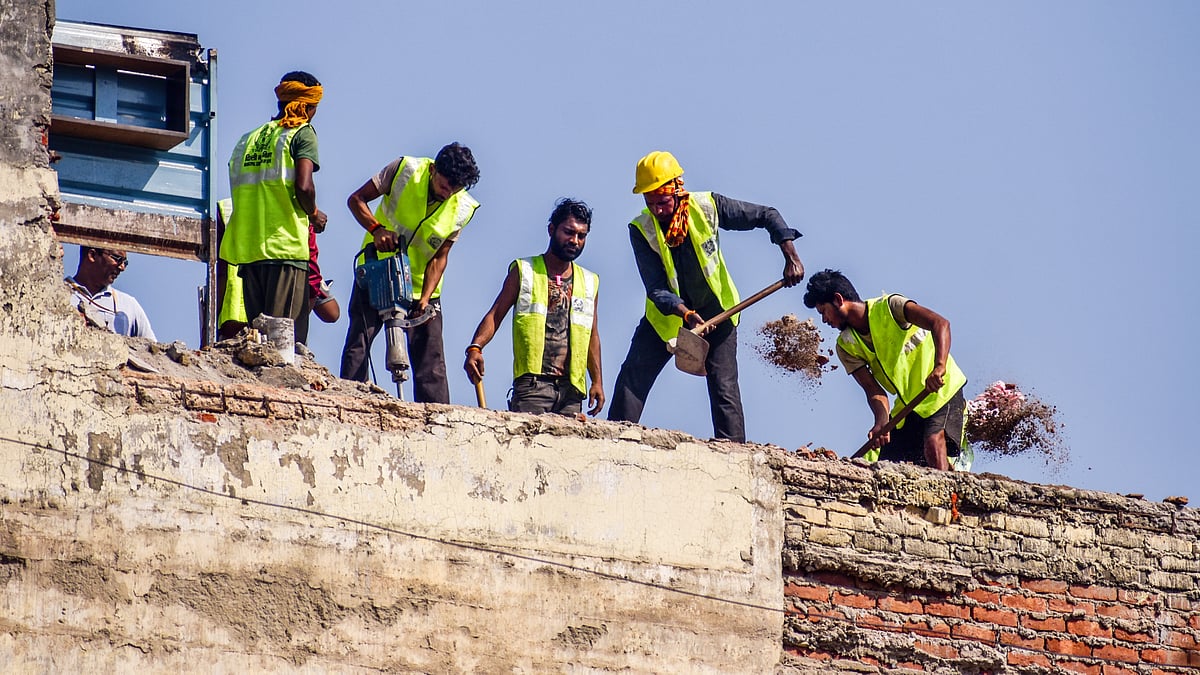
After the Satya Niketan building collapse that claimed the lives of at least seven students, the Municipal Corporation of Delhi (MCD) has apparently launched a sweeping enforcement drive against illegal and unsafe structures.
But the civic body's claims of more than 58 demolitions have raised a basic question: where are these buildings, and how many have actually been demolished?
The MCD has said it demolished 34 illegal or unsafe structures across its 12 zones in a single day, taking the total number of recent demolitions to more than 58 properties.
It has also begun surveying paying guest (PG) accommodations across the city for structural vulnerabilities, with particular attention to buildings with more than five storeys and RCC-framed structures, as well as those with more than four storeys and load-bearing brick-wall structures.
Following field inspections, buildings are being categorised as visibly safe; visibly repairable requiring minor repairs; visibly repairable requiring major repairs; and visibly vulnerable or dangerous.
But the enforcement drive has also raised questions over the scale, location and nature of the demolitions being claimed by the civic body.
Publicly available media reports so far appear to have documented only a handful of specific demolition actions. This makes it difficult to establish whether the numbers cited by the MCD refer to complete demolitions, partial demolition of unauthorised portions, or enforcement action involving relatively minor structures.
According to MCD data cited by PTI, the civic body stepped up action against unauthorised construction, demolishing 17 properties and sealing five on 8 September alone. It also issued nine show-cause notices for unauthorised construction, two notices for sealing and 15 demolition orders.
On 7 September, the MCD reportedly demolished seven properties, sealed two and issued 26 show-cause notices for unauthorised construction, four sealing notices and 12 demolition orders.
Between 1 and 8 September, the civic body said it had demolished 48 properties and sealed 15, besides issuing 90 show-cause notices for unauthorised construction, 124 sealing notices and 66 demolition orders.
The figures suggest an aggressive enforcement campaign. But there is no publicly accessible, zone-wise list identifying the demolished properties, their addresses, the nature of the violations or whether entire buildings or only unauthorised portions were brought down. That makes independent verification of the headline numbers difficult.
The lack of transparency assumes greater significance because the crackdown followed a fatal building collapse in an area where unauthorised construction and unsafe buildings have long been a concern.
The civic body has, meanwhile, identified around 1,245 buildings being operated as PG accommodations, housing nearly 24,000 occupants, as part of an exercise to create a database and assess their structural safety.
That exercise raises another immediate question: where will the students and other occupants go if buildings are declared unsafe and ordered to be vacated?
Colleges have reportedly opened their doors to students affected by the crackdown, while gurdwaras and other institutions have offered temporary shelter. But such measures can provide only short-term relief. The larger challenge is finding a sustainable solution for thousands of students and workers who depend on affordable PG accommodation in Delhi.
The Satya Niketan collapse has exposed a deeper problem in the capital's urban landscape: a large number of buildings have grown vertically and horizontally beyond the limits of approved plans, particularly in unauthorised colonies, urban villages and areas where enforcement has historically been weak.
Demolishing buildings after a tragedy may eliminate an immediate danger, but it does not address the system that allowed unsafe structures to come up in the first place. Urban planners and building-safety experts argue that demolition should be the last stage of an enforcement process, not the first visible response after lives have been lost.
A meaningful safety policy would require regular structural audits, transparent building records, accountability for officials who permitted violations, and a mechanism to rehabilitate occupants when buildings are declared unsafe.
The MCD's post-Satya Niketan drive therefore needs to answer two questions: what exactly has been demolished, and why were these structures allowed to exist in the first place?
Join our official telegram channel (@nationalherald) and stay updated with the latest headlines