Nation
Yogendra Yadav slams SIR verdict, says BJP will now decide ‘who can vote and who cannot’
Petitioner in electoral rolls case calls Supreme Court ruling a foregone conclusion, alleges it authorises mass disenfranchisement and gives Election Commission unchecked powers over voter lists
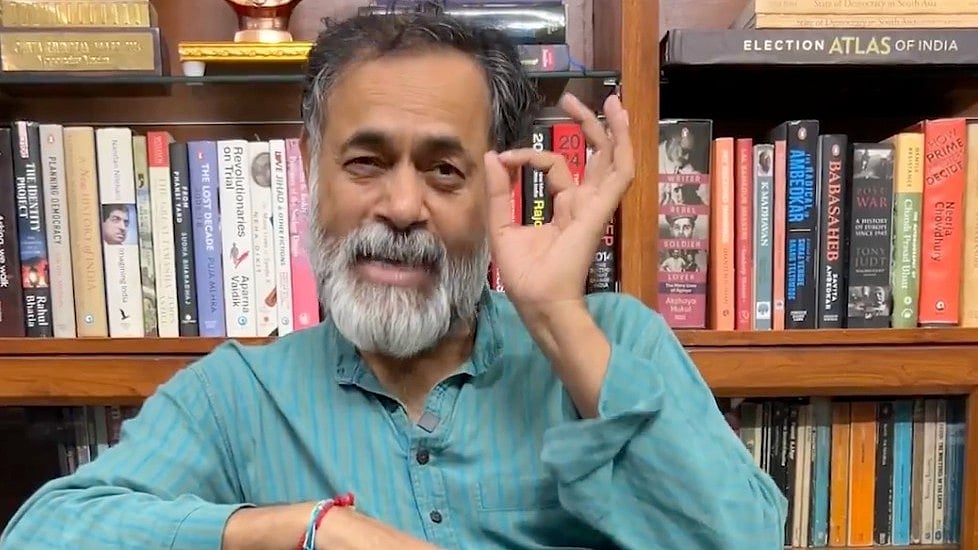
Political activist and psephologist Yogendra Yadav on Wednesday strongly criticised the Supreme Court's verdict upholding the Election Commission's Special Intensive Revision (SIR) of electoral rolls, alleging that the ruling effectively allows the BJP to determine “who can vote and who cannot” and legitimises the disenfranchisement of millions of citizens.
Yadav, one of the petitioners who challenged the SIR exercise, said the outcome of the case was apparent long before the judgment was pronounced and claimed the apex court had moved away from examining the constitutional validity of the exercise.
“As a litigant in this case, and as someone who was given the honour of addressing the court, I should have been hopeful, anxious or at least curious. I was not. The case was decided long ago,” Yadav wrote in a post on X after the verdict.
He argued that the direction of the case became clear when the court, according to him, shifted its focus from constitutional scrutiny to procedural grievance redressal.
“The court moved away from examining the constitutionality of SIR and effectively converted itself into a Consumer Forum, focused on grievance redressal and arbitration, rather than constitutional principles,” he said.
Yadav contended that the matter was effectively settled when the Supreme Court allowed the Election Commission to proceed with the electoral process in Bihar without first deciding the constitutional challenge to the SIR exercise or directing corrections to what he termed “glaring defects” in the revised electoral rolls.
“The continuation of the SIR process during the hearings rendered the challenge largely ineffective. SIR had become a fait accompli,” he said.
In one of his strongest criticisms, Yadav alleged that the judgment amounted to judicial approval of large-scale voter exclusion.
“The simple truth is that the verdict has authorised the disenfranchisement of millions of citizens, at least 59 million so far, that could go up eventually to 100 million,” he claimed.
He further alleged that the ruling had handed the Election Commission sweeping powers over electoral rolls.
“A carte blanche has been handed over to the EC to do what it pleases with the voters' list,” he said.
Drawing a parallel with one of the most controversial rulings in India's constitutional history, Yadav compared the judgment in ADR vs Union of India (2026) with the Emergency-era ADM Jabalpur v. Shivkant Shukla verdict of 1976.
“ADR vs Union of India (2026) is to our times what ADM Jabalpur vs Shivkant Shukla (1976) was to the previous assault on our democracy,” he wrote, expressing hope that the ruling would eventually be “recognised for what it was. And reversed.”
In a separate post, Yadav argued that the implications of the judgment went beyond the legality of the SIR exercise.
“The news is not that the Supreme Court has today declared the Election Commission's SIR to be constitutional. The real news is that now in this country, the BJP will decide who can vote and who cannot,” he said.
He further claimed that parts of the Constitution, which he described as “perhaps the last pillar” safeguarding democratic institutions, had “broken and fallen today”.
The remarks came hours after a Supreme Court bench headed by Chief Justice of India Surya Kant upheld the Election Commission's authority to conduct the SIR exercise, holding that the revision “breathes life” into the constitutional mandate of free and fair elections and advances the constitutional imperative of maintaining accurate electoral rolls.
Join our official telegram channel (@nationalherald) and stay updated with the latest headlines