Obituary
Nana Patekar: from screen icon to guardian of Mother Earth
With the death of Nana Patekar on 8 October, aged 75, Indian cinema lost not only a distinguished actor but also a remarkable public figure
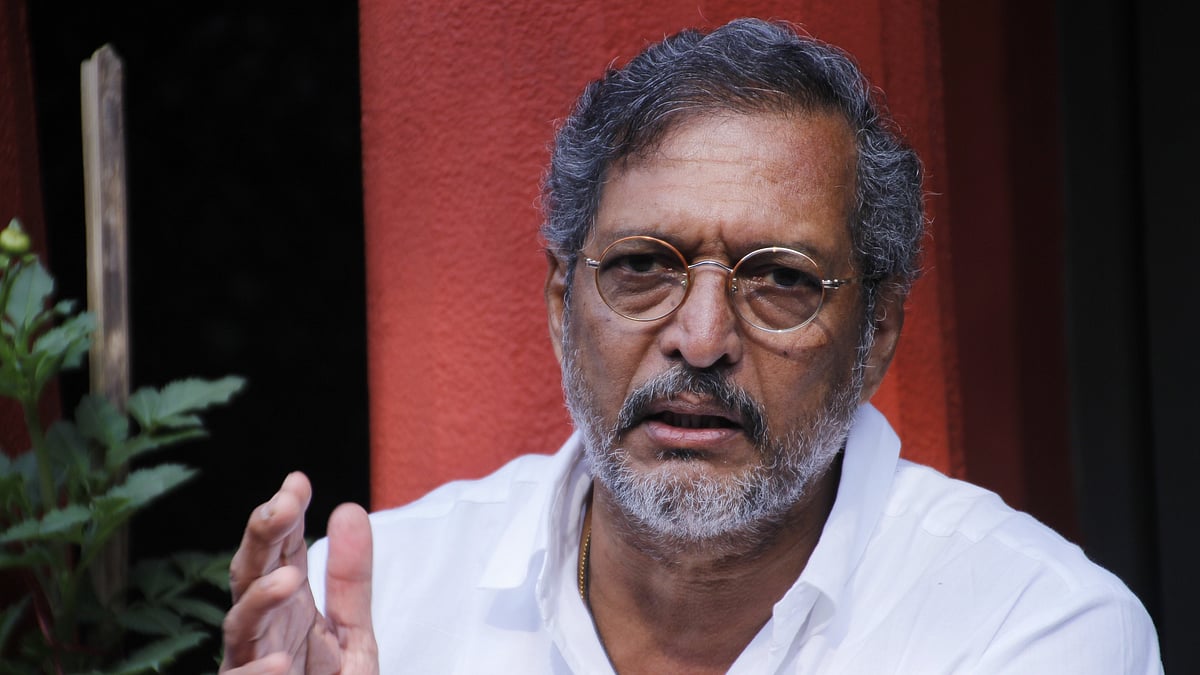
I am reminded of a recent video of Nana Patekar sitting with schoolchildren. They ask him to recite a famous dialogue from Krantiveer. Nana initially hesitates, then relents. He recites it and performs it leaving everyone spellbound. and —he performs the concluding action (mimicking a self-inflicted cut on the hand) so powerfully that everyone is left spellbound. The dialogue: “यह मुसलमान का खून, यह हिन्दू का खून, बता इसमें कौन सा हिन्दू का कौन सा मुसलमान का?” (This is a Muslim's blood, this is a Hindu's blood; tell me, which is that of a Hindu and that of a Muslim). In fact, as Nana delivered these lines to the children, the prevailing state of the nation weighed heavily on his mind. One might often disagree with Nana's views, but his unique quality was that, on such occasions, he would speak from the heart while simultaneously conveying a meaningful message.
His observations on the plight of farmers are particularly worth remembering.
Remembering Nana Patekar, 75, is not merely about remembering an actor. Many artists have graced Indian cinema—gaining popularity and winning awards—and many have left an indelible mark on the craft that time could not erase. Yet, Nana’s story is somewhat different. He made acting his identity, but ultimately, his identity transcended acting. He became known as a man deeply troubled by farmers' suicides, one who treated the water crisis in Maharashtra as his own personal cause, and one who would go to drought-stricken villages to stand in solidarity with the people. With his death Indian cinema has lost a distinguished actor and a remarkable public figure.
The cinematic journey of Nana Patekar—born Vishwanath Patekar—began with the 1978 film Gaman. In his early years, he established his identity in theatre and in Marathi and Hindi cinema. Films such as Ankush, Pratighaat, Parinda, Angaar, Tirangaa, Krantiveer, Agni Sakshi, Khamoshi, Ab Tak Chhappan, Apaharan and Raajneeti showcased his diverse acting prowess. Nana portrayed menacing villains and exemplary heroes alike, while also excelling as a character actor and a comedian.
His Uday Shetty in Welcome presented a completely different side to the fiery, system-battling protagonist in Krantiveer.
Perhaps the most defining characteristic of his acting was that it felt less like a performance and more like real life. His voice, his expressions, and his dialogue delivery all carried an underlying restlessness that the camera effortlessly captured. He received a national award for Parinda, the national award for Best Actor for Krantiveer, and another national award for Agni Sakshi. He was among those rare actors who earned national-level recognition in both the Best Actor and Best Supporting Actor categories.
Viewing Nana merely as a Hindi film actor would be to diminish the scope of his contribution. His roots lay deep in Marathi theatre and cinema; for him, Marathi was not just a language but a foundation for his craft. His portrayal of social activist Prakash Amte in Dr. Prakash Baba Amte – The Real Hero served as a fascinating bridge between his acting and his own social commitments. He won the Filmfare Marathi Award for Best Actor for this role. Only Nana could have portrayed the themes of ageing, loneliness, family dynamics, and an artist's identity—as revealed through the tragic life of a legendary theatre actor—in Natasamrat, which was based on Kusumagraj’s famous play. Released in 2016, Nana Patekar’s performance in this film is considered a significant milestone in Marathi cinema, earning him a best actor award.
And perhaps, this is where the key to understanding Nana’s other journey lies. The same intensity with which he portrayed the restlessness of the common man on screen was something he could not escape in his own real life.
The suicides of farmers in the villages of Maharashtra deeply disturbed him. In 2015, he co-founded the NAAM Foundation with actor Makarand Anaspure. While the initiative began by providing immediate aid to families affected by farmer suicides, he soon realised that merely distributing cheques would not solve the farmers' underlying problems. Addressing the core issues—water, agriculture, village infrastructure, and employment—was essential.
His commitment to the cause led him to initially contribute from his personal earnings, providing financial assistance to families of farmers who had committed suicide in the Vidarbha and Marathwada regions. Later, he institutionalised these efforts through the NAAM Foundation.
Nana once said, "I realised rather late that a farmer cannot be helped merely through financial relief. If there is no water, giving a farmer money might stave off the crisis for a while, but it cannot eliminate it." Perhaps this is why the focus of his social work gradually shifted from simply "saving the farmer" to "making the farmer self-reliant". He was opposed to the idea of helping someone by casting them as a helpless victim.
Those who knew Nana closely often speak of another facet of his social activism. I recently heard a comment on a television channel (though I missed the speaker's name): "He shunned ostentation. While he certainly leveraged his fame as a tool to raise funds, he never tried to project himself as a 'messiah’. His nature was straightforward—sometimes blunt—and devoid of any feigned humility."
Perhaps this is why his engagement with the issues of farmers and water never felt like a typical celebrity social campaign; one could sense a deep, personal anguish driving it. His intervention amid the droughts and farmer suicides in Maharashtra stemmed from this very restlessness.
There was another intriguing paradox in his public persona. On screen, he frequently embodied anger, violence and a voice of rebellion against authority; yet, in his private life, he gravitated towards the village, farming, water conservation, and a simple existence. His rural lifestyle and connection to agriculture—far removed from the glitz of cinema—were integral to this aspect of his character. Recent tributes describe him as an actor who remained deeply rooted in his origins and the land.
Nana Patekar’s legacy, therefore, is not confined to roles like Krantiveer or Natasamrat. It lives on in the villages where water returned to once-dry wells, in the farming families that found support during times of crisis, and in the children whose education was able to continue.
He is survived by his wife and son. His last rites will be held at his farmhouse near Pune later this afternoon
(With inputs from social media, agencies)
Join our official telegram channel (@nationalherald) and stay updated with the latest headlines