Opinion
Can the Gulf states weather this war?
Ashok Swain decodes this moment of reckoning for the Gulf monarchies
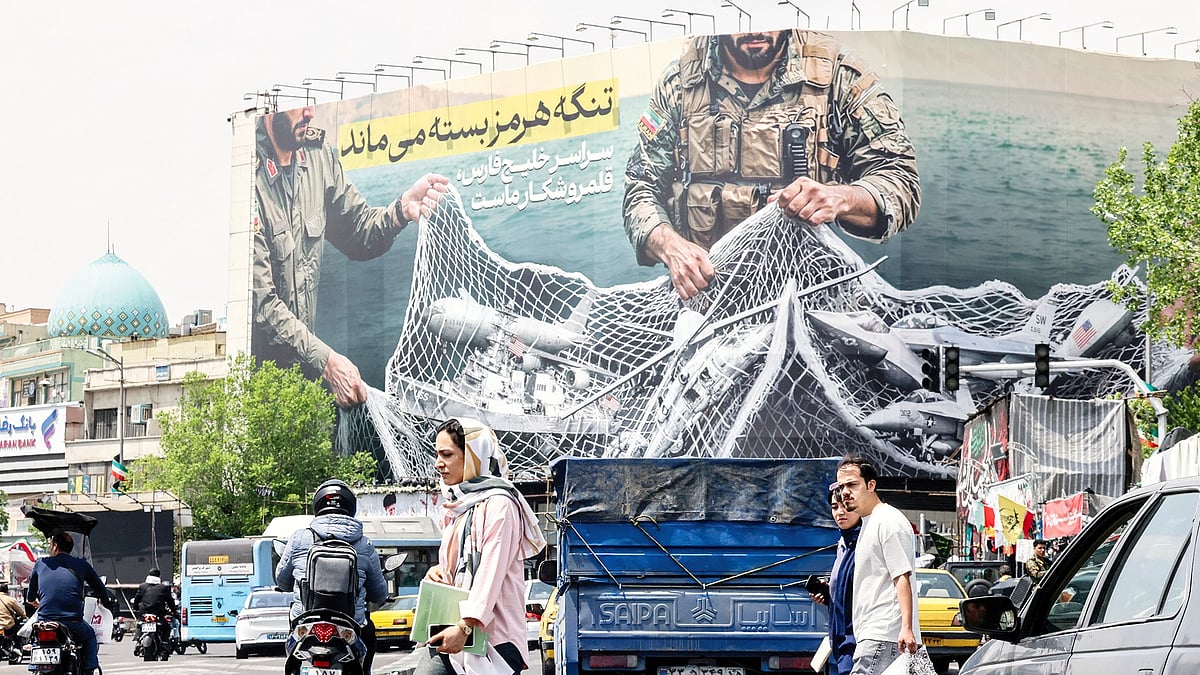
The Gulf countries didn’t start the war. Yet they’re paying a terrible price. In battered infrastructure and the erosion of a carefully manufactured illusion of stability. What has unfolded since end-February is a brutal audit of decades of strategic choices made by the Gulf monarchies.
Within forty-eight hours of the opening strikes on Iran, every member of the Gulf Cooperation Council (GCC) had taken retaliatory hits. The missiles and drones didn’t just target US bases; they tore through airports, hotels, energy installations, ports and all the fragile markers of prosperity cities like Dubai had spent decades burnishing and flaunting.
For decades, these monarchies were secure in the knowledge that the trade they had made with Washington gave them an unassailable security cover. They hosted US bases, bought US weapons, aligned strategically with the US in the firm belief that they had purchased deterrence and security. The war has shattered that illusion.
Iran’s justification was brutally simple. If US planes take off from your soil, your soil is part of the war. Iran couldn’t afford symmetric warfare, so it would hit where it hurt; civilian infrastructure was not going to be spared.
The strikes have taken a heavy toll: nearly $200 billion in lost output across the six GCC nations in the Persian Gulf. Their tourism industry is bleeding hundreds of millions every day. Their oil flows are badly hit by Iran’s blockade of the Strait of Hormuz. The insurance costs of shipping are insupportably high. GDP contraction is an unfolding reality. In other words, this is a systemic collapse of their defence–diplomacy–development 3D model.
The Gulf’s economic architecture was built on a simple premise: stability attracts capital. That premise is now in ruins. When drones can slip through air defences, when missile debris falls on luxury districts, when desalination plants that supply 90 per cent of drinking water are vulnerable, the narrative of the Gulf as an oasis collapses.
Yet the deeper failure is political. The GCC monarchies were not just passive victims. Many supported the strategic logic that led to this war. They feared and envied Iran. They lobbied and feted Washington. They entertained the illusion that a US–Israeli campaign could eliminate the Iranian threat without engulfing them. It was a dangerous fantasy.
Humiliatingly for the GCC, even though they are under attack, the war is being waged as if their stand is of no consequence. They are being attacked by Iran and ignored by the US, their supposed protector. Deci-sions about the war were made without them. Negotiations about ceasefires are happening without them. Despite being the most exposed, they are not at the table shaping the outcome of the war.
Even the ‘normalisation’ with Israel — sold as a pathway to security integration, intelligence sharing and technological superiority — has been of no avail; it has only deepened the perception that certain Gulf states are part of an anti-Iran axis. That perception has consequences: it invites retaliation from Iran and its allies.
If anything, normalising ties with Israel has made some of these monarchies more vulnerable, tying their security calculus to a regional actor whose strategy is driven by perpetual confrontation. The Gulf has effectively imported Israel’s enemies without acquiring Israel’s deterrence.
Meanwhile, the US security umbrella has revealed its limits in the harshest way possible. Air defences may have intercepted most of the missiles, but deterrence is not about intercepting attacks; it’s about preventing them. On that count, the US has failed the GCC spectacularly.
Nor is the economics of defence in their favour. Intercepting a low-cost drone with a multimillion-dollar missile is not sustainable strategy. Iran has weaponised this asymmetry; its strategy pivots on imposing costs that will become unbearable in a war of attrition.
Trump went into the war without bothering to consult allies, working on advice that badly underestimated Iran’s appetite and capacity for retaliation. It is now negotiating with Iran from a position that is far worse than where it started. For the Gulf countries, the message is disturbingly clear: US protection is neither guaranteed nor sufficient. In the post-war scenario, they will have to think beyond reconstruction; they’ll have to rethink the entire logic of security.
The first uncomfortable truth the GCC must confront is that Iran is not going anywhere. Despite massive strikes, despite leadership losses, the Iranian state endures and dictates the war and ceasefire. It retains its capacity to disrupt the region, to choke global energy flows, to project power asymmetrically. A militarily weakened Iran may even be more dangerous, less predictable and more willing to escalate.
The idea that Iran can be eliminated as a strategic factor is fantasy. The only viable path is coexistence, however uneasy. That requires a shift from confrontation to accommodation, from external balancing to regional engagement, from wishing Iran away to learning to live with it.
The second reality they confront is that relying on the US alone is not sound strategy. A strategically shifty US cannot offer the security guarantees the GCC needs. This is where China enters the picture, not as a replacement in military terms, but as a different kind of patron. China offers some-thing the US no longer can: economic stability without political volatility, engagement without entanglement.
China has already demonstrated its relevance. It brokered the Saudi–Iran rapprochement. It positioned itself as a stabilising actor. For the Gulf countries, turning to China is not about abandoning the US but about reducing dependence on a patron that has proven unreliable; it’s about diversification, hedging, creating strategic space.
But the shift towards China cannot be separated from the need to recalibrate relations with Iran. The two are intertwined. China’s influence in the region is tied to its relationship with Tehran. Any new security architecture that excludes Iran is doomed to fail.
This is the hardest pill for the GCC to swallow. The very state they have spent decades fearing and containing may now have to be engaged as a central pillar of regional order. The alternative is worse. Continued reliance on external powers that use the region as a battleground. Continued exposure to wars they do not control. Continued economic vulnerability to disruptions they cannot prevent. The one certainty of this war is that the Gulf that emerges from it will not be the same.
Ashok Swain is a professor of peace and conflict research at Uppsala University, Sweden. More by the author here
Join our official telegram channel (@nationalherald) and stay updated with the latest headlines